Is It Better To Do A Food Tour In Rome Or Florence?
A fair, sourced comparison of food tours in Rome and Florence, with real Florence prices, ratings and inclusions, and the honest case for choosing Florence.
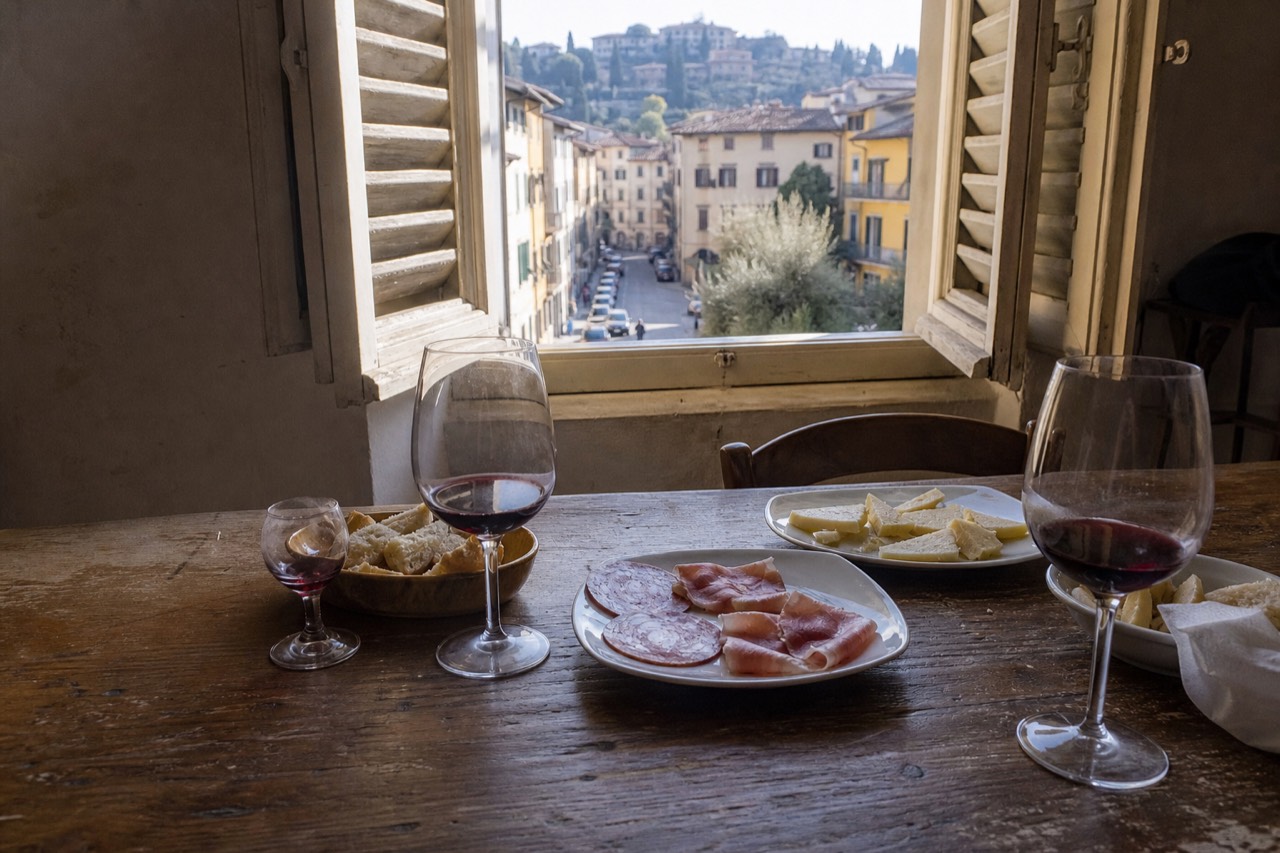
Two cities, one food tour budget, and a question every Italy traveller eventually faces. Rome is the capital of a cuisine the whole world can name: carbonara, cacio e pepe, amatriciana, supplì, pizza al taglio. Florence is smaller, quieter at the table, and built around products rather than pastas: Chianina beef, pecorino, lardo, finocchiona, schiacciata, oil and wine with protected legal status.
We publish Florence Food Tours, so our answer is Florence, and we will say so plainly up front. But the honest version of that answer is not a slogan. It is an argument about walkability, about what a tour in each city actually puts in your hand, and about what happened to Rome in 2025, which changed the terms of the comparison. This article makes that argument with real numbers on the Florence side and properly sourced reporting on the Rome side, because inventing Rome prices would be easy and dishonest.
Is It Better To Do A Food Tour In Rome Or Florence?
Florence wins for a first food tour, and the reasons are structural rather than culinary: the entire eating geography of the city sits inside a walkable historic centre, the products on the tasting table carry EU-protected designations you can verify on the label, and a three-hour tour here can move from market stall to steak dinner without a bus. Rome rewards a longer stay and its own tour.
The case rests on density. Florence's food scene is compressed into a rectangle you can cross on foot between tastings. The Mercato di Sant'Ambrogio, one of the two historic markets, operates Monday to Saturday 07:00 to 14:00 in Piazza Lorenzo Ghiberti, and the Mercato Centrale's first-floor food hall is open every day 09:00 to 23:00, all inside the UNESCO centre. A tour in Florence spends its minutes tasting, not travelling.
That is also why the tour products here are short and intense. On our roster, the shortest is 2 hours and the longest standard walk is 4 hours, with most sitting at 2.5 to 3.5 hours. You are never far from the next stop, and the stops themselves are often centuries-old institutions rather than venues that opened for the tourist decade.
Rome's food is not lesser. It is simply spread across a city of nearly three million people with a historic centre far larger than Florence's whole core. A food tour in Rome is excellent; it is just a different shape of experience, one where the city's sheer size and its 2025 visitor surge both matter. We will come to both.
If you are already leaning Florence, these are the three tours we would put in front of you first, chosen to show the range of what the city offers at three different price points.
Should I Do A Food Tour In Rome Or Florence?
Do it in Florence if this is your only food tour in Italy and you have two or three days in the city; do it in Rome if Rome is your base and Florence is a day trip, because a rushed food tour eaten against a train timetable is the worst version of either. The food tour should live where your evenings live, and in Florence the evening meal is the city's strongest culinary moment.
This is the practical version of the question, and practicality decides it more often than taste does. Consider what each itinerary actually looks like. Travellers who base themselves in Rome and day-trip to Florence arrive mid-morning and leave in the late afternoon, which fits a street-food walk but not a sit-down steak dinner with four wines. Travellers who sleep in Florence can take an evening tour that ends at 21:30 with a glass of Vin Santo still on the table.
The evening format deserves the emphasis. Florence's strongest food-tour products are sunset and dinner walks: the roster's most-reviewed product is an evening tour at 5.0 across 5,911 reviews, 3.5 hours, 9 to 10 Tuscan bites, 4 wines, a prosecco toast and a cocktail lesson, departing from Piazza Santo Spirito. That product exists because Florence's Oltrarno neighbourhood supports it: a real residential quarter with bars, trattorie and a monthly zero-kilometre farmers' market in the same square.
If that evening shape appeals to you, it is worth checking what dates and times are currently open on the live booking pages before you lock in your hotel, since several of these tours carry a likely-to-sell-out badge.
What Does A Guided Food Walk In Florence Actually Include?
A Florence food tour includes, on real current listings: between five and fourteen food tastings, up to six drinks, and formats ranging from a $45 street-food walk to a $170.37 VIP dinner with Florentine steak; the mid-range classic tours cluster between $69.39 and $124.00 per person, run 2.5 to 4 hours, and almost all cancel free up to 24 hours before start.
The full roster of 22 bookable tours runs from the City Highlights street food walk at $45.00 from, 4.9 across 103 reviews, up to the VIP dinner tour with Florentine steak and wine at $170.37 from, 5.0 across 293 reviews. Somewhere in the middle sits the best food-per-dollar pick on the list: the Ultimate Food Tour with a full Tuscan meal, $69.39 from, 4.8 across 493 reviews, a full itinerant meal across at least four stops with wine included.
What the tastings physically are matters more than the counts. A Florence tour puts protected products in your hand: Prosciutto Toscano DOP, registered in 1996; Pecorino Toscano DOP, registered the same year; Finocchiona IGP, registered 2015; Cinta Senese DOP, registered 2012; Cantucci Toscani IGP and Pane Toscano DOP, both registered 2016. These are not marketing labels. They are entries in the European Commission's official register, each with a registering regulation behind it, and a guide can hand you the label and show you the name.
| Florence tour (from price) | Duration | Rating and reviews | What the listing includes |
|---|---|---|---|
| City Highlights and Street Food, $45.00 | 2.5 hours | 4.9, 103 reviews | Florentine recipe tastings |
| Street Food Tour with Wine and Local Guide, $49.00 | 2.5 hours | 4.8, 1,869 reviews | Market and street tastings, oil, balsamic, truffle, wine |
| Ultimate Food Tour: Full Tuscan Meal, $69.39 | 3.5 hours | 4.8, 493 reviews | Full itinerant meal, at least 4 stops, wine |
| Food and Wine Tour, Historic Centre, $100.60 | 2.5 hours | 4.9, 521 reviews | 5 food stops, Chianti and Vin Santo |
| Food Tour with Fiorentina Steak, $124.00 | 4 hours | 5.0, 349 reviews | Truffle pasta, aged balsamic, steak, all drinks |
The steak row deserves a note, because it is the item Rome cannot match. Bistecca alla fiorentina has no protected designation of its own, and we will not pretend it has a legal minimum thickness, because no such document exists. But the breed behind the best examples does sit inside a real EU protection: Vitellone Bianco dell'Appennino Centrale IGP, registered in 1998, whose registered area explicitly includes the province of Firenze. When a Florence guide talks about Chianina beef, there is a regulation behind the conversation.
For a balanced first visit, the tour we would point you at is the food and wine walk through the historic centre: five food stops, named regional wines including Chianti and Vin Santo, 4.9 across 521 reviews, $100.60 from. See the full Florence food and wine walking tour guide for how these products compare in depth, or go straight to the operator's page: Check availability.
What About Rome: What The Sources Actually Say
Rome in 2025 absorbed roughly 33.5 million Jubilee pilgrims, a figure Vatican and Italian officials reported in January 2026, and that volume is the single most important fact in this comparison: any like-for-like crowding judgement between the two cities is distorted by an exceptional year, so we will not make one.
That number comes from Reuters, reporting a 5 January 2026 press conference, and it exceeded the roughly 31 to 31.7 million that Roma Tre University had forecast. Pilgrims came from 185 countries, with Italy at 36 percent and the United States at 12 to 13 percent of the count. Reuters reported the figure as a record for a Holy Year.
We will not quote Rome food-tour prices or ratings, because we do not verify Rome listings and a made-up Rome number, even a plausible one, would be a lie. What we can say is what Rome's food identity is, because that is not in dispute: a pasta-first tradition with four famous dishes, a fried-snack culture around supplì and pizza al taglio, and a restaurant scene whose classic quarters, Trastevere, the Jewish Ghetto, Testaccio, are genuinely world-class. A food tour in Testaccio is one of the best food experiences in Italy.
The honest structural point is this. Rome's food strengths are spread across a capital; Florence's are concentrated in a core you can walk across. And on the recognition front, the current data favours Florence more than most travellers expect: Florence ranked fourth in TasteAtlas's 2025/2026 Best Food Cities in the World list, behind only Naples, Milan and Bologna and ahead of every non-Italian city, a ranking La Nazione reported in December 2025. A separate survey, reported by Florence Daily News in February 2026, named Florence the world's top city for hands-on food experiences, counting 231 cooking classes of which about 74 percent held four-star ratings or higher. Both are published rankings, not measurements of quality, and we present them as exactly that.
How Do The Two Cities Compare On Food Identity?
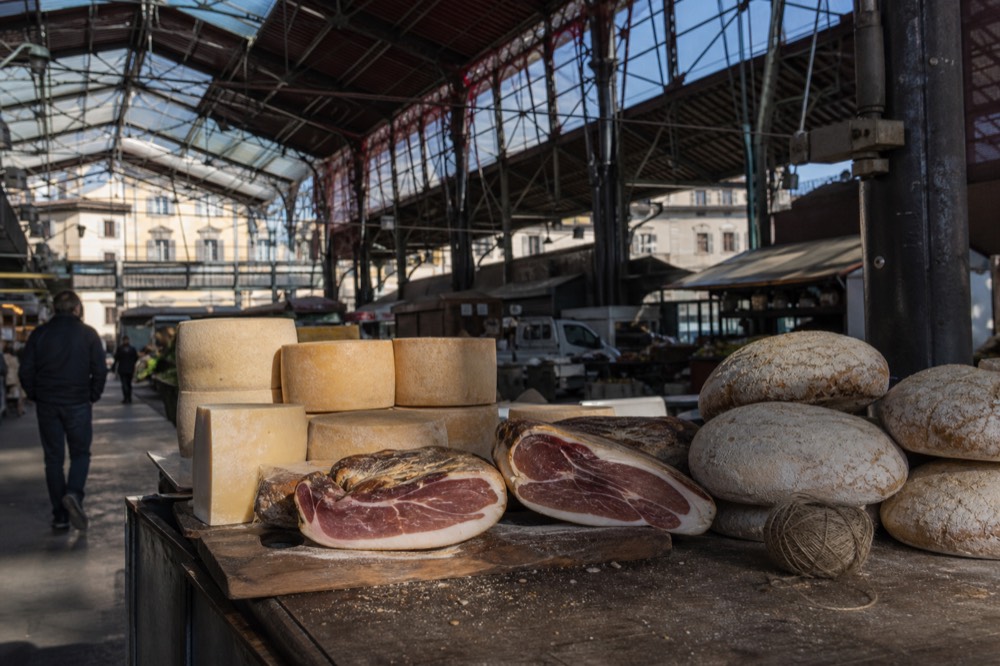
Florence's table is built on protected raw materials, unsalted bread, offal traditions like lampredotto, and wine from the surrounding region; Rome's is built on technique, four canonical pastas and a fried street-food culture, and the difference matters for tours because Florence's products can be verified on labels while Rome's genius lives in the cooking.
This is the deepest difference, and it changes what a guide can actually show you. In Florence, the tasting table is a lesson in European food law as much as cooking. The bread is unsalted and has been a PDO since 2016. The prosciutto, the pecorino, the finocchiona, the lardo di Colonnata, each carries a registration number and a consortium. Even the oil has rules: the Toscano PGI specification sets a latest harvest date of 15 December and a maximum acidity of 0.45 grams per 100 grams. A guide in Florence can turn a tasting into a verifiable education.
Rome's greatness is the opposite kind. Carbonara is not a registered product; it is a dish whose excellence depends entirely on the hand that makes it, which is why Roman food tours are organised around kitchens and fryers rather than labels. Neither approach is better in the abstract. But for a traveller who wants to come home understanding what they ate, and able to buy a bottle or a ham with the same name on it, Florence's model delivers something Rome's cannot.
| Dimension | Florence | Rome |
|---|---|---|
| Core food identity | Protected products: DOP and IGP hams, cheese, bread, oil, wine | Technique-driven pastas and fried street food |
| Signature items | Bistecca, lampredotto, schiacciata, pecorino, cantucci, Vin Santo | Carbonara, cacio e pepe, amatriciana, supplì |
| City scale for touring | Compact UNESCO core, walkable between all stops | Capital city, food quarters spread across districts |
| 2025 visitor context | 4.78 million arrivals and 11.52 million overnight stays, per La Nazione | Roughly 33.5 million Jubilee pilgrims, per Reuters |
| What a guide can verify | EU-register designations on the label | The dish in front of you |
| Best tour length | 2 to 4 hours, evening formats strongest | Half-day formats around a single quarter |
One more Florence advantage belongs here, and it is not obvious from a first page of search results. Between 2015 and 2025 Florence lost 119 traditional bars, a 14.6 percent decline, while table-service restaurants rose by 145 units, according to a Fipe-Confcommercio study reported in June 2026. The city's eating landscape is shifting from standing coffee bars toward seated restaurants and takeaways, which is precisely the terrain food tours occupy. The tours are, in a real sense, riding the same wave the city itself is on.
Which Should You Choose If You Only Have Time For One?
Choose Florence if this is your only food tour, if you care about wine alongside food, or if your trip is Tuscany-centred; choose Rome if your trip is Rome-centred, if pasta is the point, or if you have four-plus days there and can give a tour a whole unhurried morning, because both cities punish the rushed version.
Break the tie with three questions. First, where are you sleeping? A food tour should end within walking distance of your bed, ideally after wine. Second, what do you want to understand afterwards? If the answer is Tuscan products and how to buy them at home, Florence; if it is how a great pasta is built, Rome. Third, what does the rest of your day look like? Florence pairs a food tour with the Uffizi or the Duomo in a single day without strain; Rome rarely rewards that compression.
If Florence it is, the budget logic is straightforward. Under $55, the street-food walks, and the cheapest of them is also the highest-rated of the sub-60-dollar walks at 4.9 across 103 reviews. Between $69 and $100, the full-meal and classic formats, where the Ultimate Food Tour's four-stop itinerant meal at $69.39 from is the value pick. Above $100, the steak-and-wine dinners, where the 5.0-rated Fiorentina steak tour at $124.00 from, 349 reviews, four hours, everything included, is the flagship.
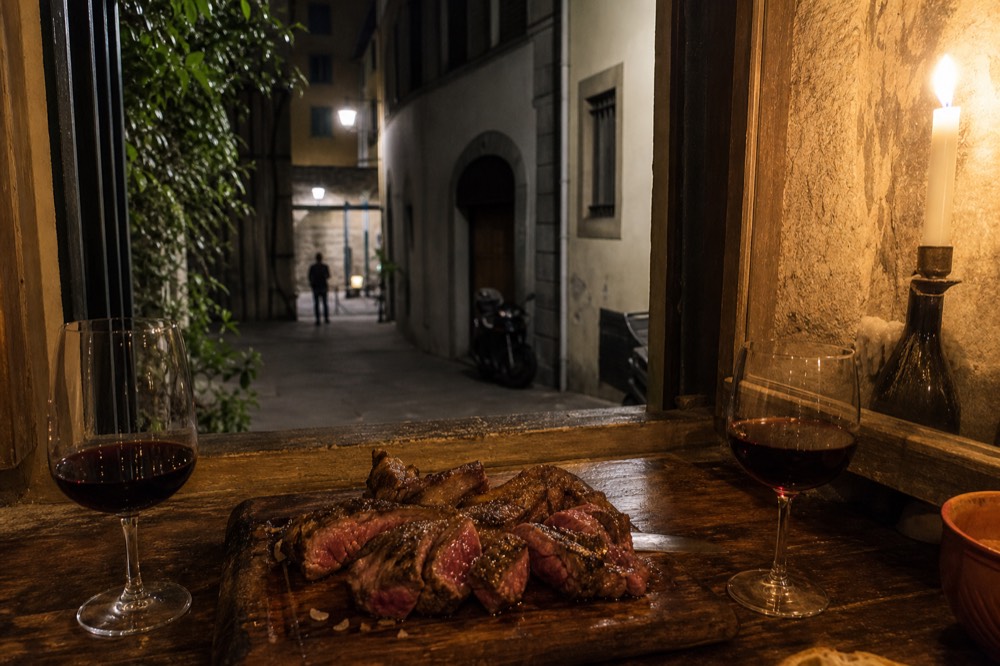
Before you commit, it is worth checking the live price on the listing for whichever format you choose, since from-prices move with season and demand, and the free-cancellation window on almost all of these products, 24 hours before start, means an early booking costs you little flexibility.
For deeper planning, our guides on how long Florence food tours last and what to expect on a Florence food tour cover the practical ground, and the evening and sunset food tour guide makes the case for the format we think suits the city best.
Whichever city you choose, book the tour for the night you have the most energy, not the night you have left over. A food tour is a three-hour conversation with a city, and both of these cities deserve your full attention.
The short answers: Florence for a first or only food tour, Rome if Rome is your base; Florence tours run $45.00 to $170.37 with most classics between $69.39 and $124.00, and we never quote Rome prices because we do not verify Rome listings. The questions below cover the details, including wine, budget and doing both cities on one trip.
Common Questions About Food Tours In Rome Or Florence
Is it better to do a food tour in Rome or Florence?
Florence is the stronger choice for a first or only food tour in Italy: the historic centre is compact enough that tours spend their time tasting rather than travelling, the products on the table carry EU-protected designations, and the evening steak-and-wine formats have no real Roman equivalent. Rome is the right choice if Rome is your base and you can give a tour an unhurried half-day in a single quarter like Testaccio.
Should I do a food tour in Rome or Florence?
Do the food tour in the city where you are sleeping, ideally on an evening. A food tour ends with wine and a sit-down meal, and it works best when your hotel is a walk away. If both cities are on the itinerary, put the food tour in Florence, where the evening formats are the strongest products, and see Rome's food through its trattorie on your own.
Are Rome food tours more expensive than Florence food tours?
We do not verify Rome listings, so we will not quote Rome prices. On the Florence side, verified listings run from $45.00 for a street-food walk to $170.37 for a VIP steak dinner, with most classic tours between $69.39 and $124.00 per person. Check the live listing for any Rome tour before comparing, and compare what is included, not just the headline price.
Is Florence or Rome better for wine on a food tour?
Florence. The city sits inside Tuscany's wine country, and Florence listings routinely include named regional wines: Chianti and Vin Santo appear verbatim in the inclusions of the historic-centre food and wine tour, and the sunset tour includes four wines plus a prosecco toast. Rome's tours centre on food and beer more often than on regional wine.
Can I do food tours in both Rome and Florence on one trip?
Yes, and many travellers do. Keep them in different formats so they do not blur together: a street-food walk in one city and a sit-down dinner tour in the other works well. In Florence, the street-food walks start at $45.00 and the dinner formats with steak and wine start around $80.00, so a two-tour Italy trip is affordable on most budgets.
Which city has better food overall, Rome or Florence?
There is no honest single answer, only published rankings and personal taste. TasteAtlas's 2025/2026 Best Food Cities list, reported by La Nazione, placed Florence fourth in the world behind Naples, Milan and Bologna, ahead of every non-Italian city. Rome's pasta tradition is unmatched. Florence's strengths are protected products and wine; Rome's are technique and street food.