Do You Tip On Food Tours?
Tipping on food tours in Florence and Italy: what is customary, what the coperto and servizio actually are, what your tour price already covers, and how to hand over a gratuity without awkwardness.
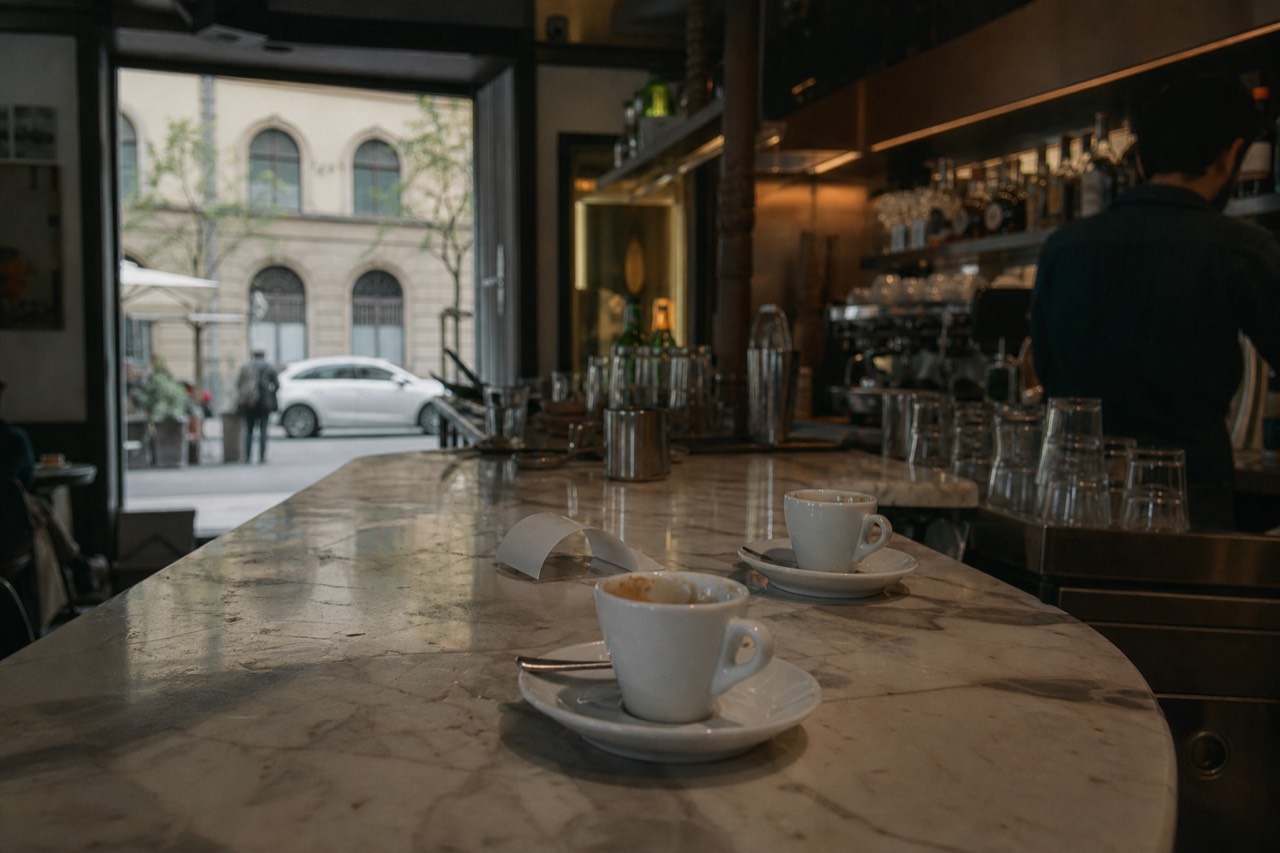
Do You Tip On Food Tours?
No rule obliges you to tip on a food tour in Italy, and no guide will treat the absence of a tip as an insult, but a gratuity for a guide who did well is a normal, appreciated gesture rather than an American habit you need to suppress. There is no verified figure for what food-tour guides in Florence are actually tipped, and this site will not invent one. What can be said with confidence comes from the law and from the structure of the tours themselves: the price you pay covers the food, the wine and the guide's fee, and anything extra is a thank you, not a wage top-up that the operator is quietly relying on.
That framing matters because the American instinct runs the other way. In the United States a tip is part of the worker's income, and withholding it is a statement. In Italy the legal and cultural machinery is different: service-sector wages are not tip-subsidised in the same way, the coperto and servizio charges exist as separate, lawful line items, and a gratuity lands as a genuine bonus. A guest review of one Florence street-food walk on the live listing praises the guide by name and mentions returning to a stop the guide recommended, which is the kind of moment a tip rewards. Nothing in that exchange is compulsory.
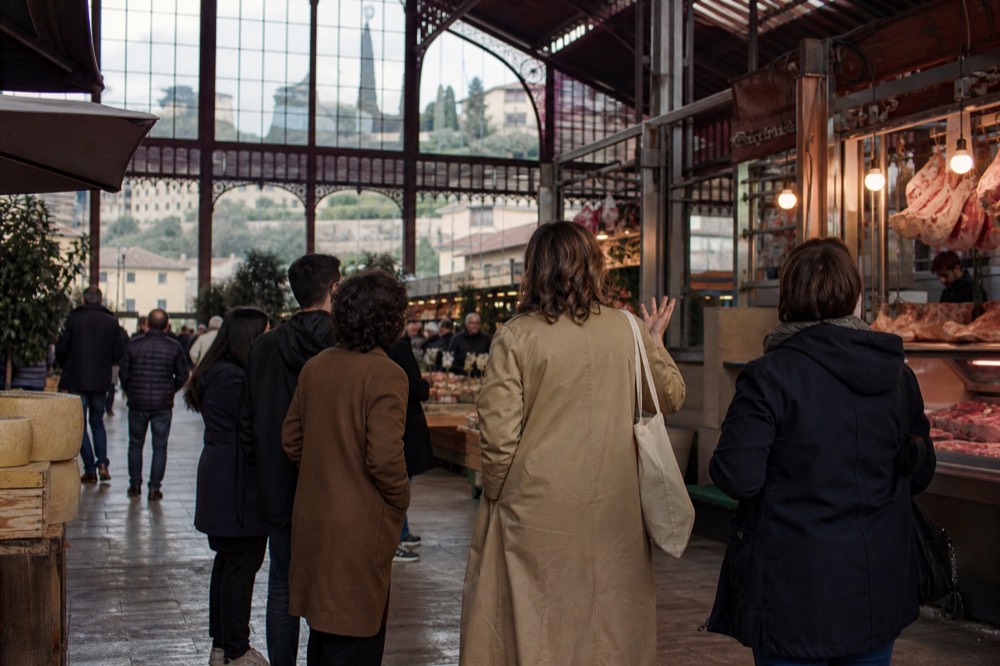
So the practical answer for a Florence food tour is: budget a small amount of cash, hand it to the guide directly at the end if you were happy, and do not agonise over a percentage. The rest of this article separates what is already paid for from what is not, because most tipping anxiety on tours comes from not knowing which is which. If you are still choosing a tour, the price and the inclusions are on the operator's live listing, and comparing a few side by side settles the question faster than any rule of thumb.
The three walks above illustrate the range you will actually meet in Florence: a 2.5-hour street-food walk with wine from $63.00, an old-city tour with six named tastings from $51.00, and a private tasting tour with a local expert from $167.77. All three include the tastings and the guiding in the headline price, and all three carry free cancellation up to 24 hours before the start time. That last detail matters to the tipping question in a small way: an operator generous with cancellation terms is an operator whose guides are not living tour to tour on your gratuity.
Is It Rude Not To Tip A Tour Guide?
No, it is not rude, in Italy, to leave no tip for a tour guide, and there is no Italian social norm that reads a missing gratuity as a slight, though a guide who was genuinely excellent will of course notice and appreciate a tip when it comes. The claim that guides expect a fixed amount per person circulates widely on travel-advice pages, but none of those figures traces to a measurement of what anyone actually tips in Florence, and this site does not publish invented percentages. What is verifiable is the legal backdrop: the price of the tour is a complete contract, the guide is paid by the operator out of that price, and the receipt rules that govern the transaction say nothing about gratuities.
The contrast with the United States is worth spelling out because it explains the anxiety. Where tipping is part of compensation, not tipping is a message. Where it is a bonus, not tipping is simply the default. Italian guides know the difference and deal with American groups constantly; a guide on a Florence food walk will not be confused or wounded by an unmarked handshake goodbye. What can create awkwardness is the opposite: loud, performative tipping that turns the end of the tour into a transaction. A quiet euro note folded into the hand, or a few coins left on a counter with a thanks, is the local register.
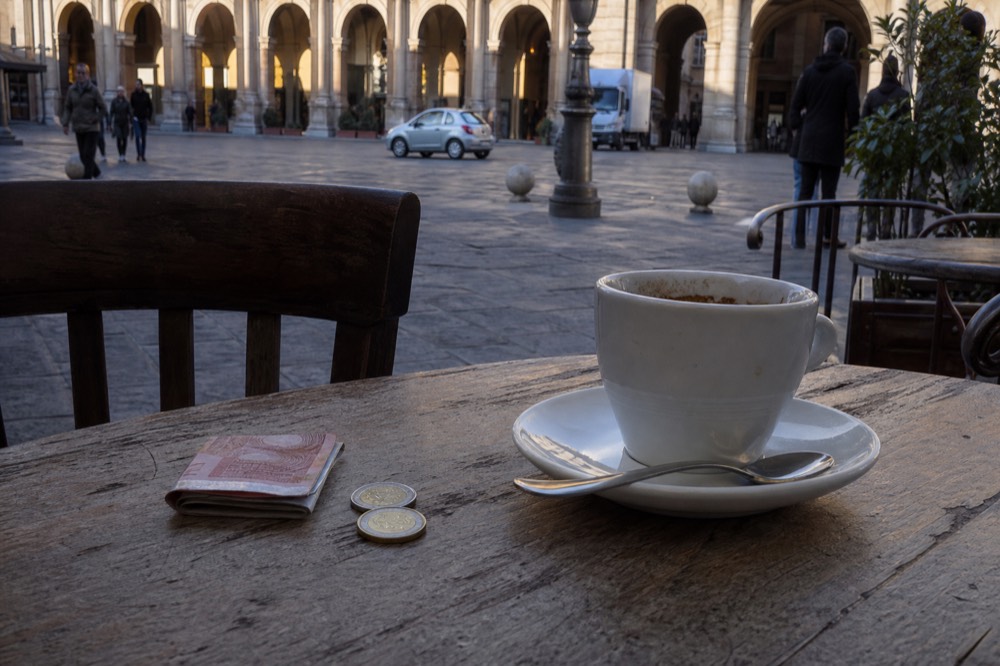
One thing that genuinely does read as rude, and is worth separating from tipping, is walking out of a bar or restaurant in a way that suggests the service was worth nothing. That is about manners, not money. The customer is under no legal obligation to take or keep the receipt, contrary to a myth this site has examined and rejected, but saying goodbye, thanking the staff, and not treating the counter as a vending machine are the actual etiquette. A good guide on a food tour will model exactly this behaviour at every stop, which is one of the quieter benefits of taking one.
If you are weighing a tour where the guide's quality is the product, the private options are where that calculus is sharpest. The private food and wine tasting tour with a local expert runs 3 hours from Piazza Sant'Ambrogio, holds a 5.0 rating across 66 reviews, and is the only listing on the roster whose inclusions name transport. For a private format, the decision moment is usually about dates rather than price, so it is worth checking the available slots on the operator's listing before planning the rest of your day around it.
Is 10% Tip Disrespectful?
No, a 10 percent tip in Italy is not disrespectful, and no Italian custom treats a modest gratuity as an insult; if anything, the risk with percentages in Italy is over-tipping, because the amounts that feel normal to an American can read as extravagant in a culture where tipping is a small, occasional gesture rather than an expected share of the bill. The question itself is a piece of internet folklore, usually answered with invented rules in both directions. Some pages claim ten percent offends; others claim five euro is a mandated minimum for a walking guide. Neither claim traces to any Italian law, survey or statistic, and this site publishes no tipping figure it cannot source.
What the sources do establish is the surrounding structure. The coperto, where charged, is lawful in Tuscany provided it appears on the price list before you order, and it is not a tip; the servizio, where it appears, is a service charge that also is not a tip; and neither obliges you to add anything. A bar or restaurant must keep its price list displayed in a visible place, under article 180 of the 1940 public-security regulations, so you can always check what is and is not included before the bill arrives. Tipping sits entirely outside that framework, in the space of voluntary thanks.
That is why the percentage question misfires. Ten percent of a 12-euro lampredotto lunch is a coin or two, which is perfectly normal. Ten percent of a $170.37 VIP dinner tour is a substantial sum, which is generous but not offensive. The disrespectful scenario people fear, a waiter throwing money back, essentially does not exist; Italian service staff accept tips of any size with a simple grazie. The real mistake is not the size but the misunderstanding: adding ten percent on top of a bill that already carries a servizio line means paying for service twice, and nobody will stop you.
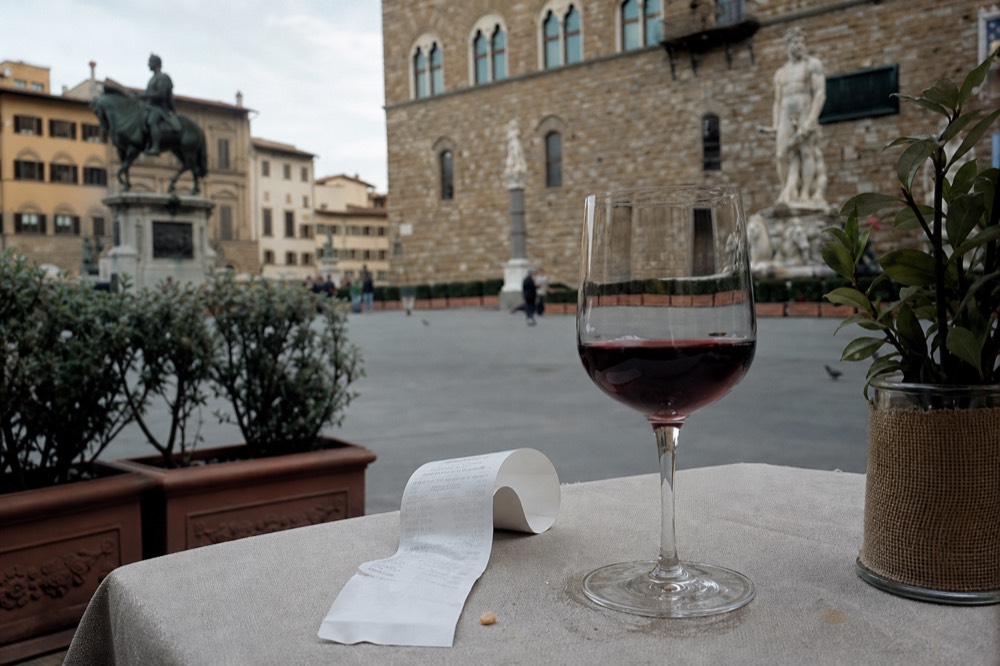
For a food tour specifically, the arithmetic is even simpler, because the tour price already bundles everything. On the roster this site tracks, the cheapest walk is $45.00 and the most expensive experience is $259.10, and in every case the tastings, the drinks and the guiding are inside that figure. A ten percent tip on the lower end is a rounding error; on the upper end it is a substantial gift. Decide what the evening was worth to you in absolute terms, not in percentages, and you will land somewhere both you and the guide can be comfortable with.
What Is The Difference Between The Coperto, The Servizio And A Tip?
The coperto is a fixed cover charge for the table, bread and setting; the servizio is a percentage service charge, usually itemised on the bill; and a tip is a voluntary gratuity that is neither of those things, and in Florence, unlike Rome, both the coperto and the servizio are lawful so long as they are disclosed on the price list before you order. The three get conflated constantly, and the confusion costs visitors real money, either in double-paying for service or in tipping defensively on top of a bill that already includes it.
The legal position is clearer than most travel pages admit. There is no national Italian law that bans, caps or regulates the coperto; it is lawful nationwide provided the customer can see it before ordering. The regional exception is Lazio, whose 2006 regional law prohibits an additional cover charge where table service is provided, which is why a coperto in Rome is contestable and a coperto in Florence is simply part of the bill. Tuscany has no equivalent law. The price-list display obligation comes from the old public-security regulation still in force, and the electronic receipt obligation, in force since 2021, means the business must issue a commercial document for what you actually paid.
| Charge | What it is | Is it a tip? | Legal status in Florence | What you should do |
|---|---|---|---|---|
| Coperto | Fixed per-person cover charge for table, bread, setting | No | Lawful in Tuscany if shown on the price list before ordering; banned in Lazio, not in Tuscany | Check the menu or price list; pay it without adding a tip on top unless service was special |
| Servizio | Percentage service charge, often around a tenth of the bill, itemised separately | No | Lawful if disclosed in advance on the price list | Treat it as the service charge; no obligation to add more |
| Servizio incluso | The phrase indicating service is already inside the listed prices | No | Lawful disclosure practice | Nothing further is expected |
| Tip / gratuity | Voluntary cash you choose to leave for staff or a guide | Yes, by definition | Entirely unregulated; no minimum, no maximum, no obligation | Optional; small amounts are normal, hand it over directly |
The practical reading of that table: when a Florentine restaurant bill shows a servizio line, the tipping question has already been answered by the house, and leaving coins is a courtesy rather than a duty. When the bill shows neither servizio incluso nor a coperto, a modest rounding-up is the customary gesture. And when the price list is not visible anywhere, which is itself a breach of the display rules, you are entitled to ask before ordering rather than discover the charges at the end. A guide on a good food tour will usually point out which stops charge a coperto before the group sits down, which is one of those small pieces of local knowledge that saves more than the tour costs.
What Is Already Included In The Price Of A Guided Tasting Walk?
Almost everything is included: on the tours this site tracks, the headline price covers the tastings, the drinks and the guide's fee, so the only extra money you might reasonably carry is a discretionary gratuity and whatever you spend on personal purchases, never a service charge or a cover fee at the stops. This is the single most useful fact for the tipping question, because it removes the fear of hidden add-ons. Tour operators negotiate their stops; you are a guest at each one, not a walk-in customer facing a menu.
The roster makes the point concretely. The street food walking tour with wine includes pasta, truffle, oils, charcuterie, wine, a bakery stop and gelato for $63.00 from, with a 4.9 rating across 1,035 reviews. The old city street food tour includes six named tastings, among them cantucci with Vin Santo, for $51.00 from. The full Tuscan meal tour is a complete itinerant dinner across at least four stops with wine for $69.39 from. None of these carries a coperto, a servizio or an expectation of a per-stop payment; the guide handles the settlements you never see.
| Tour | From price | What the price already includes | Duration | Cancellation |
|---|---|---|---|---|
| Florence Street Food Walking Tour with Wine | $63.00 | Pasta, truffle, oils, charcuterie, wine, bakery stop, gelato | 2.5 hours | Free up to 24 hours before start |
| Florence Old City Street Food Tour | $51.00 | Pasta, wine, gelato, cantucci with Vin Santo, focaccia, salami | 2.5 hours | Free up to 24 hours before start |
| Florence Ultimate Food Tour: Full Tuscan Meal | $69.39 | Full itinerant meal across at least 4 stops, wine included | 3.5 hours | Free up to 24 hours before start |
| Florence Food Tour with Fiorentina Steak and Wine | $124.00 | All food and drink: truffle pasta, aged balsamic, Fiorentina steak, wine | 4 hours | Free up to 24 hours before start |
| Private Food and Wine Tasting with Local Expert | $167.77 | Tastings plus transport | 3 hours | Free up to 24 hours before start |
Read that table with the tipping question in mind and the picture is complete. The guide is paid from the price. The food and wine are paid from the price. The stops charge the operator, not you. What remains voluntary is the gratuity, and what remains genuinely yours to spend is anything you buy to take home, from a bottle of oil to a wedge of pecorino. One warning belongs here: if you are shopping with cash, note that Italy's cash payment ceiling for transfers between parties is 5,000 euro, and EU rules require a declaration when entering or leaving EU territory with 10,000 euro or more in cash, per the European Commission's cash controls page. Neither figure is a tipping concern; both are worth knowing before you withdraw a month of spending money in fifty-euro notes.
The street food walking tour with wine is the one this site points most readers toward for a first evening, and it carries a genuine sell-out badge on its listing, which is the operator's own signal rather than a marketing line from this site. If that format appeals, checking the live dates before you build the rest of your itinerary around the evening is the practical move. Check availability and the current price on the operator's live listing, since both move with the season.
How Should You Actually Hand Over A Tip In Italy?
Hand the tip to the person directly, in cash, at the moment the service ends: euro notes folded into the palm for a guide, coins left on the counter or plate for bar and restaurant staff, and never a dramatic announcement, because the Italian convention is quiet and immediate rather than performative. The mechanics matter more than the amount. Cards are a poor vehicle for tips in Italy because the till cannot easily split a gratuity out of a card payment, and the electronic receipt system, which requires the business to issue a document for the transaction, does not have a natural slot for an after-the-fact tip added to a card slip.
The receipt rules are worth understanding because they shape the moment. Every business must issue a commercial document through its registered till, and the invoice is only required if the customer asks for one at the time; the rules are set by the Agenzia delle Entrate's electronic-receipts guidance. A cash tip handed to a guide or left on the table sits outside that document entirely, which is one reason the gesture stays informal. You are not breaking any rule by tipping in cash, and the person receiving it is not dodging one by accepting a small amount; the obligations attach to the priced transaction, not to the thank you.
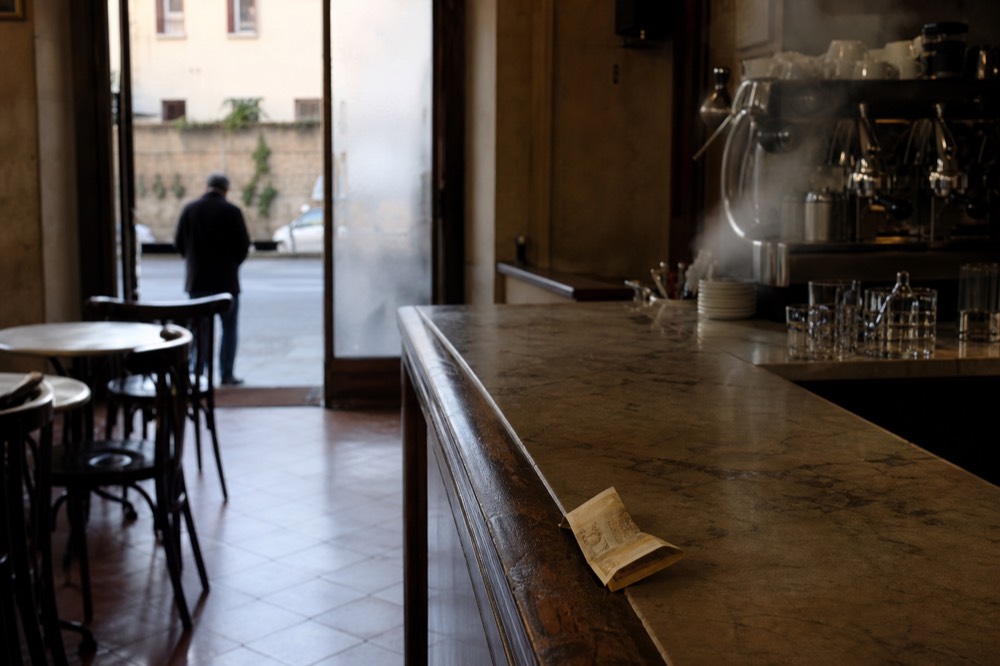
For a food tour, the natural moment is the last stop or the final goodbye, whichever the guide signals. If the tour ended well, a folded note with a genuine word of thanks covers everything the custom expects. If the tour was mediocre, nothing is owed and no explanation is needed. If a stop on the tour delighted you, a coin or two left at that counter, with a grazie, is a gesture the staff will register precisely because it is rare. And if you want to do something that costs nothing, a detailed review naming the guide is, on the evidence of the listings themselves, the thing operators value most; several of the tours on this site's roster carry review bases in the thousands, and every one of those reviews was written by a guest who took five minutes.
One last practical note for Florence specifically: the dehors regulation in force since February 2026 restricts outdoor seating in the UNESCO historic centre, banning installations on 60 streets and restricting types on 73 others, per the Comune di Firenze's own regulation page. That changes where tours sit you down, not what you pay for, but it is the kind of current local detail a guide will explain on the walk, and it is exactly the sort of knowledge a tip rewards. The site's guide to what to expect on a Florence food tour walks through the full evening from meeting point to last stop, and the comparison of guided versus self-guided food tours is useful if you are still deciding whether a guide adds enough to be worth paying for at all. Prices and inclusions above come straight from each operator's own listing, so you can compare Florence Food Tours options with confidence.
The private format above is the case where the tipping calculus weighs heaviest, because one guide spends three hours with one party. Even there, the same rule holds: the price is complete, the tip is a thank you, and the size is your call. For readers who want the fuller picture on spending in the city, the guide to how much Florence food tours cost breaks the whole budget down, and the post on what is considered impolite in Italy covers the etiquette beyond money.
The questions below are the ones readers actually ask, and each answer keeps to the same principle the article has argued throughout: the tour price is complete, the coperto and servizio are lawful disclosed charges rather than tips, and a gratuity in Italy is a voluntary thank you with no minimum, no maximum and no social penalty for leaving nothing. The details vary by situation, so read the answer that matches yours, and treat any percentage you see on a travel-advice page with suspicion unless it names a source.
Common Questions About Tipping On Food Tours
Do you tip on food tours?
Tipping is discretionary. The tour price already covers the food, the drinks and the guide's fee, so a gratuity is a voluntary thank you for a guide who did well, not a required top-up. There is no verified standard amount for Florence food tours, and no operator on this site's roster lists a tip as an expected extra.
Is it rude not to tip a tour guide?
No. In Italy a missing gratuity is the default, not a message. Guides are paid by the operator out of the tour price, and nothing in Italian law or custom obliges a tip. A guide will not treat the absence of a tip as an insult.
Is 10% tip disrespectful?
No, a ten percent tip is not disrespectful anywhere in Italy. The bigger risk is over-tipping, because percentages that feel normal to American visitors can read as extravagant where tipping is a small occasional gesture. Decide in absolute euros rather than percentages.
Is the coperto a tip?
No. The coperto is a fixed cover charge for the table and setting, lawful in Tuscany when shown on the price list before you order. It goes to the business, not to your waiter, and paying it does not discharge any tipping obligation because no such obligation exists.
Should I tip in cash or on a card?
Cash. The registered till must issue a document for the priced transaction, and there is no natural slot for an after-the-fact gratuity on a card payment. A folded note handed directly to the guide, or coins left on the counter, is the working convention.
How much do Florence food tours cost before tips?
On this site's roster, from prices run from $45.00 for the cheapest street-food walk to $259.10 for the most expensive market tour and cooking class. Every listing includes its tastings, drinks and guiding in the headline price, so the only extra is discretionary.