Best Time Of Year For Eating Your Way Around Florence: Season By Season
There is no single best month for eating in Florence, and no honest source ranks the months for you. What is verifiable is which markets are open, which produce is in season, and how much of each tour happens indoors.
Short answer
Florence food tours run year round. Street food walks cost from $45, market tours from $79 and evening tours from $129. Spring and autumn bring the truffle and olive oil seasons, summer heat pushes tours indoors, and winter keeps Mercato Centrale open until 23:00 daily. April and May grew most in 2025, according to Centro Studi Turistici data.
Florence does not close for winter. The food hall above Mercato Centrale opens every day of the year from 09:00 to 23:00, Sant'Ambrogio trades six mornings a week, and the trippaio carts that anchor any street food walk keep their schedules through the cold months. The honest answer to "when should I go" is not a month. It is a match between three things you can actually verify: what the weather does to a walking tour, what the markets are doing that week, and what is in season on the plate. This guide works through each of those, season by season, so you can weigh them against real numbers. Where a claim cannot be sourced, we say so rather than guessing.
No single month wins for everyone, and volume is not the same as quality. What matters more is your own constraints: your dates, your budget, and your tolerance for heat. A quiet February week with shorter market hours suits one traveller; a loud August one suits another. The data above, with its named sources, gives you the raw material to weigh that trade-off yourself. That is the approach Florence Food Tours takes across every guide on the site: real figures, named sources, and no invented rankings.
What The Seasons Actually Do To Eating Your Way Around Florence
Florence has four genuinely distinct food-tour seasons, defined by temperature, daylight and what is being harvested, and the difference between them is practical rather than cosmetic: a 3.5-hour evening walk in July is a different product from the same walk in October, and the same is true of market mornings in January versus June.
The volume backdrop first, attributed properly. According to Centro Studi Turistici di Firenze, drawing on Regional Tourist Observatory and Città Metropolitana data presented at the Destinazione Firenze 2026 conference, Florence recorded over 4 million arrivals and 9.7 million overnight stays in the first ten months of 2025, up 7.1 and 8.5 percent on the same period of 2024. The same data set showed April adding 132,000 stays and May adding 228,000 year on year, while July was the only month that fell, down 1.6 percent. That is a growth signal, not an absolute-volume ranking, and it is the only monthly seasonality figure on file that traces to a research body.
Weather is the part you will feel most. Summer in Florence is genuinely hot: Corriere Fiorentino reported that summer 2026 averaged a maximum of 35.2 degrees with 26 days above 38, including a 20-day heatwave from late July to mid August. That is a press figure from a named newspaper, not meteorological office data, so treat it as reported rather than official. Either way, a walking tour with nine or ten tasting stops behaves differently at 35 degrees than at 20, and the tour operators know it: evening and sunset formats exist precisely because the late afternoon and early evening are the humane hours in high summer.
Winter is the mirror image. Daylight is short, the light is low and beautiful, and the crowds thin, but an evening tour that starts at sunset in December starts in the late afternoon. The indoor share of any tour, which we break out in a table below, becomes the single most important planning variable.
Which Markets And Food Halls Are Open, Month By Month
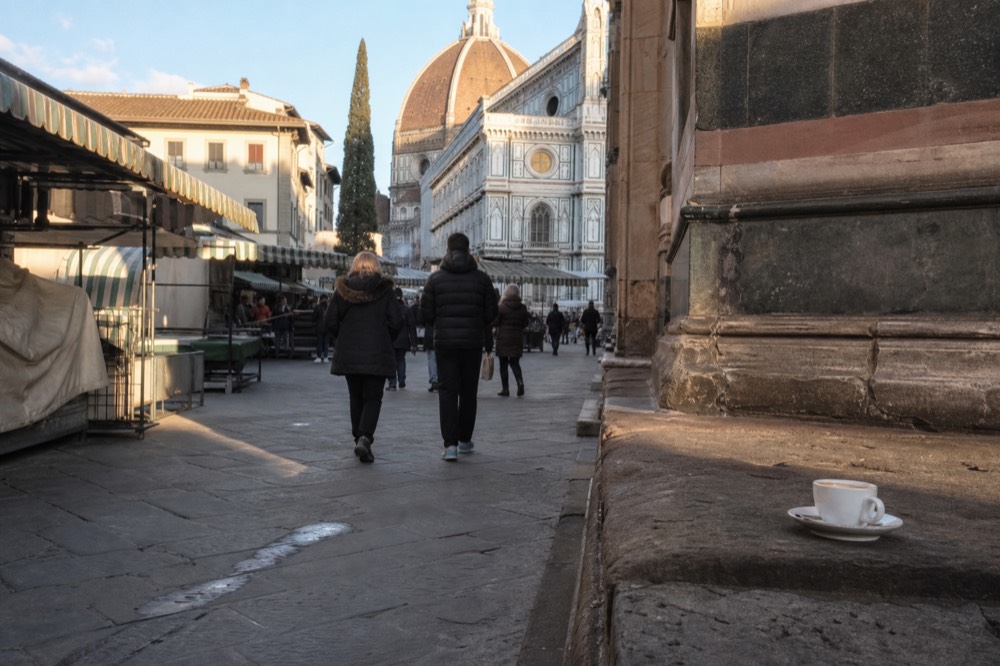
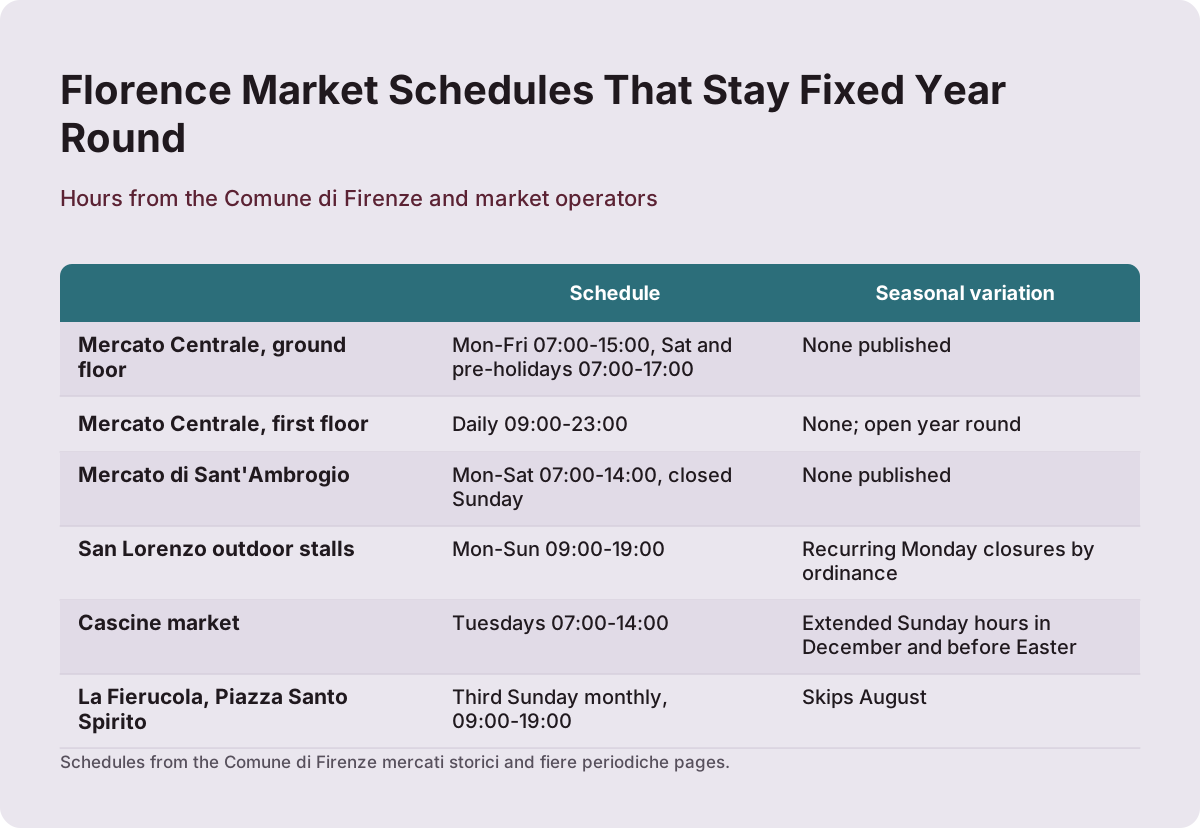
The two covered markets anchor Florence food tours in every season: Mercato Centrale's first-floor food hall opens daily 09:00 to 23:00 year round, while Sant'Ambrogio runs Monday to Saturday 07:00 to 14:00 and closes Sundays, and the outdoor stall patterns around San Lorenzo shift with a published municipal closure calendar.
These are the hours that matter, all from primary sources. The Comune di Firenze's mercati storici page lists Mercato Centrale's ground floor at 07:00 to 15:00 Monday to Friday and 07:00 to 17:00 on Saturdays and pre-holiday days. The operator's own current pages put the first-floor food hall at 09:00 to 23:00 every day, a schedule that does not change with the seasons. Sant'Ambrogio, in Piazza Lorenzo Ghiberti, trades 07:00 to 14:00 Monday to Saturday and closes on Sunday, confirmed on both the market's own site and the Comune's page.
The outdoor layer is where the calendar gets seasonal. A Comune di Firenze ordinance of 24 January 2025 set recurring Monday closures for the outdoor stalls around Mercato di San Lorenzo: every Monday in January, February, March, August and November, and the first and third Mondays in the other months, with holiday exceptions. If your tour route runs through the San Lorenzo streets, a Monday in February and a Thursday in May are genuinely different walks. Note also that the outdoor San Lorenzo market sells leather, clothing and souvenirs rather than food; the food is inside.
Beyond the historic markets, the municipal calendar adds two more fixed points. The Cascine market in Parco delle Cascine runs every Tuesday from 07:00 to 14:00, per the Comune's fiere periodiche page, with extended Sunday hours in December and before Easter. And La Fierucola, the zero-kilometre organic farmers' market, fills Piazza Santo Spirito on the third Sunday of each month except August, 09:00 to 19:00, with a published 2026 calendar on its own site. A Sunday food tour that lands on a Fierucola date gets a market most visitors never see.
| Venue | Type | Schedule | Seasonal variation |
|---|---|---|---|
| Mercato Centrale, ground floor | Covered produce market | Mon-Fri 07:00-15:00, Sat and pre-holidays 07:00-17:00 | None published |
| Mercato Centrale, first floor | Food hall | Daily 09:00-23:00 | None; open year round |
| Mercato di Sant'Ambrogio | Covered market | Mon-Sat 07:00-14:00, closed Sunday | None published |
| San Lorenzo outdoor stalls | Open-air market (non-food) | Mon-Sun 09:00-19:00 | Recurring Monday closures by ordinance |
| Cascine market | Open-air market | Tuesdays 07:00-14:00 | Extended Sunday hours in December and before Easter |
| La Fierucola, Piazza Santo Spirito | Organic producers' market | Third Sunday monthly, 09:00-19:00 | Skips August |
Sant'Ambrogio has also just had a physical upgrade worth knowing about: La Nazione reported that its new external canopies and restored historic pavement were inaugurated in mid-December 2025 after roughly two years of works costing about 1.9 million euros, with adjustable solar shading added in August 2026. The practical effect for a summer tour is that the stalls are now under cover, which changes the heat calculation at this market specifically.
If you are matching a market tour to your dates, the Central Market food and wine tour runs inside the food hall and is therefore one of the few formats the weather cannot touch. See the available dates on the live listing before you lock your itinerary, because market tours cluster around the morning trading hours.
How Much Of Each Tour Happens Indoors, By Season
The single most useful timing variable is the indoor share of your tour: street food walks spend most of their time outdoors between stops, market tours are almost entirely under cover, and evening formats split the difference, so in July and January the same three formats deliver very different experiences.
A street food walk in Florence is a walking tour first. The 2 to 2.5-hour formats move between the central squares, the market streets and the counter stops, and while the tastings themselves happen at the counter or standing at a cart, the connective tissue is street time. In summer that means heat management; in winter it means daylight and layering. The street food walking tour with wine, which carries a "Likely to sell out" badge on its listing, covers pasta through gelato across its stops, and gelato seasonality is real even if the shops never close.
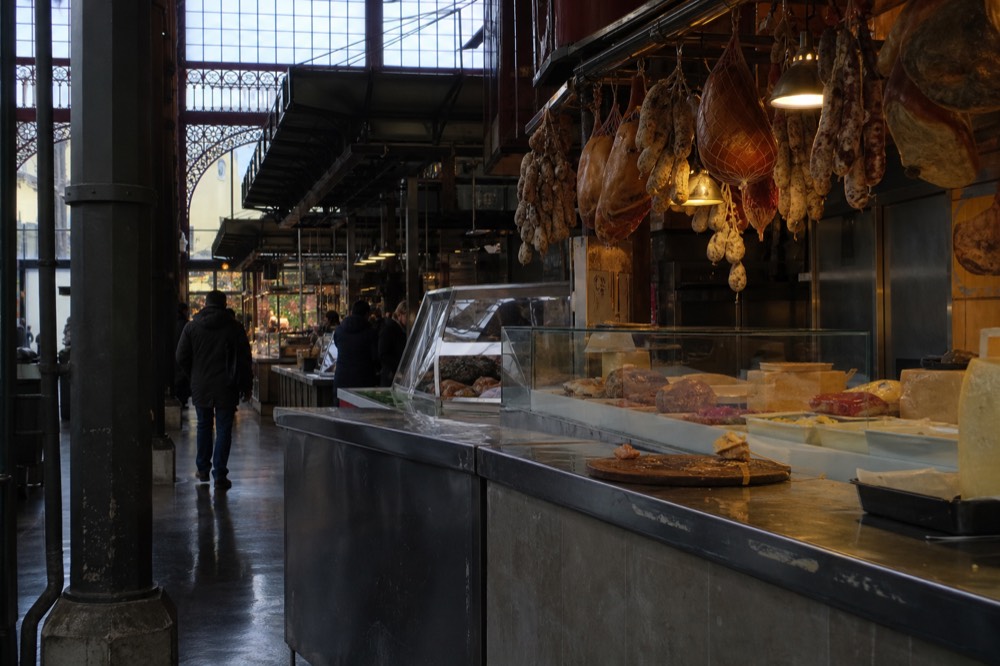
Market tours are the all-weather option. The Central Market food and wine tour's nine food tastings and six drinks happen inside the food hall, and the Sant'Ambrogio chef-led tour now runs under the new canopies. Neither cares whether it is 4 degrees or 38 outside.
Evening tours sit in between. The sunset food and wine tour from Piazza Santo Spirito runs 3.5 hours with 9 to 10 Tuscan bites, four wines, a prosecco toast and a cocktail lesson, moving between venues in the Oltrarno. In June that means a late golden-hour start; in December it means darkness by the second stop, which is atmospheric in its own way but is a different evening out.
One regulatory note that affects outdoor stops specifically: Florence's new dehors regulation, approved 19 January 2026 and in force from 11 February 2026, banned outdoor seating installations on 60 streets and restricted the permitted types on 73 others in the UNESCO historic centre, freezing total authorised outdoor surface at its 15 November 2025 level. Outdoor tables still exist, but the footprint is capped, and a tour stop that used to spill onto a piazza may now be tighter.
| Tour format | Typical outdoor share | Best seasonal fit | Watch out for |
|---|---|---|---|
| Street food walk (2-2.5 hours) | High, walking between stops | Spring and autumn | Midday heat in July-August; short daylight in December |
| Market tour (3 hours) | Low, under cover | Year round, ideal in summer and winter | Morning-only trading hours at Sant'Ambrogio |
| Classic food walk (2.5-4 hours) | Mixed, with seated stops | Spring and autumn | Longest formats test stamina in heat |
| Evening and sunset tour (3.5 hours) | Mixed, venue to venue | Late spring to early autumn | Sunset start times shift sharply with the season |
| Market tour plus cooking class (4-5 hours) | Low, market shop then kitchen | Year round | Longest commitment; book around a fixed lunch |
If you already know your dates fall in the hot weeks, the sunset format is the one to check first: it is built for the part of the day when Florence is walkable again. Check availability for your evenings, and note it carries free cancellation up to 24 hours before the start time.
Which Tours Run Year Round, And Which Need Seasonal Planning
Every tour on the roster runs in all four seasons, because Florence's food-tour economy does not close, but three things still move with the calendar: what the tasting menu features, which optional stops are pleasant, and how far ahead you need to book, with the summer and early-autumn slots carrying the heaviest demand.
The year-round backbone is the street food band. The cheapest walk on the roster, the city highlights and street food tour at $45 from, runs 2.5 hours and holds a 4.9 rating across 103 reviews. The street food walking tour with wine at $63 from, 4.9 across 1,035 reviews, covers the widest tasting list of the cheap walks, pasta through gelato. The classic and evening formats sit above them in price and duration. None of these is seasonal in the way a truffle hunt is; the products change, the structure does not.
What does change is the produce inside the tastings. A spring tour will hit pecorino at its best and the first vegetables; an autumn tour lands in truffle and new-oil season; a winter tour leans on cured meats, cantucci with Vin Santo and ribollita-weather dishes. The guides adapt, and that is part of the argument for timing your visit around what you want to eat rather than around a "best month" that no source on file can actually support.
Booking lead time is the practical seasonal variable. The sunset food and wine tour carries the largest verified review base on the roster, 5.0 across 5,911 reviews, and its listing shows real demand signals, including "Booked 10+ times in 12 hours" and "Top 5% booked in Florence in the last 48 hours". Several other tours carry "Likely to sell out" badges. Those are listing-sourced urgency signals, not marketing invention, and they cluster in the high season.
| Tour | From price | Duration | Rating and reviews | Seasonal note |
|---|---|---|---|---|
| City Highlights and Street Food Tour | $45.00 | 2.5 hours | 4.9, 103 reviews | Cheapest roster option, runs year round |
| Street Food Walking Tour with Wine | $63.00 | 2.5 hours | 4.9, 1,035 reviews | Widest cheap-walk tasting list; sells out |
| Ultimate Food Tour: Full Tuscan Meal | $69.39 | 3.5 hours | 4.8, 493 reviews | Full itinerant meal, best food-per-dollar |
| Central Market Food & Wine Tour | $111.21 | 3 hours | 5.0, 265 reviews | Indoors; immune to weather |
| Sunset Food & Wine Tour | $128.96 | 3.5 hours | 5.0, 5,911 reviews | Largest review base; peak demand in summer |
The street food walking tour with wine is the one we would check first for any month, because it works as a first-evening orientation in every season and its tasting list stretches from pasta to gelato. Check the live price and the available dates on the operator's listing before you commit to a slot.
Seasonal Produce Windows That Are Actually Sourced
The two produce calendars with legal force in Tuscany are the truffle seasons set by Legge Regionale Toscana 36/2023 and the olive harvest deadline of 15 December for Toscano PGI oil, and together they make late October through January the richest window for tasting tours built around specific ingredients.
The truffle calendar is regional law, not folklore. White truffle, Tuber magnatum, runs 1 October to 15 January. The prized black truffle, Tuber melanosporum, runs 15 November to 15 March. Summer truffle, or scorzone, runs 1 June to 31 August and again 1 October to 30 November, and bianchetto runs 15 January to 15 April. Hunting is closed region-wide in May and September. If a truffle-focused day trip is on your list, those windows are the honest constraint, and our guide to truffle hunting day trips from Florence maps them onto the actual fairs.
The market layer sits on top. Il Tirreno reported that white truffles from the San Miniato area reached 3,000 euros per kilo early in the 2025 season, and the 55th Mostra Mercato Nazionale del Tartufo Bianco di San Miniato is scheduled for the last three weekends of November 2026, per the published dates: 14-15, 21-22 and 28-29 November. Those weekends are the single most truffle-dense dates on the Tuscan calendar.
Olive oil works on its own clock. The current Toscano PGI specification, published in the Official Journal of the European Union in October 2025, sets the latest harvesting date at 15 December, and new oil reaches tasting rooms in the weeks after pressing. Tuscany's 2025 production was estimated at roughly 140,000 quintals, about 30 percent down on the previous campaign, according to T24 Economia, so new-oil tastings in late 2025 and 2026 are tasting a scarcer, more prized vintage. The specification also caps acidity at 0.45 g per 100 g, one of the figures a good frantoio visit will explain.
| Product | Season window | Source of the window |
|---|---|---|
| White truffle | 1 October to 15 January | L.R. Toscana 36/2023, art. 8 |
| Prized black truffle | 15 November to 15 March | L.R. Toscana 36/2023, art. 8 |
| Summer truffle (scorzone) | 1 June to 31 August, and 1 October to 30 November | L.R. Toscana 36/2023, art. 8 |
| Bianchetto truffle | 15 January to 15 April | L.R. Toscana 36/2023, art. 8 |
| New olive oil (Toscano PGI) | Harvest ends 15 December; new oil follows | Official Journal C/2025/5538 |
| San Miniato white truffle market | Last three weekends of November 2026 | Published event dates |
Bread and pastry have their own quiet calendar too. Pane Toscano DOP, the unsalted bread on nearly every tasting board, had a standard amendment to its specification approved on 28 July 2025, published in the Official Journal that August, confirming the sourdough starter and the defined Tuscan flour zone. And Pasticceria Giorgio won the 2026 Miglior Schiacciata alla Fiorentina contest on 17 February 2026, Tasting Life reported, which tells you the schiacciata culture that street food tours stop for is alive and competitive.
Spring In Florence: What The Growth Data Says
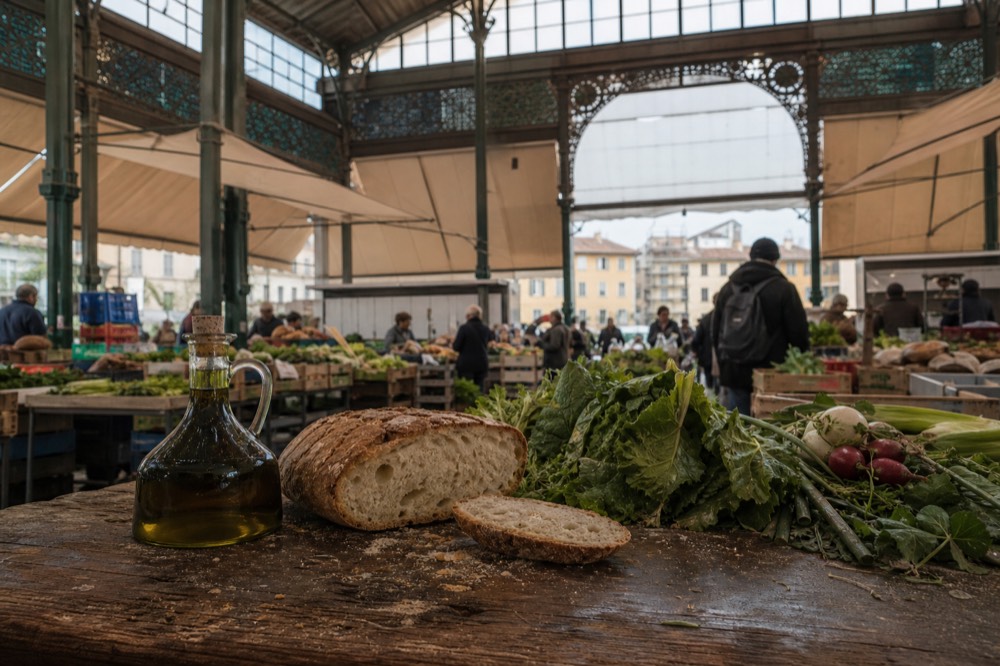
Spring is where the measurable growth is: according to Centro Studi Turistici di Firenze, April added 132,000 overnight stays and May added 228,000 year on year in 2025, the United States remains the largest foreign market at 29 percent of foreign stays, and the produce calendar turns over from winter curing to the first fresh vegetables and pecorino.
That growth data comes with a caveat we will keep repeating: it is a growth signal, not a volume ranking, and it does not tell you April is "better" than September. What it does tell you is that spring demand is rising fast, which in practice means the tours carrying sell-out badges fill earlier in April and May than they used to. If your dates are locked to a spring holiday week, book the food tour before the museum tickets, not after.
The eating case for spring is straightforward. The winter truffle windows close in mid April with bianchetto, the scorzone season opens 1 June, and between them sits the vegetable turn: the first peas, artichokes and beans that Florentine cooking is built around. Pecorino Toscano DOP, protected since 1996, is at its freshest in the spring months. Market mornings are cool enough to be pleasant, and the evening tours start in genuine daylight.
One spring-specific event worth planning around: CiokoFlo, the Chocolate Florence Experience festival, took place 12 to 15 March 2026 in Piazza Santa Croce per the official FeelFlorence listing, with artisan makers across four days. A mid-March visit gets you a chocolate layer that most months do not offer.
Summer In Florence: Heat, Evening Formats And Indoor Escapes
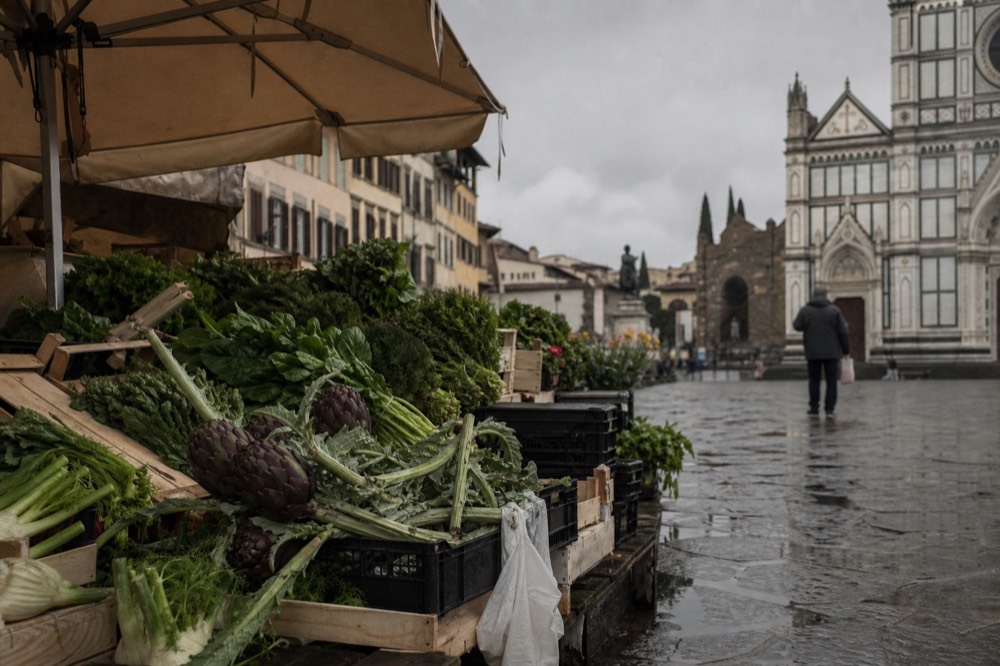
Summer is the season with the strongest argument for the sunset and market formats: Corriere Fiorentino reported summer 2026 averaged a 35.2-degree maximum with 26 days above 38, the outdoor seating footprint is now frozen by the 2026 dehors rules, and the tours that thrive are the ones built around the evening cool and the air-conditioned food hall.
The heat figure deserves its attribution: it comes from Corriere Fiorentino's reporting, not from a meteorological office, so treat it as a reported measure of one summer rather than a climate average. But anyone who has stood in Piazza della Signoria at 2 pm in July does not need a statistic. The practical translation is simple. In summer, book the morning market tours and the evening walks, and leave the midday hours for the Duomo's cool interior or the food hall.
The market tour inside Mercato Centrale is the summer-proof option: nine food tastings and six drinks, all under the food hall's roof, with a 5.0 rating across 265 reviews. The sunset tour from Piazza Santo Spirito is the summer evening option, and its listing shows the demand is real, with "Booked 10+ times in 12 hours" on the badge. Summer is also when the dehors freeze matters most, because the outdoor tables that once absorbed evening crowds are capped at their 2025 footprint, so seated stops fill faster.
Summer also brings the outdoor venue season. Firenzetoday reported that summer 2026 venues along the Arno and in the outer districts ran from May through September with street food and aperitivo until late, some until 02:00. Those are outside the historic-centre tour routes, but they extend any evening a tour ends early.
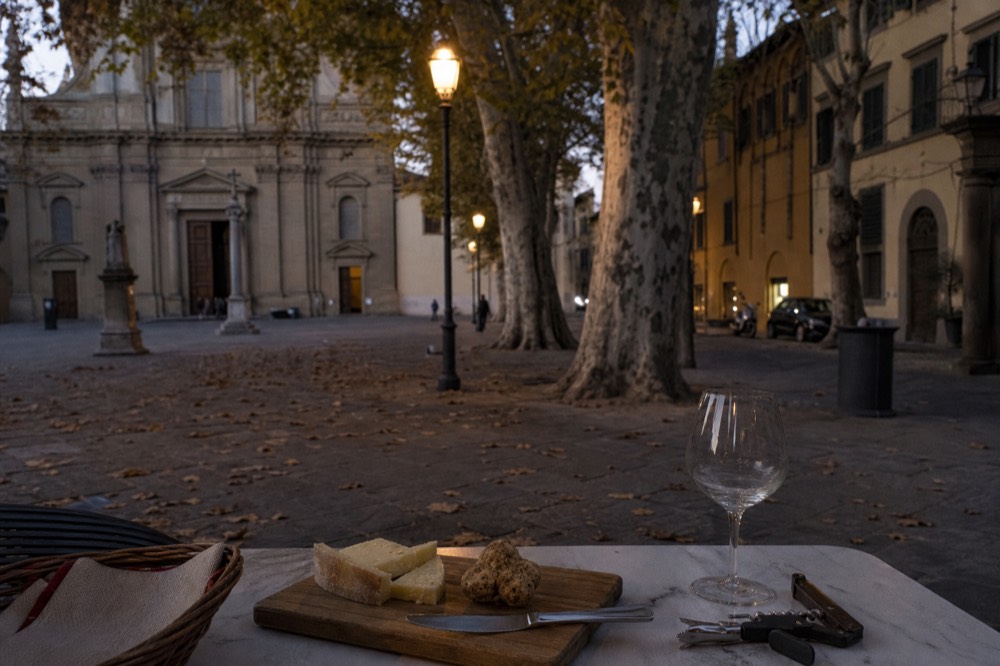
Autumn In Florence: Truffles, New Oil And The Richest Calendar
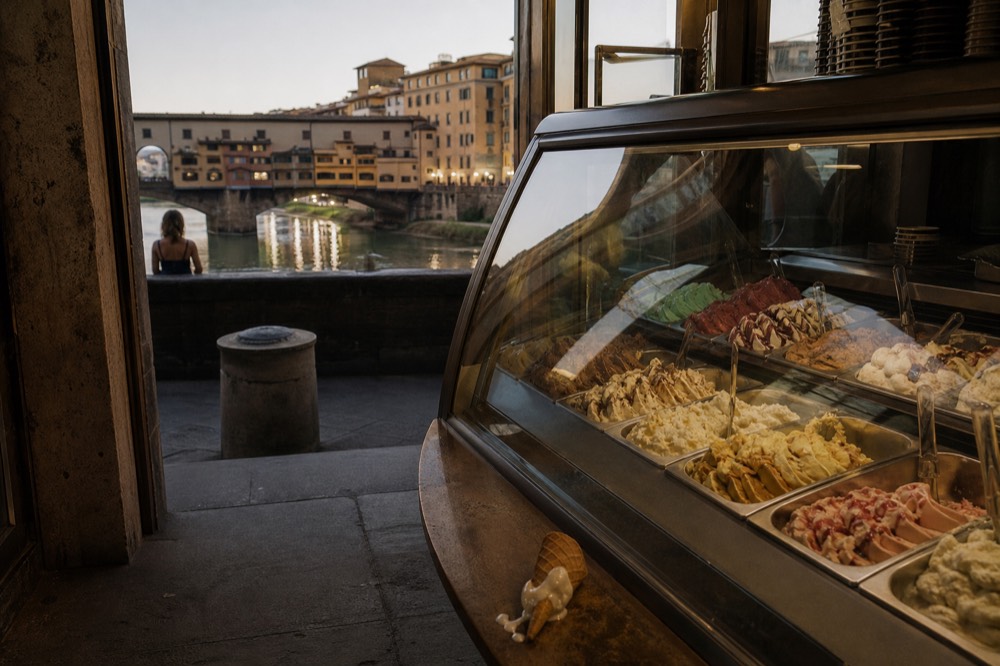
Autumn is the densest produce season on the Tuscan calendar: white truffle opens 1 October, prized black truffle follows 15 November, the San Miniato truffle market runs the last three November weekends, the olive harvest closes 15 December, and the November market fairs at San Giovanni d'Asso and Borgo San Lorenzo stack on top.
If you are timing a trip around ingredients rather than weather, this is the window. The white truffle season overlaps the new-oil season, so a late-October through mid-December visit can taste both in the same week: shaved truffle on one stop, the year's new Toscano PGI oil on bread at the next. The 2025 harvest was down about 30 percent regionally, T24 Economia reported, which makes tastings of the 2026 vintage more interesting, not less.
The fixed autumn dates are worth writing down. The San Miniato market: 14-15, 21-22 and 28-29 November 2026. The Cascine market's extended Sunday hours begin in December. La Fierucola's autumn edition ran 18 October 2025, with the new-oil edition on 15 November, per its published calendar, and the pattern repeats monthly. And the Festa della Rificolona, the lantern festival with associated food stalls, falls in early September each year, with the Fierucola del Pane alongside it in Piazza SS. Annunziata.
Daylight is the trade-off. Sunset in November is early enough that a tour billed as a sunset walk starts in late afternoon, and the 3.5-hour formats finish in full dark. The Oltrarno's streets handle that beautifully, but it is a different experience from a June evening, and you should book the format that matches the evening you actually want.
Winter In Florence: Short Days, Thin Crowds, Warm Kitchens
Winter keeps every covered-market and food-hall option running at full schedule, Mercato Centrale's first floor stays open until 23:00 daily through the darkest weeks, and the bianchetto truffle window from 15 January to 15 April gives the cold months a produce season of their own.
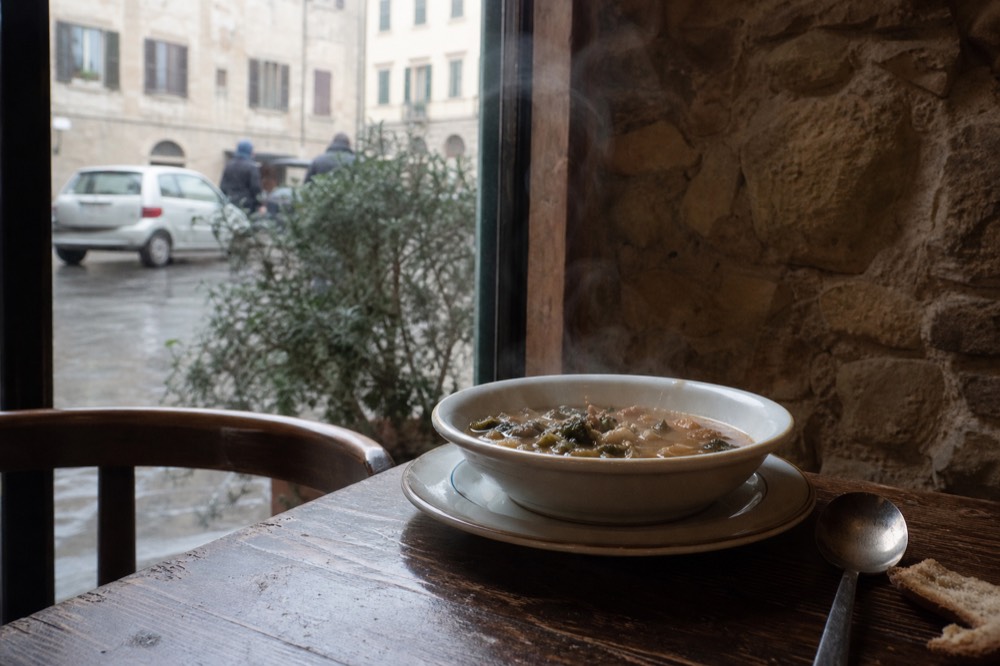
The winter case is the quiet one. Sant'Ambrogio and the Mercato Centrale ground floor keep their morning hours, the food hall keeps its 23:00 close, and the street food walks keep running, with lampredotto and ribollita doing exactly what they were invented to do in cold weather. The indoor share of every tour is at its natural maximum, which makes winter the season where format matters least and produce matters most.
Two winter specifics. First, the San Lorenzo outdoor stalls close every Monday in January, February and November under the municipal ordinance, so a Monday winter route shifts toward the covered markets. Second, February brings Taste, the Pitti Immagine food salon: the 2026 edition ran 7 to 9 February at Fortezza da Basso with 810 exhibiting companies, GustoH24 reported, with public access on the weekend afternoons. It is a trade fair with limited public hours, but it concentrates an extraordinary amount of Tuscan food talent in one building.
The honest winter caveat is daylight and atmosphere. Some outdoor-leaning stops lose their charm at 5 pm in the rain, and the evening tours that feel expansive in June feel compact in January. Counter that with the formats built for indoors: the market tours, the cooking-class combinations, and the full-meal walks with long seated stops.
For a fuller comparison of how the formats differ in structure, our guide to Florence food tour itineraries breaks down the routes stop by stop, and our guide to how long Florence food tours last covers the duration question in detail. If cost is the deciding variable, how much Florence food tours cost prices out every band on the roster.
Whatever month you settle on, the three tours below cover the three seasonal strategies: a covered market tour for the hot and cold extremes, an evening walk for the long-day months, and a street food walk that works in all of them.
The recurring timing questions all have verifiable answers: tours run year round, truffle and olive oil windows are fixed by regional law and the PGI specification, summer heat is a real reported figure, and market schedules shift with published municipal calendars rather than with the weather.
Common Questions About The Best Season For Eating Your Way Through Florence
Is there a best month to visit Florence for food?
No verified source ranks Florence's months by desirability, and we will not invent a ranking. What is verifiable: April and May grew most in overnight stays in 2025 according to Centro Studi Turistici, July was the only month that fell, the truffle windows run October to March depending on species, and the new olive oil season follows the 15 December harvest deadline. Match the month to what you want to eat.
Do Florence food tours run in winter?
Yes. Every tour format on the roster runs year round. Mercato Centrale's food hall opens daily until 23:00, Sant'Ambrogio trades six mornings a week, and street food walks keep their schedules. Expect early sunsets on evening tours and the Monday closures of the San Lorenzo outdoor stalls in January, February and November.
When is truffle season in Tuscany?
Under Legge Regionale Toscana 36/2023, white truffle runs 1 October to 15 January, prized black truffle 15 November to 15 March, summer truffle 1 June to 31 August and again 1 October to 30 November, and bianchetto 15 January to 15 April. Hunting is closed region-wide in May and September.
Are Florence food tours too hot in summer?
Midafternoon walks can be: Corriere Fiorentino reported summer 2026 averaged a 35.2-degree maximum with 26 days above 38. The workaround is structural, not seasonal. Book morning market tours, which are under cover, and evening or sunset formats, which start as the heat breaks.
When does new olive oil arrive in Florence?
The Toscano PGI harvest deadline is 15 December, so new oil reaches tastings from late autumn onward. Tuscany's 2025 production was down roughly 30 percent on the previous campaign, T24 Economia reported, so recent vintages are scarcer and tastings focus on quality rather than volume.
Which markets are open on Sunday in Florence?
Mercato Centrale's first-floor food hall, daily 09:00 to 23:00. Sant'Ambrogio closes on Sunday, and the ground-floor produce market at San Lorenzo is not listed as open Sunday either. The Cascine market adds extended Sunday hours in December and before Easter, and La Fierucola fills Piazza Santo Spirito on the third Sunday of most months.