What Can You Not Bring Back From Italy To The USA?
The honest answer on US customs rules for Italian food souvenirs: what gets seized, what is legal, and what to buy at Florence's markets instead.
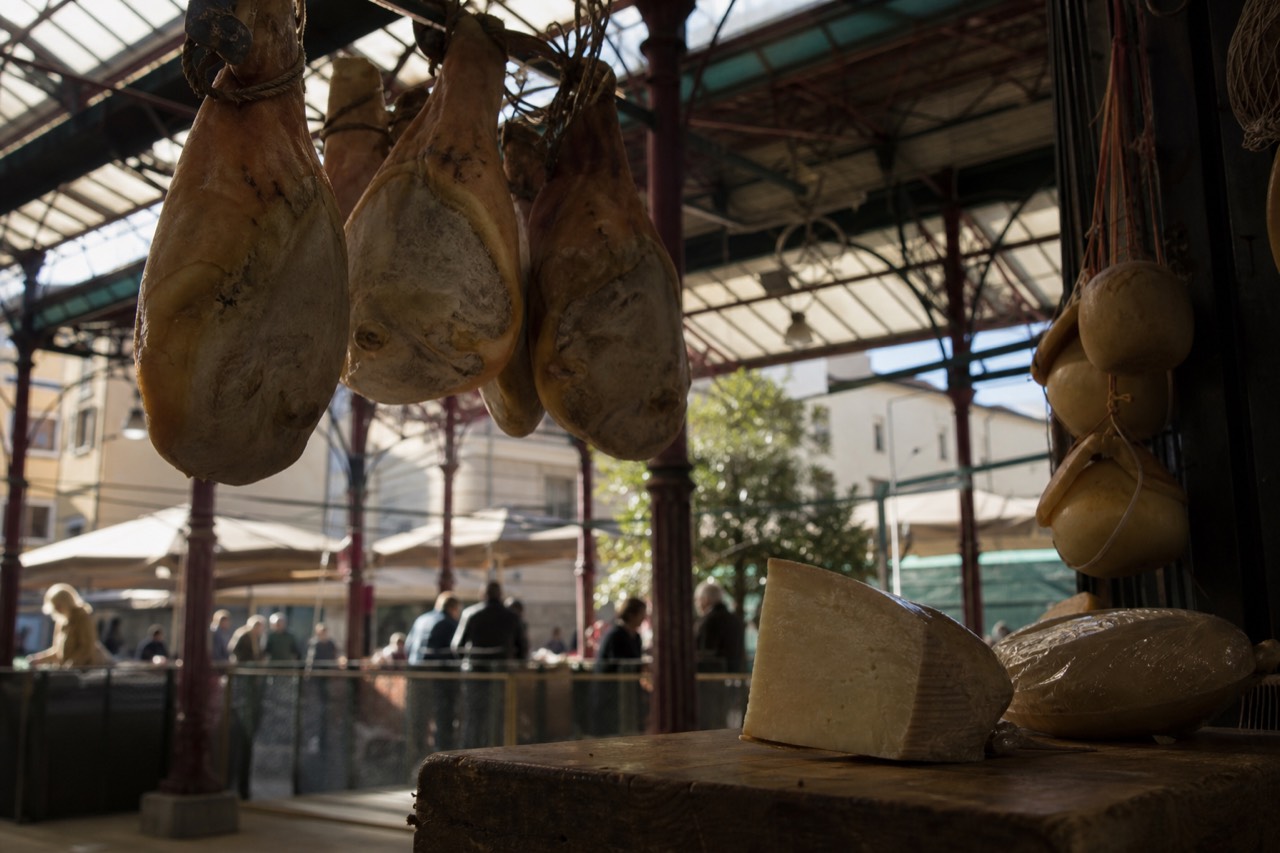
The USDA put it plainly in a February 2026 blog post: travelers cannot bring pork products, cooked or uncooked, into the US mainland or territories, because they can carry African swine fever. That single rule takes prosciutto, salami, finocchiona and most of the cured-meat counter at a Florentine market off your souvenir list. It is not a gray area, and it is not something a vacuum pack fixes.
This article walks through the rules as the issuing bodies state them, nothing softened and nothing generalised beyond the source. It also covers what you can legally carry home, what the DOP and IGP seals on Italian products actually certify, and what is worth buying at Florence's markets instead of the things customs will confiscate. The rules come from USDA and CBP publications and the European Commission's geographical indications register, and they apply to every protected Italian product you might shop for in Florence.
What Can You Not Bring Back From Italy To The USA?
Cured pork leads the prohibited list: prosciutto, salami and similar products from Italy may not be brought into the United States by travelers, because African swine fever can survive in processed pork. The USDA restated this on 23 February 2026, and CBP reinforced it on 11 June 2026, reminding travelers that all meats, fruits, vegetables and animal products must be declared, with fines starting at $300 for a first failure to declare.
The two agencies say slightly different things, so it is worth separating them. USDA explains why the rule exists: African swine fever can survive in cured and processed pork, so a ham that is perfectly safe to eat can still carry a livestock disease into a country with a domestic pig industry to protect. Cured hams and salami from Italy are limited to commercial shipments with additional certification; the individual traveler lane is closed. The USDA blog post notes that agents may seize and dispose of any meat that looks like pork, and that travelers must declare all meats.
CBP's side of the rule is the enforcement one. The CBP guidance on bringing agricultural products into the United States requires all travelers to declare meats, fruits, vegetables and animal products, and states that failure to declare can result in fines starting at $300 for first offenses. Italy falls under restrictions for certain pork and ruminant products. Declaring costs you nothing if the item turns out to be prohibited; not declaring can cost you hundreds of dollars and the item anyway.
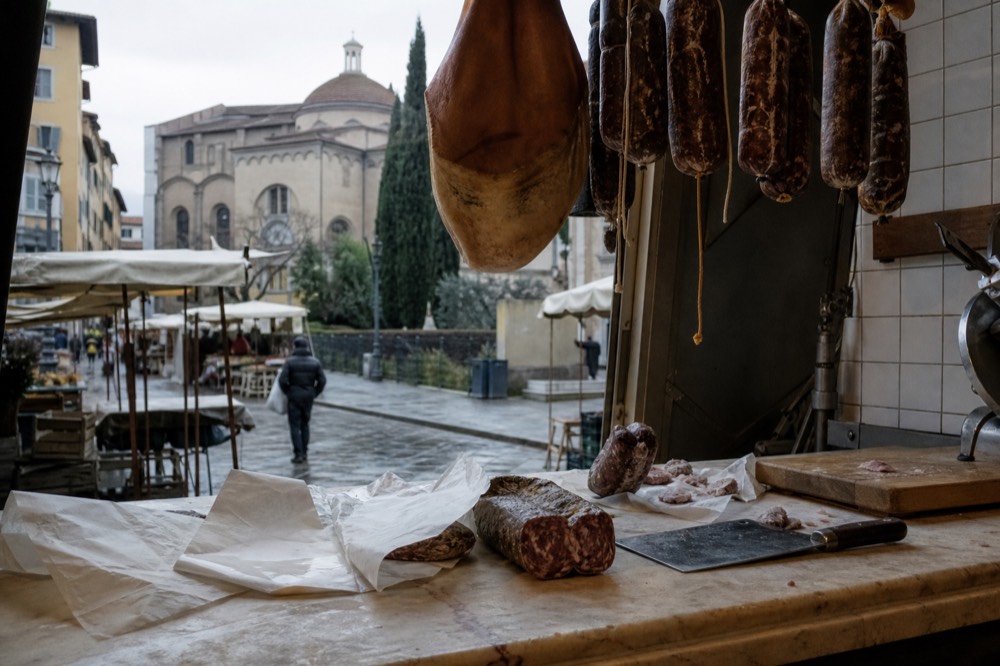
A practical reading for a Florence food shopper follows directly. The prosciutto and finocchiona you tasted on a tour, the vacuum-sealed salame at the airport shop, the sliced porchetta in a market bag: all of it goes in the bin at the border if it is found, and if it is not declared the fine can be larger than the value of everything in your suitcase. The rule does not depend on packaging. Sealed, sliced, refrigerated or cured makes no difference to USDA's position on traveler-imported pork.
It is worth being clear about what the rule is protecting, because it explains why there is no exception for the good stuff. African swine fever is a viral disease of pigs that is harmless to humans but devastating to herds, and the pathogen survives curing, drying and long storage. A 24-month-aged ham is a hostile environment for bacteria and a comfortable one for this virus. That is the whole logic of the ban: the product being delicious, traditional and expensive does not reduce the biological risk, so the rule does not bend for it.
If you are still shopping and want to understand what those products actually are before deciding what to substitute, a market walk with a guide is the efficient way to do it. The Sant'Ambrogio Market Food Tour with Tastings led by a local Chef runs 3 hours, costs from $79.27, and takes a small group capped at 12 through a market shop plus chef-led cooking and tasting; it is rated 5.0 across 7 reviews so far, a small review base worth knowing about. If that format appeals, Check availability on the live listing, where the current price and dates are shown.
Which Italian Food Products Are Banned, Restricted Or Allowed?
Banned outright for travelers: cured pork products including prosciutto and salami. Restricted and often prohibited: most meats from cloven-hoofed animals and most animal products, plus many fresh fruits and vegetables. Generally allowed: commercially canned, shelf-stable products with no meat, hard cheeses, bread, sweets, olive oil and wine within your duty-free allowance. Every category below names the source of the rule.
The table below is the planning version of the two agency documents, sorted by what a Florence shopper is actually holding. Where a rule comes from USDA it says so; where it comes from CBP it says so. Nothing in the table is this site's opinion.
| Category | Typical Florence purchase | US rule | Source |
|---|---|---|---|
| Cured pork | Prosciutto Toscano DOP, salami, finocchiona, soppressata | Prohibited for travelers; commercial shipments only with certification | USDA, February 2026 |
| Cooked pork | Porchetta, cooked sausage, restaurant leftovers with pork | Prohibited, cooked or uncooked | USDA, February 2026 |
| Other meats | Canned beef, dried meat mixes, most fresh or dried meats from cloven-hoofed animals | Restricted; many prohibited depending on country of origin | CBP, June 2026 |
| Cheeses | Pecorino Toscano DOP, Parmigiano Reggiano | Hard, shelf-stable cheeses generally allowed; soft or fresh cheeses in liquid restricted | CBP, June 2026 |
| Fresh produce | Fresh truffles, fruit from a market stall | Must be declared; many items prohibited | CBP, June 2026 |
| Olive oil | Toscano PGI extra virgin, Chianti Classico PDO oil | Allowed | CBP, June 2026 |
| Bakery and sweets | Cantucci, schiacciata, chocolate, panettone | Allowed if they contain no meat products | CBP, June 2026 |
| Wine and spirits | Chianti Classico, Vin Santo | Allowed within the personal duty-free alcohol allowance | CBP, June 2026 |
Two rows deserve a closer look. The cheese row is the one most people get wrong in both directions: a hard wheel or wedge of aged cheese is routinely fine, while soft cheeses and cheeses packed in liquid face restrictions, and any cheese containing meat, such as some cured pork-stuffed varieties, falls under the meat rules instead. The truffle row matters to Florence shoppers in particular, because fresh white truffle is a genuinely tempting purchase in season, and fresh produce is exactly the category CBP asks you to declare and often prohibits. Dried or preserved truffle products in sealed commercial packaging are a different item; ask the vendor how the product is preserved and keep the label.
The declaration habit is the part of this that costs people money. CBP's rule is that you declare the category, and the officer decides. A sealed pack of cantucci you forgot to mention is unlikely to matter; a cured sausage you decided not to mention because you knew the answer is exactly what the $300-and-up fines are for. Declare, let the officer rule, and you have done everything the rule asks of you.
A word on the middle rows, because "restricted" reads like a shrug and it is not one. The meat row beyond pork depends on the product and the country, and Italy sits under restrictions for certain pork and ruminant products, which is why the honest advice is to treat any meat product as presumptively problematic and ask before buying. The produce row is similar: an apple bought at Sant'Ambrogio for the train is fine to eat in Italy, and not fine to carry through a US port of entry undeclared. The pattern across both agency documents is consistent. Animal products and living plant material get scrutiny; processed, shelf-stable, plant-based goods do not.
What Do DOP And IGP Labels Actually Tell You Before You Buy?
A DOP or IGP seal tells you where a product was made and to what registered specification, not whether US customs will let it in. Prosciutto Toscano DOP, registered in 1996, is a protected designation, and it is still prohibited pork for travelers. Pane Toscano DOP, registered in 2016, is protected bread, and bread is generally allowed. The seal and the customs rule are two separate questions.
The European Commission maintains the register of these geographical indications, and the entries relevant to a Florence shopping bag are verifiable facts. Prosciutto Toscano DOP was registered by Commission Regulation (EC) No 1107/96 in 1996, with the Consorzio del Prosciutto Toscano as its producer group. Pecorino Toscano DOP followed the same year under Regulation (EC) No 1263/96. Lardo di Colonnata IGP was registered in 2004, Cinta Senese DOP in 2012, Finocchiona IGP in 2015, and both Cantuccini Toscani IGP and Pane Toscano DOP in 2016. The Finocchiona IGP regulation in the Official Journal is one example of what a registration actually looks like: a legal document defining the product, its area and its method.
Why does this matter to a customs question? Because the seal is the reason people buy these products as gifts, and it is worth being precise about what you are holding. Finocchiona IGP is fennel-seeded salami, protected since 2015, and it is still pork. Pane Toscano DOP is the region's saltless bread, protected since 2016, and a loaf of it crosses without issue. The same shelf can hold one item customs will seize and one it will wave through, and the label that distinguishes them is not the DOP or IGP seal but the ingredient list.
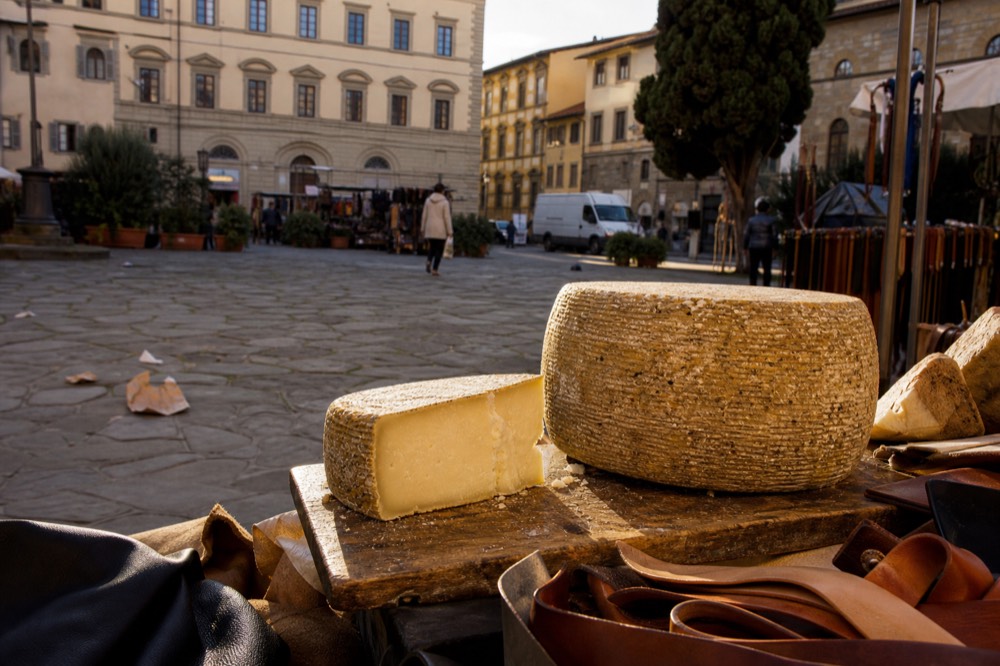
One more designation worth knowing while you shop: Toscano PGI extra virgin olive oil, whose current specification sets 15 December as the latest harvest date for the designation. Oil is one of the best souvenirs in Florence precisely because it is allowed, it keeps, and the PGI tells you the olives were grown and pressed inside Tuscany. A bottle from a market stall or a tasting room travels well in a checked bag wrapped in clothing, and there is no meat rule anywhere near it.
There is also a label change arriving on European shelves that a souvenir shopper can see with their own eyes. From 14 May 2026, under Regulation (EU) 2024/1143, the name of the actual producer must appear on the label of DOP and IGP products in the same visual field as the designation, ending anonymous private-label presentation for items such as Parmigiano Reggiano and Prosciutto di Parma. For a buyer in Florence deciding between two similar-looking packages, that is genuinely useful: the producer's name is now on the front, next to the seal, on the certified product.
What Should You Buy At Florence's Markets Instead?
The safe souvenir list is long: hard aged cheeses, olive oil, cantucci and other dry biscuits, chocolate, sealed preserves, honey, wine and Vin Santo. Florence's two great covered markets, Mercato Centrale and Sant'Ambrogio, sell all of it, and a guided tasting walk is the fastest way to learn which stalls do each thing best before you commit suitcase space.
Start with the cheese. Pecorino Toscano DOP, protected since 1996, is a hard sheep's milk cheese that travels well and is generally allowed. Tell the vendor you are flying to the United States and ask for a wedge rather than a whole piece; a hard, dry, well-wrapped wedge is the shape of cheese that causes no conversation at the border. Declare it anyway. The declaration is free.
Then the pantry shelf. Olive oil, as above, is allowed and is arguably the best value in the whole market. Cantuccini Toscani IGP, protected since 2016, are the dry almond biscuits made for dipping in Vin Santo, and they survive a suitcase better than almost anything else in Tuscany. Sealed jars of preserves, honey and vegetable-based sauces are all in the allowed column, provided nothing in the jar is meat. Chocolate needs no explanation and no declaration anxiety.
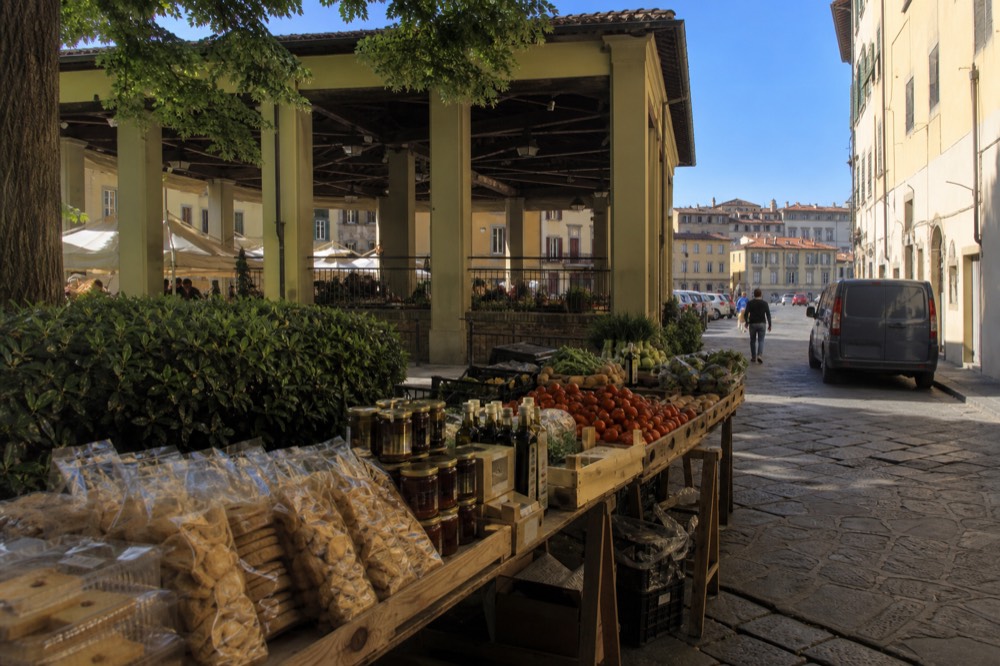
Wine deserves its own sentence: Chianti Classico and Vin Santo are allowed, subject to the personal alcohol allowance for your age and entry circumstances, and the Consorzio Vino Chianti Classico's own history pages are the primary record of what the denomination guarantees, from the consortium's founding on 14 May 1924 to the rule that every bottle must carry the Black Rooster on a label. A bottle you tasted on a tour and then bought at a shop is the souvenir most likely to be opened and enjoyed rather than confiscated.
This is where a guided market walk earns its price. The Central Market Food & Wine Tour runs 3 hours inside Mercato Centrale, costs from $111.21, and includes 9 food tastings and 6 drinks; it is rated 5.0 across 265 reviews. The Sant'Ambrogio tour mentioned earlier is the chef-led alternative on the east side of the centre. Either way, a few hours with someone who knows the stalls converts a confusing hall into a shortlist, and the free cancellation up to 24 hours before the start time on both listings means the decision is low-risk. See the available dates on the live listing before you plan your shopping day around one.
A note on timing your shopping around the markets' own schedules, because it changes what you can buy. Mercato di Sant'Ambrogio runs Monday to Saturday 07:00 to 14:00 and closes on Sunday, so a late-afternoon visit finds the shutters down. The ground floor of Mercato Centrale runs Monday to Friday 07:00 to 15:00 and Saturday 07:00 to 17:00, while its first-floor food hall stays open every day until 23:00, which makes it the evening option for a last-night souvenir run. Buy cheese and oil in the morning markets, where the producers' stalls are, and leave the food hall for dinner and a final lap past the botteghe.
How Do You Pack And Declare Food Souvenirs Honestly?
Pack food in your checked bag, keep every commercial label on, put the items in one accessible place, and declare the whole category on your customs form or to the CBP officer. If an item is prohibited the officer takes it and you walk on; if you hid it, the fine starts at $300. That is the entire strategy, and it works.
The mechanics are simpler than the rules. Checked bags avoid the question of liquids in carry-on for oil and wine. Original labels let an officer identify a product in seconds, which is the difference between a wave-through and a long conversation. Grouping everything in one bag or one section means your declaration matches what an inspection finds, and nothing looks concealed.
The declaration itself is a checkbox and a conversation. Answer yes to food, show the officer the bag, and say what is in it: cheese, oil, biscuits, wine. The officer applies the rules from the table above. If you are carrying something you now suspect is prohibited, declaring it is still the correct move, because the penalty attaches to concealment, not to possession followed by honest declaration. CBP's own guidance frames it exactly that way.
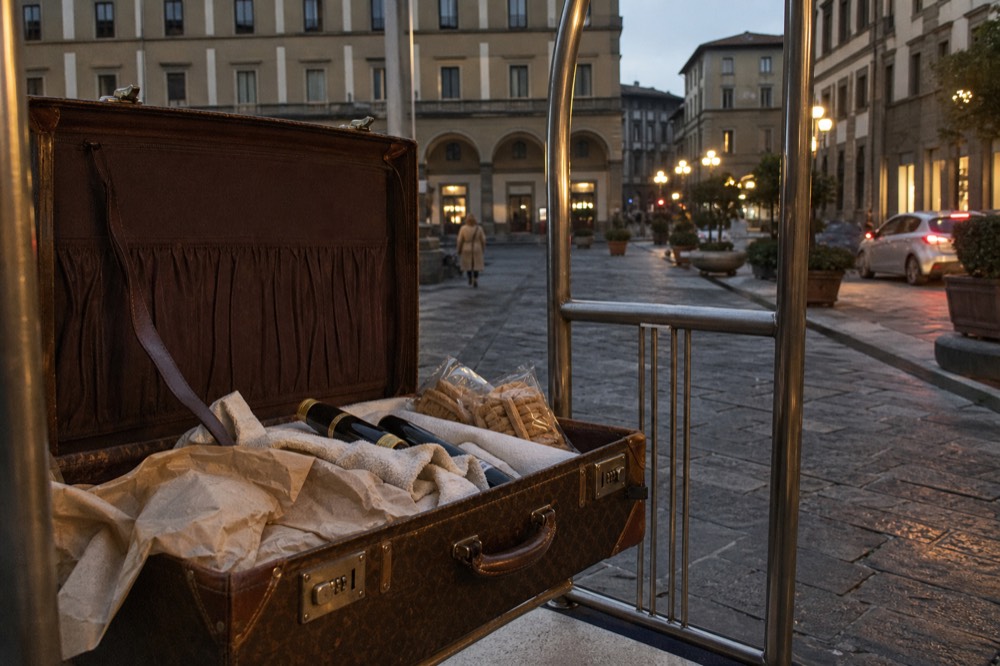
One Florence-specific note on what not to buy even for the flight home: the vacuum-sealed prosciutto and salami at airport shops are sold to travelers, but they are sold to travelers flying within the EU or to countries without the pork restriction. The packaging is not a customs document. If the destination is the United States, the airport ham is the same prohibited ham as the market ham, at a higher price.
For a fuller comparison of the city's tasting walks before you commit a morning to one, the Florence market food tours guide breaks down the formats, and what to expect on a Florence food tour covers the practicalities of the day itself. The site behind both, Florence Food Tours, keeps the whole verified roster in one place.
The six questions below cover the items travelers ask about most: cured meats, cheeses, oil and wine, truffles, and what happens if you skip the declaration line. Each answer states the rule as the issuing agency published it, names that agency, and avoids any advice the sources do not support.
Common Questions About US Customs And Italian Food
What can you not bring back from Italy to the USA?
Cured pork products including prosciutto and salami are prohibited for travelers, per USDA rules on African swine fever. Most meats from cloven-hoofed animals are restricted, and fresh fruits and vegetables must be declared and are often prohibited. Hard cheeses, olive oil, dry biscuits, chocolate and wine are generally allowed.
Can I bring prosciutto back from Italy if it is vacuum sealed?
No. USDA's position is that cured hams and salami from Italy may not be brought in by travelers regardless of packaging, because African swine fever can survive in processed pork. Vacuum sealing is a preservation method, not a certification.
Can I bring Parmigiano Reggiano or Pecorino into the USA?
Hard, shelf-stable cheeses are generally allowed. Soft cheeses and cheeses packed in liquid face restrictions, and any cheese containing meat falls under the meat rules. Declare all food items to CBP either way.
Can I bring olive oil and wine back from Italy?
Yes. Olive oil is allowed without restriction beyond normal liquids rules for carry-on, which is why checked bags are simpler. Wine and spirits are allowed within your personal duty-free alcohol allowance.
What happens if I do not declare food at US customs?
Per CBP guidance, failure to declare agricultural products can result in fines starting at $300 for a first offense. Declaring a prohibited item normally results in the item being seized and disposed of, with no fine.
Are fresh truffles allowed into the USA?
Fresh produce, which includes fresh truffles, must be declared and many items in that category are prohibited. Dried or commercially preserved truffle products in sealed packaging are treated differently; check the label and declare the item.