What Is Considered Impolite In Italy?
An evidence-based guide to Italian etiquette for Florence visitors: what is actually rude, what is folklore, and which travel myths have no law behind them.
What Is Considered Impolite In Italy?
Impolite behavior in Italy includes eating or drinking where a local ordinance forbids it, sitting at a table without paying the listed coperto, treating bar staff as a servant class, and expecting a host to adapt to your schedule rather than the reverse. Most other supposed rules, from cappuccino after lunch to carrying your receipt out of the bar, are folklore with no law behind them.
Florence is a city where roughly 13.3 million tourist presences were recorded in 2025, according to the Camera di Commercio di Firenze, in a historic centre whose residential population keeps shrinking. That imbalance is the real backdrop to etiquette here. Locals are not offended by your accent or your map. They are worn down by visitors who eat on church steps, block market lanes at rush hour, and treat the bar counter as an obstacle between them and a table. The rules that actually matter are the ones that keep daily life functioning, and several of them now carry fines.
Every etiquette point below rests on something concrete: a law, an ordinance, an official register or a named press report. Where a custom is folklore rather than rule, it is labelled as such, so you always know which mistakes carry real consequences. We do not repeat a "rule" just because a hundred travel blogs do. The result is a shorter list than you will find elsewhere, but every item on it is one you can act on.
If you want to test the culture in the most forgiving setting possible, a guided tasting walk puts you next to a local who will correct you gently before a barista has to. The cheapest entry point on our roster is the Florence street food tour with wine, from $49, 4.8 across 1869 reviews, which includes market and street tastings with wine over 2.5 hours, with free cancellation up to 24 hours before the start time.
Is The Coperto A Scam, Or Do You Actually Have To Pay It?
In Tuscany the coperto is legal, and refusing to pay it is the impolite act, not the charge itself. There is no national Italian law banning or capping it, and unlike Lazio, where a 2006 regional law prohibits the charge, Tuscany has no equivalent restriction. The only legal requirement is disclosure: the coperto must appear on the price list displayed before you order, under a 1940 royal decree that still governs price display for public establishments.
The regional contrast is worth knowing because it explains why so much conflicting advice exists. Rome banned the coperto by regional law, Lazio Regional Law n. 21 of 29 November 2006, article 16(3), so a Roman blog will tell you the charge is a rip-off, and in Rome it is, in fact, not payable. Florence is governed by no such rule. A trattoria here may lawfully charge a per-person coperto, and most sit-down places that charge one list it at the bottom of the menu, where the law requires the price list to be displayed in a visible place.
What is genuinely rude is the argument at the table. If the coperto was on the displayed price list before you ordered, it is part of the bill. If it was not, you have a real grievance, and Italian consumer rules on price display back you up. The distinction is not "coperto bad", it is "undisclosed coperto bad", and the disclosure duty is what the law actually enforces.
A related charge, the servizio, works the same way. It is a service percentage rather than a flat per-person fee, and it too is lawful in Tuscany provided it is disclosed before ordering. If you see both a coperto and a servizio on the same bill, that is worth querying with the waiter, politely, because double-charging service is not standard practice even where each charge alone is legal.
If a sit-down dinner feels like more commitment than you want on a first night, a private option like the Florence private coffee and sweets tour keeps you in café territory, where the etiquette is simpler and the counter is the social centre. Check availability if the dates around your trip are still open.
Is It Rude To Drink Your Coffee Sitting At A Table In Italy?
No, and no law forces bars to post counter and table prices side by side, despite what many guides claim. Charging more for table service is lawful commercial practice in Italy, provided any servizio or price differential appears on the price list available before you order. The etiquette is economic rather than moral: the counter is the cheap, fast, standing option, and taking a table means paying for the table, which locals accept without complaint.
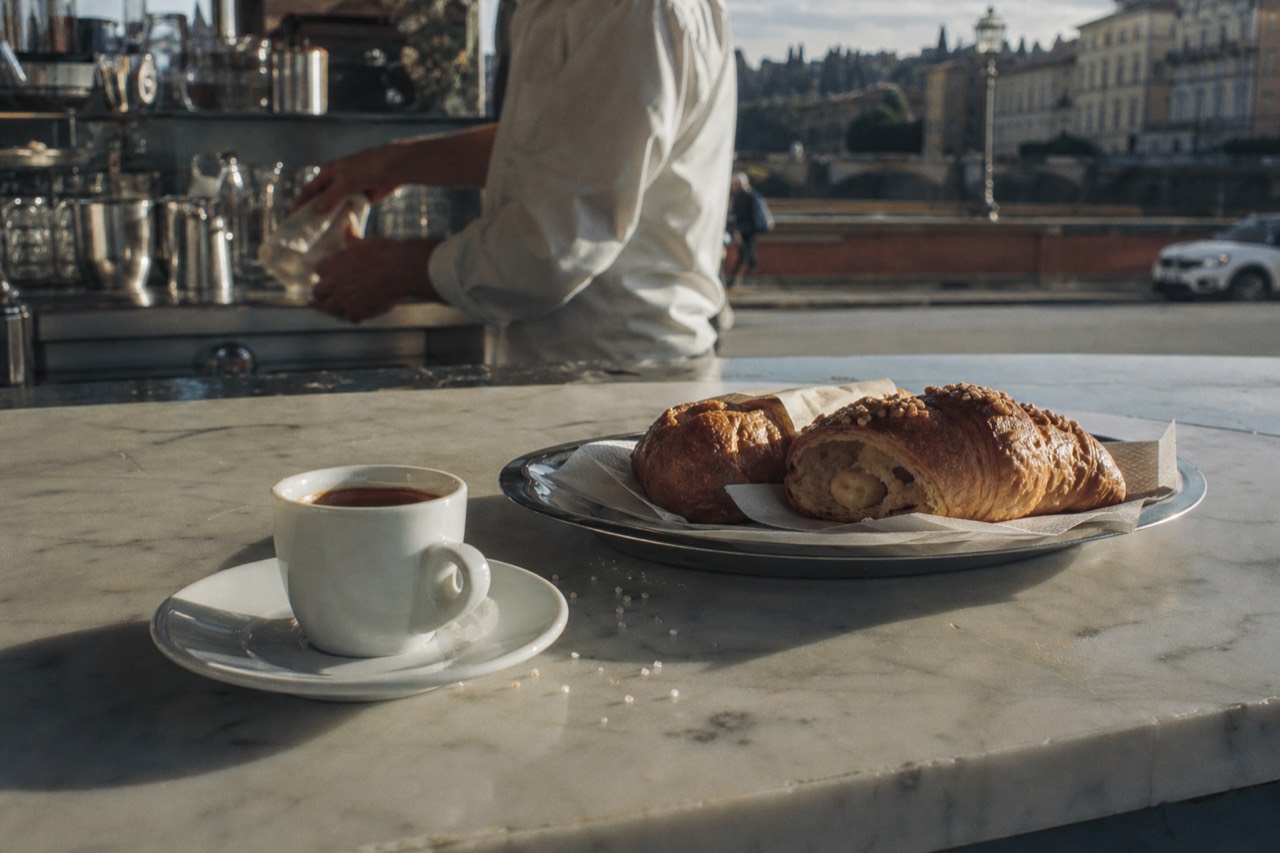
The counter-versus-table distinction trips up visitors more than any other daily ritual, so here is the honest version, sourced where sourcing exists. A Fipe-Confcommercio analysis of ISTAT 2025 prices, reported in April 2026, put the average counter price of an espresso in Florence at 1.26 euro and a cappuccino at 1.49 euro. Sit down, and the same drink can cost substantially more, and one Florence bar owner made that explicit in September 2025 by introducing a 1 euro table-service surcharge that took a seated espresso from 1.30 to 2.40 euro, as La Repubblica reported. That is not a scam. It is a price list, and the law only requires that you can read it before you commit.
| Situation | What the law says | What etiquette says |
|---|---|---|
| Espresso standing at the counter | Cheapest listed price; the norm for locals | Perfectly polite, order, drink, go |
| Same drink at a table | Higher price lawful if listed before ordering | Polite, you are paying for the space |
| Bar refusing card payment | Increasingly untenable; from 1 January 2026 Italian retailers must integrate cash registers with POS terminals, as PwC Italia has documented | Not an etiquette issue, a payment issue |
| Asking for the price first | Fully within your rights; price lists must be displayed | Normal, especially at tourist-heavy bars |
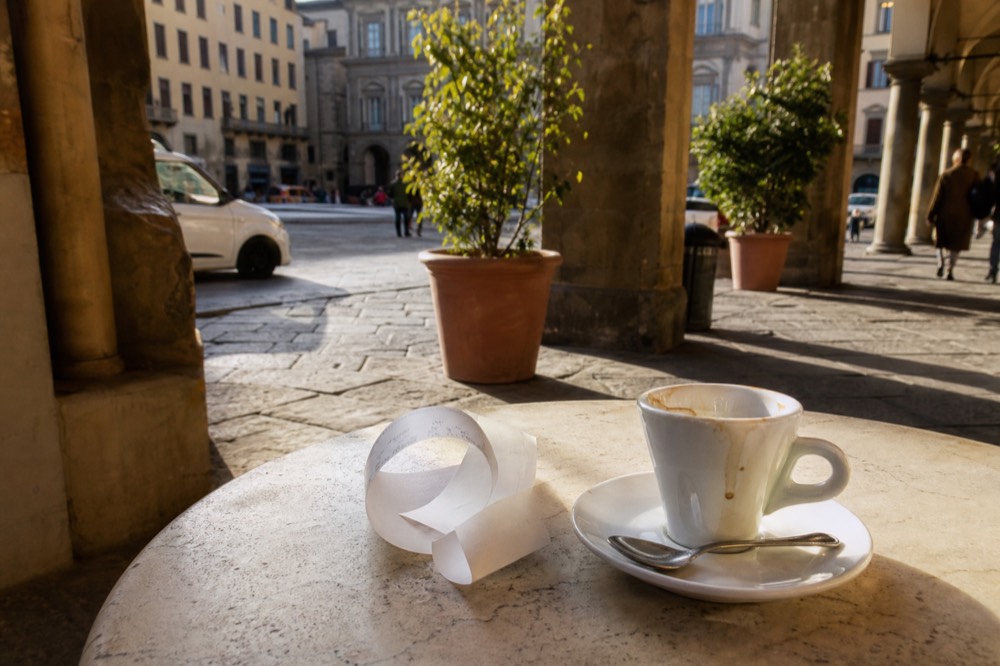
What is actually impolite in a bar is treating it as a free seating area. Ordering one coffee and occupying a table for an hour during the morning rush, spreading bags across four chairs, or expecting table service at counter speed all read as rudeness because they cost the bar money and other customers seats. Locals do linger at tables, but they do it at off-peak hours or in bars built for it, and they pay the table price without comment.
The cappuccino question deserves its own honest answer. The claim that Italians never drink cappuccino after 11 a.m. is a convention, not a rule, and no law or official standard governs it. Some Italians genuinely avoid milk-heavy coffee after a meal on the grounds that it sits heavy; others order it anyway. A barista will make you a cappuccino at 9 p.m. without a word. If you want to blend in, follow the convention. If you want the cappuccino, order the cappuccino.
Do You Have To Keep Your Receipt, And Can You Be Fined For Leaving It Behind?
No. There is no traced legal duty for a customer to take or keep a receipt in Italy, and no fine exists for a customer who walks out without one. The obligation to issue a receipt sits entirely with the business, which must produce a commercial document through a certified register. The "keep your receipt or the guardia will fine you" story is folklore, and we could not trace it to any law.
This myth is worth killing properly because it causes real anxiety. The duty, under the electronic-corrispettivi rules the Agenzia delle Entrate administers, is on the bar or restaurant to record and transmit every transaction. You are not part of that machinery. If a cashier thrusts a receipt at you, taking it is polite, and keeping it is sensible if you think you might need an expense record, but the fining of tourists for receipt-less exits is not a thing any traced Italian law provides for, and we could not find one in any case.
The kernel of truth inside the myth is old and faded: decades ago, receipt checks targeted businesses under-reporting takings, and customers were occasionally asked to show receipts as witnesses to a purchase. That enforcement logic is gone. The polite move today is simply to accept the receipt, say grazie, and move on.
What Is Actually Impolite At The Table, And What Is Invented?
The verifiable table offences are few: demanding substitutions that rewrite a dish, asking for pasta cooked differently after eating half of it, splitting a single coperto-covered seat between two diners, and treating the menu as negotiable. The invented offences are numerous, including the claim that Italians eat dinner at a fixed hour, which no primary source sets or publishes, and the claim that cutting spaghetti is a punishable insult, which is taste-policing rather than etiquette.
Italian meal times are the biggest invented rule of all. No official or legal source sets them, and we could not find one in any form, which is why this site will not print a number. What is verifiable is the opening hours of specific venues, and those vary widely: the first-floor food hall at Mercato Centrale is open every day from 09:00 to 23:00, while the ground-floor market runs Monday to Friday 07:00 to 15:00. Arriving for dinner at an hour when kitchens are genuinely closed is a planning failure, not a manners failure, and the fix is checking hours rather than apologising.
Here is the full ledger of what we could source against what we could not, and we suggest screenshotting it:
| Claim | Status | What is actually behind it |
|---|---|---|
| The coperto is illegal | Folklore in Tuscany | Legal nationwide if disclosed; banned only in Lazio by regional law |
| You can be fined for leaving a bar without your receipt | Folklore | No customer duty or fine traced; the obligation is the business's |
| Bars must post counter and table prices side by side | Folklore | No such national law; only pre-order disclosure of the price list is required |
| Italians eat dinner at eight | Unverifiable | No primary source sets meal times; venue hours are the only checkable facts |
| Cappuccino after lunch is forbidden | Convention | No law or standard; a habit some Italians keep and others ignore |
| Eating on the steps of Santo Spirito is prohibited | Sourced | A May 2026 mayoral ordinance bans standing, eating or drinking on the basilica's forecourt, with fines of 400 to 1,000 euro, as 055firenze.it reported |
| The coperto must be on the menu before you order | Sourced | Price-list display duty under the 1940 public-establishments regulation |
The pattern across the table is consistent. The invented rules are about food choices, and the real rules are about money disclosure and public space. Italy regulates what a business must tell you before you order, and what a municipality forbids in its squares. It does not legislate your coffee order.
Is Street Eating Rude In Florence, Or Actually Banned?
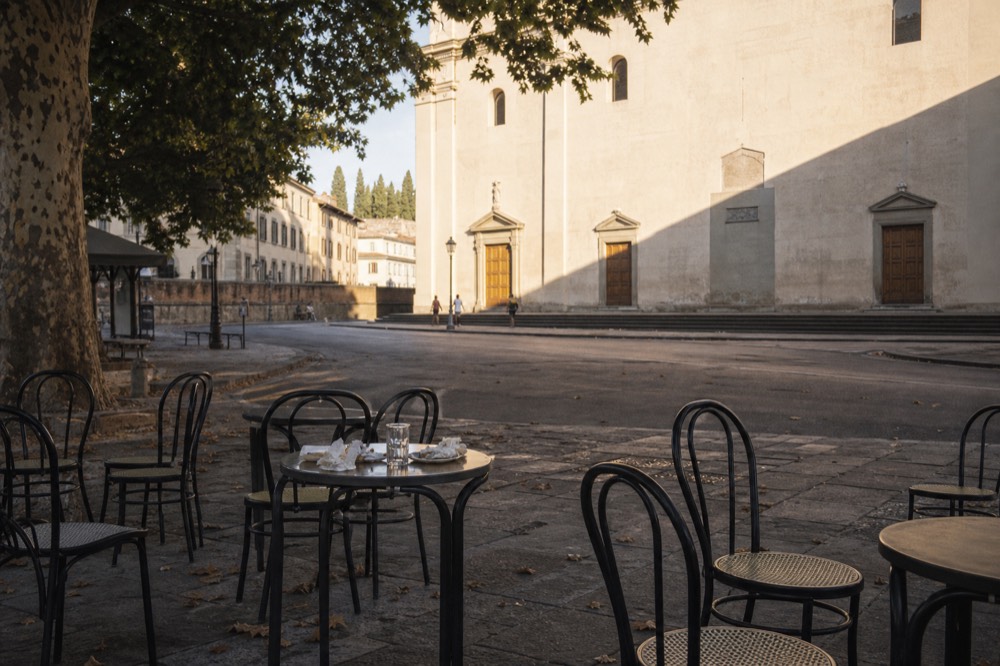
In specific places it is banned, with fines attached: a May 2026 ordinance covering the entire forecourt and steps of the Basilica di Santo Spirito prohibits standing, eating or drinking there around the clock, with fines of 400 to 1,000 euro. City-wide, eating while walking is not illegal, but the UNESCO historic centre's new outdoor-seating rules, in force since 11 February 2026, show the direction of travel.
The Santo Spirito ordinance matters to food-tour walkers because Piazza Santo Spirito is a real meeting point on the Oltrarno side of the river, and several evening routes pass through it. The rule allows transit to reach the basilica but nothing else, so finishing a gelato on the steps is now a fineable act, not merely a faux pas. The ordinance was reported by 055firenze.it at the end of May 2026, and the fines are large enough to matter to any budget.
The broader dehors regulation, approved by the Comune di Firenze on 19 January 2026 and in force from 11 February 2026, bans outdoor-seating installations on 60 streets and restricts the permitted types on 73 others in the UNESCO historic centre, freezing total authorised outdoor surface at its 15 November 2025 level. You can read the regulation on the Comune di Firenze's own page. For a visitor, the practical effect is fewer tables spilling into lanes, which means the tables that exist are more contested, and hogging one without ordering is more visible an offence than it used to be.
None of this makes Florence hostile to eating in the street. A lampredotto panino eaten standing beside the cart that sold it to you is one of the most Florentine things you can do, and a July 2025 survey of Florence trippai, reported by Le Connessioni, found the most common price at 5 euro with a range of 4 to 6 depending on location. The impolite version is the one that blocks a doorway, leaves wrappers on church steps, or picnics where an ordinance forbids it. Read the square before you unwrap.
How Do You Not Offend A Barista, A Waiter Or A Market Vendor?
The short answer is pace and greeting: enter with a buongiorno, order at the counter in one round rather than in instalments, pay where the flow indicates, and never summon staff with a snapped finger or a shouted ragazzo. The deeper answer is that Italian service culture is professional rather than performative, and the waiter who leaves you alone is doing the job correctly, not neglecting you.
The greeting is not decoration. Walking into a Florentine bar or shop without any acknowledgment is the single most reliably noticed rudeness, and it costs nothing to fix. Buongiorno before noon, buonasera after, grazie on the way out. Market vendors, who work long shifts in the open air, extend the same logic: let the person ahead of you finish, do not handle produce you have not agreed to buy, and do not photograph a stall's goods without a nod toward the vendor.
Tipping sits inside this frame, and the honest position is that tipping in Italy is discretionary and no verified figure exists for what food-tour guides or waiters in Florence actually receive, which is why we do not print one (see Florence Best Known For). Rounding up a bar bill or leaving a few coins after a good meal is normal and appreciated. A mandatory-feeling 20 percent is an import, not an obligation. The coperto is not a tip, and the servizio, where charged, is not a tip either, so neither excuses you from leaving nothing if service was poor, nor obliges you to double up if it was excellent.
If you would rather learn the rhythm of a Florentine bar with someone who can translate the unwritten parts, the private coffee and sweets format is built for exactly that: coffee, artisan chocolate, pastries and gelato over two hours, from $130.14, rated 5.0 across 20 reviews, with free cancellation up to 24 hours before the start time. Private guides run one group at a time, so it is worth checking the available dates for your trip before your itinerary firms up.
For a broader tasting format that still keeps a local beside you, the private 10-tastings tour runs three hours from $147, at 4.9 across 14 reviews so far, and can be shaped around your group, though the listing carries a likely-to-sell-out badge, so check dates early.
What Should You Not Do When Bringing Food Home From Italy?
Do not pack cured pork. USDA rules, restated in a February 2026 post, prohibit travellers from bringing pork products, cooked or uncooked, into the United States because of African swine fever, and a June 2026 CBP update requires all travellers to declare meats, fruits, vegetables and animal products, with first-offence fines starting at $300. Prosciutto and salami will be seized; declaration is the etiquette and the law alike.
The customs line is the last etiquette test of an Italian trip, and it is the one with actual enforcement behind it. The rules are on the CBP's own agricultural products page, and they are not a formality: agents may seize and dispose of anything that looks like pork, and failing to declare is the offence, not merely possession. Declare everything edible in your bag, let the officer decide, and you will never pay a fine.
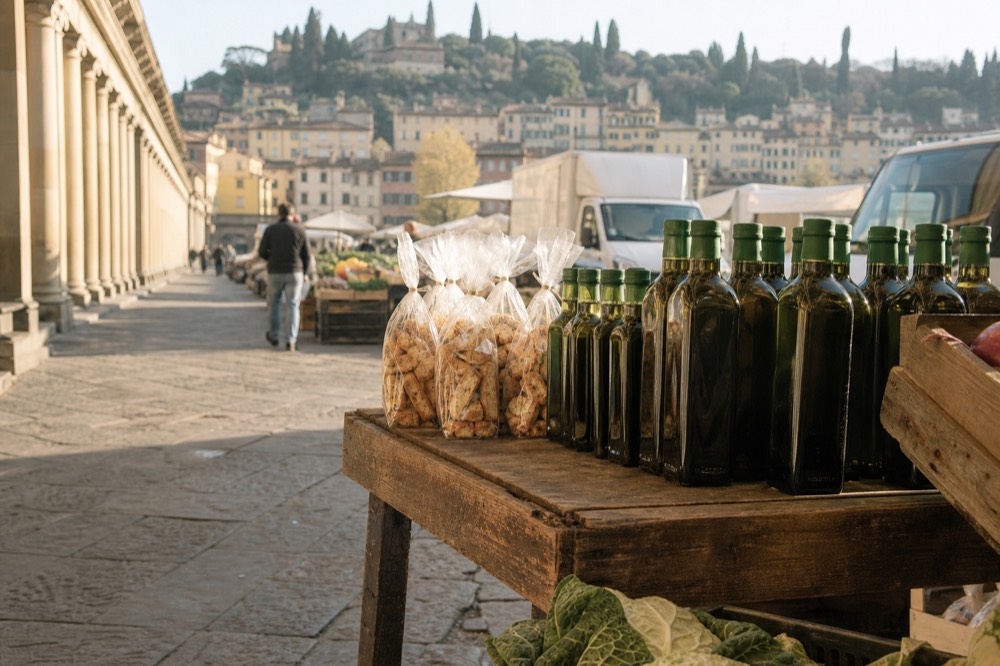
What travels well from a Florence food trip: extra virgin olive oil in sealed commercial bottles, vacuum-packed hard cheese within personal-use limits, dried pasta, cantucci, and sealed jars of sauce. Tuscan oil has a legal identity worth looking for on the label, since Toscano PGI has a protected specification with a harvest deadline of 15 December, and Pane Toscano DOP carries its own protected status under an amendment approved in July 2025. A label with a protected name on it is both a quality signal and a customs-friendly format, because it is a commercial product, not a loose farm item.
Which Etiquette Worries Are Simply Not Worth Having?
The ones we could not source and will not repeat as rules: fixed meal times, a legal cappuccino cutoff, a receipt obligation, a price-posting law for bars, and any minimum thickness or weight for bistecca alla fiorentina, for which no protected designation exists at all. Worry instead about the three things with documents behind them: the disclosed coperto, the Santo Spirito steps, and the pork in your suitcase.
The bistecca example is instructive because it shows how deep the folklore runs. Every steakhouse in Florence will tell you what a real fiorentina must weigh and how thick it must be cut, and no DOP, IGP, STG or municipal denomination exists behind any of those figures. What is real is the breed-level protection: Vitellone Bianco dell'Appennino Centrale IGP covers meat from registered Chianina, Marchigiana and Romagnola animals aged 12 to 24 months, and the registered production area includes the province of Firenze. Order the steak, ask about the breed if you care, and ignore anyone who quotes you a legal minimum. There is none.
The same honesty applies to how you dress, how loudly you talk, and whether you order pizza at lunch. Italians are not a monolith, and Florence in particular processes millions of foreign visitors a year; the barista has seen worse than you. The visitor who greets, reads the price list, pays what is disclosed, and keeps food off the church steps has cleared every bar that matters.
If you are still building your Florence plans, our guide to what to expect on a Florence food tour walks through the practical side of a tasting day, and our Florence walking food tours guide compares the formats, both written on the same sourcing rules as this page. The site you are reading, Florence Food Tours, exists because we would rather tell you a claim is folklore than repeat it for traffic.
The short version of everything above: greet when you enter, read the price list before you order, pay a properly disclosed coperto without argument, keep food off the Santo Spirito steps, declare everything edible on your way home, and treat the rest of the "rules" as optional. The answers below repeat the verifiable positions on the questions visitors ask most.
Common Questions About Italian Etiquette
What is considered impolite in Italy?
The verifiable breaches are eating or drinking where an ordinance forbids it, such as the Santo Spirito forecourt, disputing a coperto that was properly disclosed, hogging tables without ordering, and skipping the greeting when entering a shop or bar. Most other widely repeated rules, from cappuccino timing to receipt-carrying, have no law or traceable custom behind them.
Is the coperto a scam in Florence?
No. It is legal in Tuscany provided it appears on the price list before you order, and only Lazio has a regional law banning it. If it was not disclosed, you have a legitimate complaint; if it was, refusing to pay it is the rude act.
Can you be fined for leaving a bar without your receipt?
No traced Italian law imposes any duty or fine on customers over receipts. The obligation to issue and record the document belongs to the business. Accepting the receipt is polite; keeping it is optional.
Is it rude to sit at a table in an Italian bar?
No, but table service usually costs more than the counter price, and charging the difference is lawful if it is listed before you order. The impolite version is occupying a table at peak hour with a single coffee while others wait.
Do Italians really never drink cappuccino after lunch?
It is a convention some Italians follow, not a rule, and no law or official standard governs it. Order what you want; the barista will not comment.
Can you bring prosciutto home to the United States?
No. USDA rules prohibit travellers from bringing pork products, cooked or uncooked, into the US because of African swine fever, and CBP requires declaration of all meats, fruits and vegetables, with fines starting at $300 for failure to declare. Sealed non-meat products like oil, dry pasta and biscuits are generally fine.