What Should You Not Miss In Florence, Italy?
The foods, markets and sights a first-time visitor should not miss in Florence, with what a food tour actually covers and what to see on your own.
What Should You Not Miss In Florence, Italy?
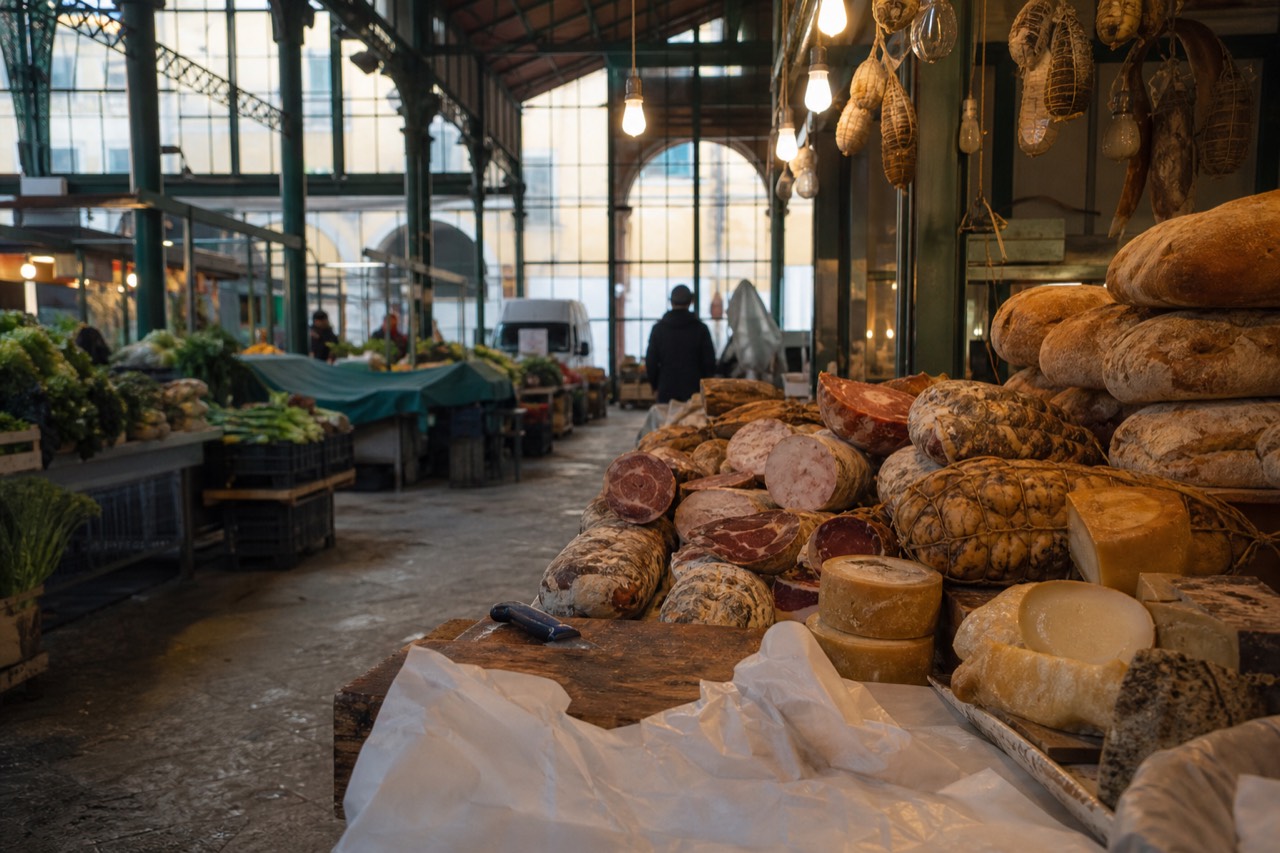
If you have limited time, do not miss the two historic markets, a proper schiacciata, lampredotto from a trippaio, pecorino and finocchiona with Tuscan bread, a Chianti Classico or Vin Santo tasting, and one sit-down Florentine steak dinner. Around the food, the Uffizi, the Duomo complex and a walk across the Arno to Santo Spirito fill the rest of a first visit.
That is the short answer, and it is deliberately food-heavy. Florence ranked fourth in TasteAtlas's 2025/2026 Best Food Cities in the World list, behind only Naples, Milan and Bologna, as reported by La Nazione, and the city's food culture is unusually concentrated: the historic centre is walkable end to end, and most of the unmissable eating happens inside it. The rest of this article breaks the list into foods, the steak question, markets and the non-food sights, and then shows how a guided tasting route maps onto the same ground. This site, Florence Food Tours, exists to answer exactly this kind of question with verified prices and review counts rather than folklore.
Three of the experiences below can be covered in a single evening if you pick the right tour, and several of the cheapest walks hit five or six of them in two and a half hours. If you would rather see the options side by side before reading further, here are the three tours that between them cover the steak dinner, the full tasting spread and the budget street-food circuit.
Which Foods Should You Not Leave Florence Without Tasting?
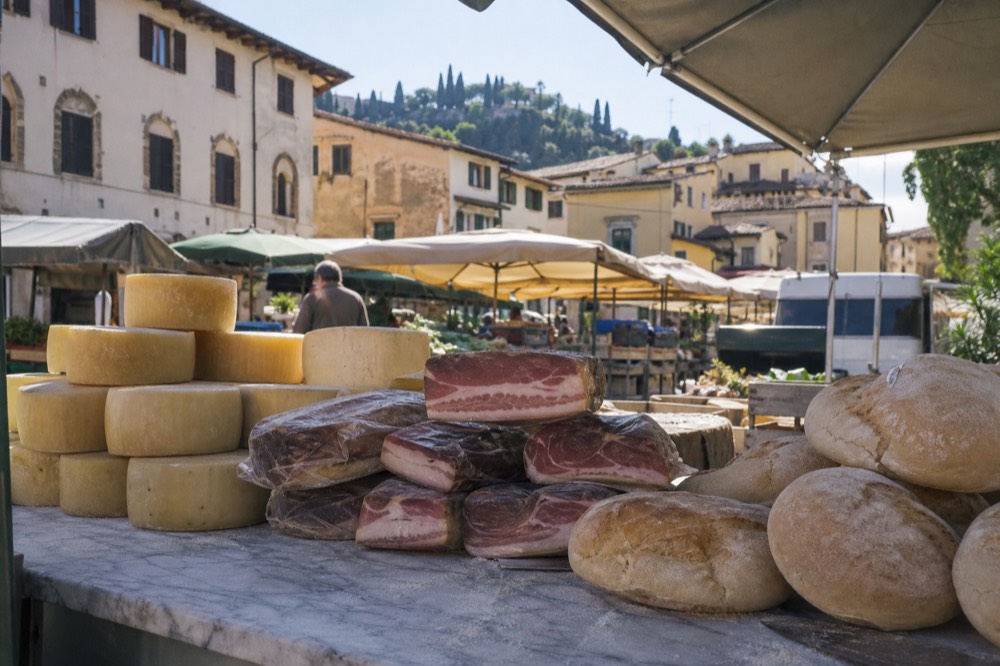
The core list is short and specific: schiacciata, the Tuscan flatbread; lampredotto, the city's own sandwich; pecorino Toscano DOP and finocchiona IGP with unsalted Pane Toscano DOP; cantucci dipped in Vin Santo; a scoop of gelato from a maker that lists its flavors naturally; and a glass of Chianti Classico. Each is protected, traditional or both, and each costs a few euro bought on its own.
Start with the bread, because it is the item that surprises people. Pane Toscano DOP is famously unsalted, a habit with centuries behind it, and its EU-protected specification was amended as recently as July 2025 without changing the sourdough method or the Tuscan flour requirement. The saltless taste is the point: it exists to sit under salty cured meats and sharp cheese, not to be eaten alone. Pecorino Toscano has been a protected designation since 1996, and finocchiona, the fennel-seeded salami, since 2015. Put those three together on a board and you have eaten a protected trio that most visitors never realize is protected.
Schiacciata deserves its own sentence. Pasticceria Giorgio won the 2026 Miglior Schiacciata alla Fiorentina contest, the fifteenth edition, held in February 2026 with over sixty entries, as reported by Tasting Life. All'Antico Vinaio, the schiacciateria that tour routes stop at on Via de' Neri, reported 80 million euros in revenue for 2025 with at least twenty new openings planned for 2026, according to Il Sole 24 Ore. The queue is part of the experience; the sandwich is cheap and enormous.
Lampredotto is the one that tests nerve, and it should not. It is the fourth stomach of the cow, slow-cooked in broth and served in a roll with salsa verde, and a July 2025 survey of Florence trippai found the most common price at 5 euro, with a range of 4 to 6 euro depending on how central the stand is, as reported by Le Connessioni. For dessert, cantucci Toscani IGP dipped in Vin Santo is the classic close, and it appears on several tours as the final stop.
The table below maps each food to where you will encounter it, both on your own and on the tours that cover it.
| Food | Where to get it yourself | Which tour format covers it |
|---|---|---|
| Schiacciata | All'Antico Vinaio, Via de' Neri, or any neighbourhood bakery | The 2-hour Florence Food Tour with Antico Vinaio skip the line includes the stop |
| Lampredotto | A trippaio cart, 4 to 6 euro per panino in mid-2025 | The 10+ Tastings tour includes lampredotto among its stops |
| Pecorino and finocchiona | Any pizzicagnolo (deli) stall, Mercato Centrale ground floor | Nearly every classic food tour; the steak-and-wine tours include cheese stops |
| Pane Toscano DOP | Bought alongside the above; protected since 2016 | Included wherever board tastings happen |
| Cantucci with Vin Santo | Any pasticceria or enoteca | The Old City Street Food Tour names it as one of six tastings |
| Chianti Classico | Any enoteca; look for the Black Rooster mark on the bottle | Every wine-inclusive walk on the roster |
If you are deciding between covering this list on your own versus with a guide, the arithmetic is straightforward. A street-food walk from $49 includes wine and several of these items in one route, and the widest tasting list in the cheap band, pasta through gelato across seven categories, is the $63 Street Food Walking Tour with Wine, which carries a "Likely to sell out" badge on its listing. Check availability decisions are easier with the formats laid out, and our guide to that question goes deeper.
Is Bistecca Alla Fiorentina A Must, And What Is Actually Guaranteed About It?
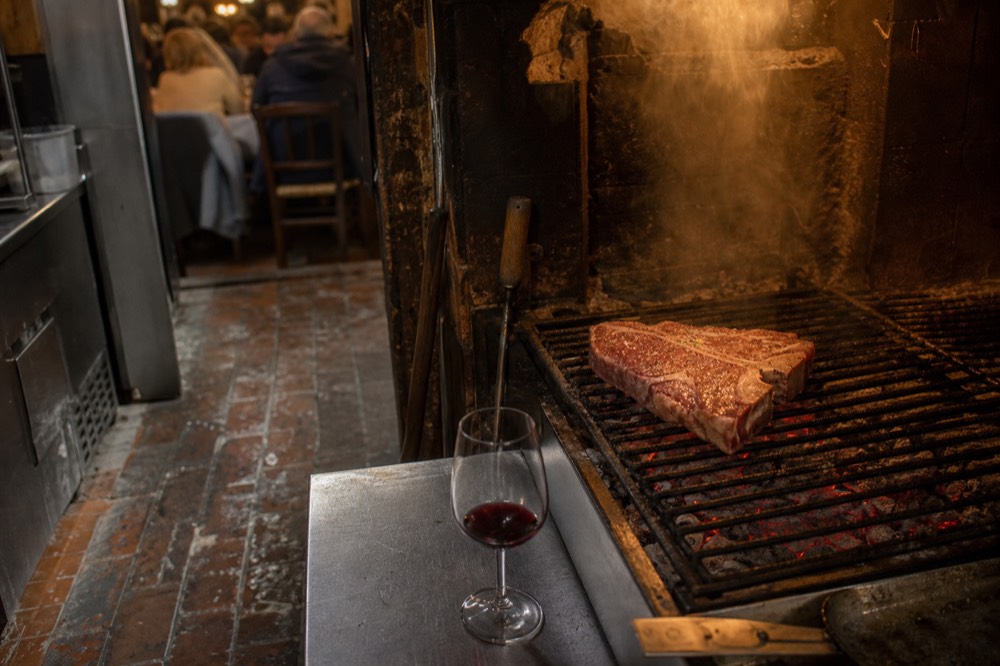
Yes, the Fiorentina belongs on the list, but almost nothing you have read about its rules is true. The steak has no DOP, no IGP and no STG, and no legal minimum thickness or weight exists. What is real is the Vitellone Bianco dell'Appennino Centrale IGP, protected since 1998, whose registered area includes the province of Firenze and whose meat comes from Chianina, Marchigiana or Romagnola cattle aged 12 to 24 months.
This is the trap section of every Florence article, so it is worth being precise. A full scan of all 4,014 entries in the European Commission's geographical indications register returns no match for bistecca or fiorentina. The figures in circulation, three fingers thick, at least 4 centimetres, a minimum of 1.2 kilograms, appear only in promotional and cultural material with no operative document behind them. The cut's shape and size are convention, strong and widely followed convention, but convention all the same. Write it that way, order it that way, and do not let a menu or a guide tell you a law exists.
Equally, the claim that "real" fiorentina must be Chianina beef is false. The IGP that actually covers the meat, Vitellone Bianco dell'Appennino Centrale, permits Chianina, Marchigiana and Romagnola equally, from registered herds. Chianina is the famous name and the one Florentine butchers boast about, but it is a choice inside the scheme, not a requirement of it.
What is guaranteed is the experience of sharing one. A Fiorentina is a T-bone cut for two or more, served rare or not at all by convention, and it is the anchor of the most expensive dinners in the city. It is also the single biggest differentiator between the classic food tours, because only some of them include a full sit-down steak dinner rather than a tasting portion.
| Tour | Price from | Rating and reviews | Length | Steak coverage |
|---|---|---|---|---|
| Florence Food Walking Tour with Local Steak and Tuscan Wine | $80.00 | 4.9 across 725 reviews | 3.5 hours | 14 tastings, 4 wines, sit-down dinner with Florentine steak, group capped at 12 |
| Florence: Guided Food Tour with Fiorentina Steak and Wine | $124.00 | 5 across 349 reviews | 4 hours | Truffle pasta, aged balsamic, Fiorentina steak, all food and drink included |
| Florence VIP Dinner Tour with Florentine Steak and Wine Tasting | $170.37 | 5 across 293 reviews | 3.5 hours | 7 tastings including truffle pasta and gelato, 5 drinks, evening format |
All three carry free cancellation up to 24 hours before the start time. The 4-hour Fiorentina tour carries a "Likely to sell out" badge on its listing, and the small-group steak dinner walk is capped at 12, so if a sit-down steak meal is the thing you refuse to miss, check the live dates for the Fiorentina tour before you lock in the rest of your itinerary.
The steak dinner at the top of the price range deserves its own word. The VIP Dinner Tour is the most expensive product on the whole roster at $170.37 from, and it earns that position by wrapping the steak evening into a full route: seven tastings including truffle pasta and gelato, five drinks, and a 3.5-hour pace through the evening centre. Its listing shows 5.0 across 293 reviews and a "5+ bookings last month" badge. It is the version of the answer for a traveller who wants the unmissable foods and the unmissable steak in one booked evening rather than assembled piece by piece.
Which Markets And Squares Belong On The Not-Miss List?
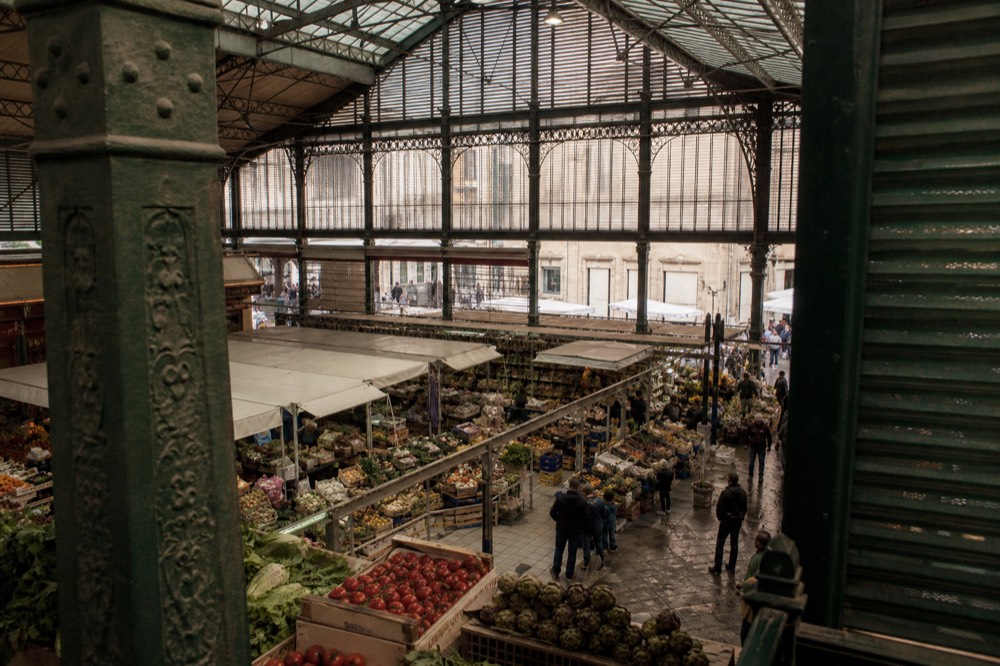
Mercato Centrale and Mercato di Sant'Ambrogio are the two markets, and Piazza Santo Spirito is the square. Mercato Centrale's food hall opens every day 09:00 to 23:00, Sant'Ambrogio runs Monday to Saturday 07:00 to 14:00 and closes Sunday, and Santo Spirito anchors the Oltrarno side where the evening tours start. Add the Cascine market on Tuesdays and La Fierucola on third Sundays if your dates align.
Mercato Centrale is the 1874 cast-iron building in San Lorenzo, designed by Mengoni, the architect of Milan's Galleria Vittorio Emanuele II. The ground floor holds over one hundred businesses, butchers, bakers, fishmongers and deli stalls, on the city's own count, and opens Monday to Friday 07:00 to 15:00 and Saturday 07:00 to 17:00. The first floor is the 2014 food hall, 3,250 square metres of artisan botteghe, a restaurant, a pizzeria and open seating, open every day until 23:00, and you can sit anywhere; only the pizzeria and restaurant take bookings. One planning note from the city's own ordinance of 24 January 2025: the outdoor stalls around the San Lorenzo market observe recurring Monday closures through the year, so the streets around the building behave differently on a Monday.
Sant'Ambrogio is the local one, in Piazza Lorenzo Ghiberti in the Santa Croce quarter, built in 1873 and the city's oldest market. It has just finished a roughly two-year, about 1.9-million-euro restoration of its canopies and historic pavement, inaugurated in mid-December 2025, with adjustable solar shading added in August 2026, as reported by La Nazione. If you want the market Florentines actually shop at, this is it, and the only chef-led tour on the roster, the Sant'Ambrogio Market Food Tour with Tastings, runs from a cookery school nearby, small group capped at 12, though it has only 7 reviews so far.
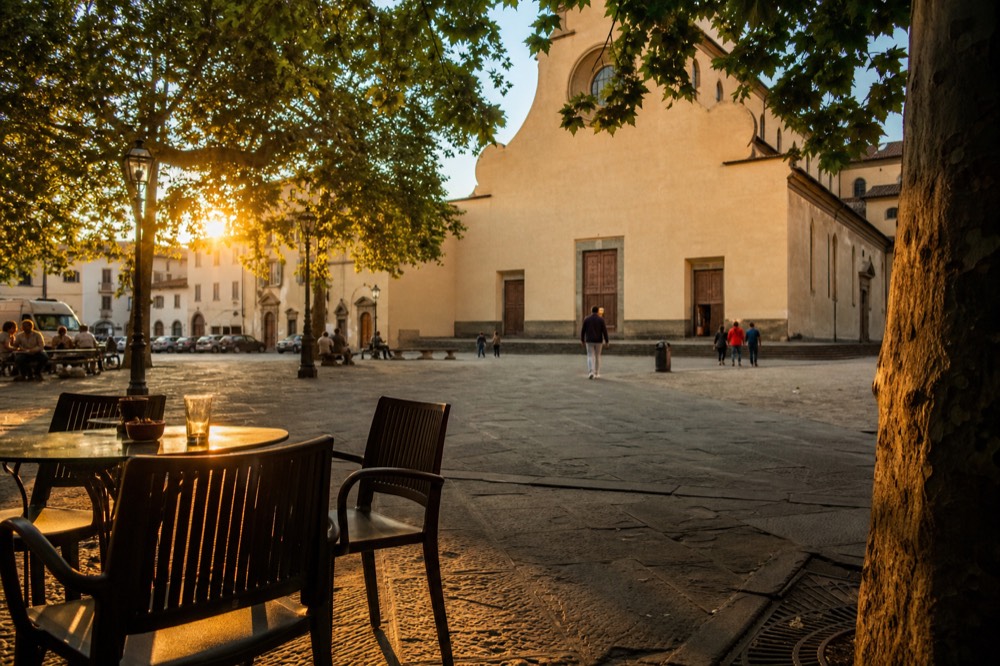
Across the river, Piazza Santo Spirito is the Oltrarno's heart and the meeting point for the two big evening walks. Two calendar facts make it more than a backdrop: the Cascine market, hundreds of stalls along Viale Lincoln, runs every Tuesday 07:00 to 14:00 per the Comune, and La Fierucola, the zero-kilometre organic farmers' market, fills Santo Spirito itself on the third Sunday of each month except August, 09:00 to 19:00. One behaviour rule to know: a May 2026 mayoral ordinance prohibits standing, eating or drinking on the basilica's forecourt and steps, with fines of 400 to 1,000 euro, as reported by 055firenze.it. Eat your market purchases elsewhere in the square.
What Should You See In Florence Besides The Food?
The non-food shortlist is the Uffizi, the Duomo complex, Ponte Vecchio and the Oltrarno walk, with the Accademia for the David if tickets allow. Uffizi tickets cost 25 euro on the day and 29 euro booked in advance, with a 16-euro afternoon rate for entry after 16:00, and a 26-euro 48-hour combined Accademia and Bargello ticket has existed since 15 March 2026.
The ticketing detail matters more than most guidebooks admit, because it changes how you schedule a food tour. The advance-booking premium on the Uffizi means a same-day morning slot is cheaper but riskier, and the afternoon discount after 16:00 pairs naturally with a morning market walk: taste in the morning, museum in the late afternoon, dinner after. The new cumulative tickets, a 26-euro 48-hour Accademia plus Bargello option and a 38-euro 72-hour option covering the Medici Chapels, Orsanmichele and Palazzo Davanzati as well, with all venues open Tuesday to Sunday 08:15 to 18:50, simplify the same trade-off for short stays. The official fares are published on the Uffizi Galleries' own fares page.
Two 2026 construction facts will shape what you actually see. Restoration of Giotto's Bell Tower began in March 2026, the first full exterior marble restoration in the tower's history, with scaffolding assembly taking roughly four months before four years of work, per the Opera di Santa Maria del Fiore. Ponte Vecchio began its first major conservation restoration on 25 May 2026, a 1.637-million-euro project with river-level structural work in the June to September window, as reported by Florence Daily News. Neither closes the city, but photographs of a scaffold-free bell tower will be harder to take this year.
Free museum days are worth building a budget itinerary around: state museums, including the Uffizi, the Accademia, Pitti and Boboli, are free on the first Sunday of every month plus 25 April, 2 June and 4 November 2026, per the official tourism site. Palazzo Pitti itself opens Tuesday to Sunday 08:15 to 18:30 with last entry at 17:30, which pairs neatly with an Oltrarno evening tour that starts at Santo Spirito.
The honest pairing advice: food tours and museums compete for the same daylight. The evening and sunset formats exist precisely to resolve this, running 3.5 hours from late afternoon and leaving your mornings for the Uffizi or the Accademia. Our evening and sunset food tour guide works through the trade-off in detail, and the one-day must-sees article handles the compressed version.
How Do You Fit The Unmissable Into A Short Stay?
Book one evening tasting tour that includes a steak dinner, give one morning to a market, and give one late afternoon to a museum at the discounted after-16:00 rate. That structure covers the foods, the markets and the sights in two days without doubling up, and it leaves the cheapest walking tours, from $45, as an optional third layer if you have more time.
The reason to book the food side rather than improvise it is density. A single evening route can cover schiacciata, cheese, charcuterie, truffle pasta, wine and gelato in one moving dinner, which would otherwise cost you four separate stops and a lot of guesswork about which counter is the good one. The evening band on this site's roster runs from $128.96 for the sunset walk, 5.0 across 5,911 reviews, the largest verified review base on the roster, up to the $170.37 VIP dinner. The sunset tour's listing carries the urgency badges "Booked 10+ times in 12 hours" and "Top 5% booked in Florence in the last 48 hours", so summer dates in particular need booking rather than hoping.
Cancellation is generous across the roster: 21 of the 22 tours listed here carry free cancellation up to 24 hours before the start time. The single exception is the Original Florence Street Food and Market Tour, which is genuinely non-refundable, so check that detail on any listing before you commit. That flexibility means you can lock the evening tour early, when the good dates exist, and adjust around museum tickets afterwards.
A word on pace. Florence recorded 4.78 million arrivals and 11.52 million overnight stays in 2025, arrivals up 10.2 percent on 2024, as reported by La Nazione, and the summer of 2026 brought an average maximum of 35.2 degrees with 26 days above 38 degrees, per Corriere Fiorentino. The practical reading: shoulder months are calmer and cooler, high summer heat is at its fiercest in July, and an evening tour format is kinder than a midday walk when temperatures climb. We work through the seasonal question in the best time of year for a food tour guide.
Before the closing questions, here again are the three tours that best cover the not-miss list between them: the VIP steak dinner evening, the four-hour Fiorentina tour, and the budget street-food walk with wine.
The short answers below repeat the essentials: the foods, the steak's actual legal status, the markets, the two-day structure, the steak tours and the free museum days, each in a sentence or two for quick scanning.
Common Questions About What To Not Miss In Florence
What should you not miss in Florence, Italy?
The two historic markets, a schiacciata, lampredotto, pecorino and finocchiona with unsalted Tuscan bread, cantucci with Vin Santo, a Chianti Classico tasting and one Florentine steak dinner, plus the Uffizi, the Duomo complex and the walk to Santo Spirito across the river.
Is bistecca alla fiorentina legally defined?
No. The steak has no DOP, IGP or STG and no legal minimum thickness or weight. The real protection sits with Vitellone Bianco dell'Appennino Centrale IGP, registered in 1998, which covers meat from Chianina, Marchigiana or Romagnola cattle and whose production area includes the province of Firenze.
What is the best market to visit in Florence?
Mercato Centrale for the full experience, with its ground-floor stalls and the first-floor food hall open every day 09:00 to 23:00, and Sant'Ambrogio for the local, working market, Monday to Saturday 07:00 to 14:00, closed Sunday. The Cascine market adds a big open-air option on Tuesdays.
Can you cover Florence food and museums in two days?
Yes. Give one morning to a market, one late afternoon to the Uffizi at the 16-euro after-16:00 rate, and book one evening food tour that includes a steak dinner. The evening formats run about 3.5 hours and leave the daylight free for sightseeing.
Do Florence food tours include the Fiorentina steak?
Some do, as a full sit-down dinner rather than a tasting. The 4-hour Guided Food Tour with Fiorentina Steak and Wine includes truffle pasta, aged balsamic and the steak with everything covered, from $124, and the $80 Food Walking Tour includes a steak dinner among its 14 tastings.
When are Florence museums free?
State museums, including the Uffizi, Accademia, Pitti and Boboli, are free on the first Sunday of every month plus 25 April, 2 June and 4 November 2026, under the Domenica al museo scheme.