Where To Avoid Staying In Florence, Italy?
A sourced trade-off guide to where to base yourself in Florence: tourist tax rates by accommodation type, the ZTL and Scudo Verde rules, and how each district lines up with real food tour meeting points.
Where To Avoid Staying In Florence, Italy?
No Florence neighbourhood deserves the word avoid outright, and this page will not defame one. What the city's own documents support instead is a set of trade-offs: the historic centre is the most expensive base per night in tourist tax, the most constrained by traffic rules, and the noisiest, while districts on the south bank and east side trade a longer stroll for quieter streets and lower frictions. The question is better asked as "which base fits my itinerary", and Florence publishes enough official data to answer it properly.
The instinct behind the search is usually a bad night's sleep or a wasted holiday budget. Both are real risks in a city that closed 2025 with 4.78 million arrivals and 11.52 million overnight stays, according to La Nazione. That volume is not spread evenly. It concentrates inside the UNESCO historic centre, which is exactly where most short-term rentals, most hotel rooms and most of the evening noise sit. So the honest answer starts with what the centre actually costs you, in money and in friction, and then works outward.
There is a second, less obvious lens: where your food tour actually starts. Florence food tours meet at a handful of fixed points, and a base on the wrong side of the river or far from the station adds real friction twice, once getting there and once getting back after wine. Our guide to Florence food tour itineraries compared breaks down the routes themselves; this page handles the sleeping side of the equation, and Florence Food Tours keeps the eating side covered from every base you might choose.
What The Tourist Tax Says About Where You Sleep
Florence's tourist tax, in force since 1 February 2025, charges between 3.50 and 8.00 euro per person per night, with the rate you pay depending entirely on where you sleep: the tax is set by accommodation type, not by location within the city. The charge is capped at seven consecutive nights, and children are exempt until their twelfth birthday. A five-star hotel guest pays 8.00 euro a night; a camper at a campsite pays 3.50. The rate is set by the accommodation type, not the district, so the tax does not punish a central address directly, but it compounds with central room rates and it is charged per person, per night, on top of the quoted price.
The rates were set by Deliberazione della Giunta Comunale DG/2024/00599, adopted 9 December 2024, and are published on the Comune di Firenze's own tourist tax portal. The band that matters most to this article's readers is the short-term rental one: an Airbnb-style apartment, affittacamere room or B&B pays 6.00 euro per person per night, a rate that rose from 5.50 euro on 1 February 2025. That is the same rate as a three-star hotel and more than a hostel or campsite.
| Accommodation type | Tourist tax per person, per night |
|---|---|
| 1-star hotel | EUR 3.50 |
| Campsite (all classifications) | EUR 3.50 |
| Youth hostel / case per ferie | EUR 4.00 |
| 2-star hotel / 2-key residence | EUR 4.50 |
| 3-star hotel / 3-key residence | EUR 6.00 |
| Short-term rental, B&B, affittacamere, holiday apartment | EUR 6.00 |
| 4-star hotel / 4-key residence | EUR 7.00 |
| Residenza d'epoca | EUR 7.00 |
| 5-star hotel | EUR 8.00 |
Two planning notes follow from the table. First, a family of four in a central short-term rental for five nights owes 120 euro in tourist tax alone, since only children under twelve are exempt. Second, the tax is capped at seven consecutive nights, so it barely registers for a week-long stay but bites on every short break. The accommodation must display the tax and its amount on every channel it advertises through, including booking sites, so the figure should never be a surprise at check-in.
If your base is a short-term rental inside the historic centre, an evening tour is usually the most natural pairing, since you can walk home afterwards. The Oltrarno dine-around is a strong fit for that, and you can Check availability on the live listing to see the dates that match your stay.
Which Districts Line Up With Real Food Tour Meeting Points
Most Florence food tours on our roster meet at a small set of fixed points: Piazza dell'Unita Italiana by the obelisk, Piazza della Signoria, Piazza di Madonna degli Aldobrandini beside Mercato Centrale, Piazza Santo Spirito on the south bank, and Piazza Sant'Ambrogio in the east. A base within reach of your tour's meeting point removes the two most annoying journeys of a food-focused day, the arrival and the post-wine return. No district is disqualified, but each one pairs differently with these points.
The pattern worth noticing is that the meeting points cluster around the markets and the station on the north side, and around Santo Spirito on the south side. The Comune's mobility office confirms the entire historic centre is a limited traffic zone, so you will not be driving to any of them anyway. This is a walking calculation, and we deliberately publish no walking times, because inventing them is how travel content misleads people.
| District character | Nearest common meeting points | What you trade |
|---|---|---|
| San Lorenzo / Mercato Centrale area | Piazza di Madonna degli Aldobrandini, Piazza dell'Unita Italiana | Zero commute to market tours, but the busiest, loudest streets in the city |
| Duomo / Signoria core | Piazza della Signoria, Piazza dell'Unita Italiana | Central for classic walking tours, highest room rates, thinnest sleep |
| Station quarter (Santa Maria Novella) | Piazza dell'Unita Italiana | Best for train arrivals and departures, mixed evening atmosphere |
| Oltrarno (Santo Spirito, San Frediano) | Piazza Santo Spirito | Quieter residential fabric, ideal for evening tours, a river crossing for market tours |
| Sant'Ambrogio / Santa Croce east | Piazza Sant'Ambrogio, Piazza della Signoria | A genuine local neighbourhood, fewer hotel options, east-side meeting points |
| Outside the centre (Campo di Marte, Rifredi) | None directly | Cheaper and quieter, but every tour starts with a transit ride |
The market-based tours illustrate the trade. The Florence Central Market Food & Wine Tour, rated 5.0 across 265 reviews and from $111.21, meets at Piazza di Madonna degli Aldobrandini, right at Mercato Centrale, and spends three hours inside the market itself. If a market morning is the anchor of your day, the San Lorenzo side of the city is the base that makes it effortless; if you would rather sleep and eat in a residential quarter, it is a crossing you will make once and tolerate.
The evening tours tell the opposite story. The Florence Sunset Food & Wine Tour, from $128.96 and rated 5.0 across 5,911 reviews, the largest review base on our entire roster, meets at Piazza Santo Spirito and runs 3.5 hours through the Oltrarno with 9 to 10 Tuscan bites, four wines, a prosecco toast and a cocktail lesson. For that tour, an Oltrarno base is the one that lets you finish a glass of Vin Santo and be home in minutes, while a San Lorenzo base sends you back across the river at night.
Is The Historic Centre Really The Best Base?
The historic centre is the most convenient base for sightseeing and the worst for sleep and price, and since 2025 it is also the hardest place to find a new short-term rental, because the city froze new authorisations inside the UNESCO core on 31 May 2025 and a regional court upheld the freeze on 14 May 2026. Convenience is real: every meeting point above sits inside or on the edge of the centre. But the same streets carry the entire weight of the city's visitor volume, and the commercial mix is now legally protected precisely because it was under pressure.
That protection is worth understanding, because it shapes what your base feels like. On 13 April 2026 the City Council extended the UNESCO commercial regulation to 2031, adding nine streets to the most protected list, now 71 in total, and maintaining the ban on new food-service outlets in designated squares and streets. The rules exist to keep traditional food shops and trattorie from being crowded out, which is good news for a food tour, but they also mean the centre's character is a managed museum piece rather than a living trade-off you can opt out of.
The noise argument is not a matter of opinion. Florence's new outdoor seating regulation, approved 19 January 2026 and in force from 11 February 2026, bans installations on 60 streets and restricts the permitted types on 73 others in the UNESCO centre, freezing total authorised outdoor surface at its 15 November 2025 level. Fewer dehors means somewhat quieter terraces, but the streets that keep them are exactly the streets where people stay out late. If your room faces a piazza with tables, you are renting the soundtrack.
One behaviour rule to know if you base in the Oltrarno: a May 2026 mayoral ordinance, reported by 055firenze.it, prohibits standing, eating or drinking on the entire forecourt and steps of the Basilica di Santo Spirito, around the clock, with fines of 400 to 1,000 euro. It is aimed at evening crowds in the exact square where two of the top evening tours meet. Finish your gelato before you sit on those steps, and warn your teenagers.
What The Short-Term Rental Rules Changed About Supply
Since 31 May 2025 new short-term rental authorisations are frozen inside the UNESCO historic centre, and from 21 June 2026 the same restrictions extended to the A3 and A4 sub-zones, covering Campo di Marte, San Jacopino, Gavinana, Rifredi and other belts holding 67,780 dwellings. For a visitor this means the supply of legal short-term rentals is thinning both in the centre and in the first ring around it, and the surviving stock is older, grandfathered inventory. Price follows scarcity.
The rules themselves, the Regolamento per le Locazioni Turistiche Brevi, impose five-year authorisations tied to both owner and property, a 28-square-metre minimum dwelling size, a municipal register and safety equipment requirements. The Tuscan regional administrative court rejected 18 appeals and confirmed the regime on 14 May 2026, so this is not a regulation you can wait out. The practical reading for a traveller is that the shiny new apartment listings are migrating to the edges, while the centre offers hotels and older rentals.
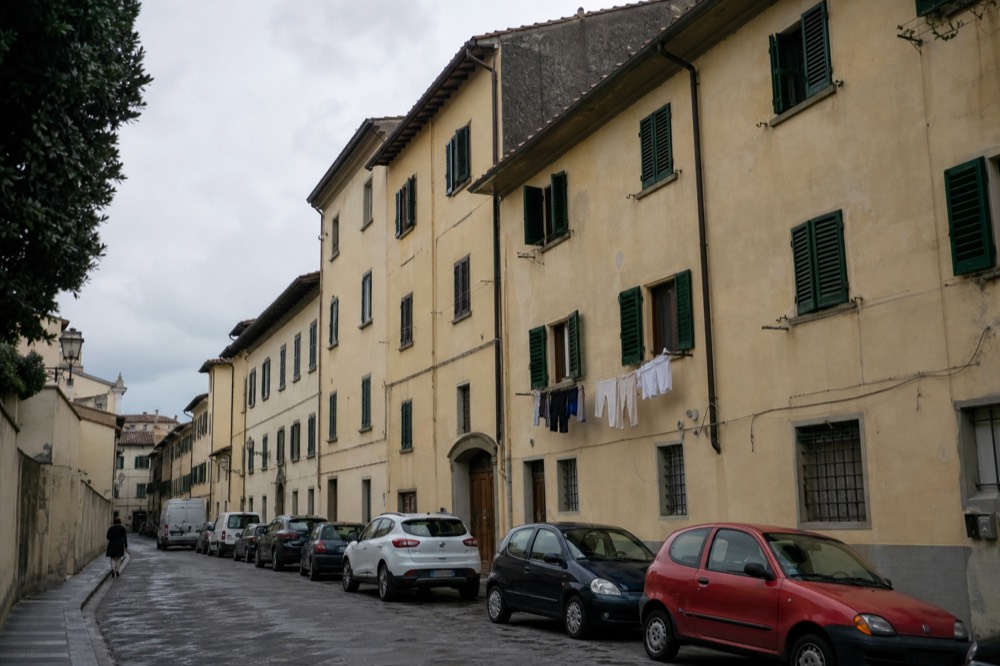
This is where the "avoid" question gets its honest reframe. The districts being restricted are not being restricted because they are bad; they are being restricted because they are popular and residents need protecting. A short-let in Campo di Marte is now scarcer precisely because that neighbourhood works well: it is residential, it has its own market life, and it sits on the rail line. Scarcity is a signal of desirability, not a warning sign.
For the tax angle, note again that a short-term rental anywhere in Florence pays the same 6.00 euro per person per night as a three-star hotel. The saving you make on a rental comes from the room rate, not the tax, and it evaporates for short stays once you add per-person charges for a family. Our Florence on a budget guide works through the full arithmetic of eating and sleeping cheaply here.
How To Choose A Base Around A Car And The Traffic Zones
The entire historic centre of Florence is a Zona a Traffico Limitato enforced by automatic camera gates, active Monday to Friday 07:30 to 20:00 and Saturday 07:30 to 16:00, and since 1 April 2025 a second, larger low emission zone called the Scudo Verde bans older vehicles around the clock using 75 planned camera gates. If you are not driving in Florence, this barely touches you. If you are, it is the single strongest argument for basing yourself outside the centre at a hotel with parking, or not bringing a car at all.
The camera gates read every plate that passes. Tourists who rent a car, drive to a central hotel, and park "just for a minute" collect fines that arrive months later through the rental company. The summer night ZTL, which extends restrictions to all five sectors on Thursday, Friday and Saturday nights from the first Thursday of April to the first Sunday of October, has its exact hours set by a fresh municipal ordinance each year, so no published night time is reliable for long. Check the current ordinance before you drive anywhere near the centre after dark.
The Scudo Verde changes the calculus for day trips too. It is formally a Low Emission Zone that bans vehicles by Euro emission class, 24 hours a day, seven days a week, established by Comune deliberation DG/2023/00607. A rental car that is fine on the motorway to Siena may not be fine crossing Florence's belt to reach it. If your itinerary leans toward Tuscan food day trips from Florence, the train plus a central or station-side base beats a car plus an outer hotel almost every time.
How To Match Your Base To Your Food Tour Plan
The practical method is to pick your tour first, find its meeting point, and choose a base that makes the arrival and the return easy: San Lorenzo or the station quarter for market tours, the Oltrarno for evening tours, Sant'Ambrogio for a local-market morning, and anywhere outside the centre only if you accept a transit ride at both ends. The tour, not the hotel, is the fixed point of a food-focused day, because tours have set start times and fixed meeting places while hotels are negotiable.
Start from the evening options, since they are the ones where the base really matters. The Florence Oltrarno Neighborhood Food & Wine Dine Around, from $130.14 and rated 4.9 across 302 reviews, meets at Piazza Santo Spirito and delivers 8+ food tastings and 6 drinks across 3.5 hours on the south bank; the listing currently shows 10+ bookings last month, and it carries free cancellation up to 24 hours before the start time. If that is your anchor evening, an Oltrarno or San Niccolo base turns the whole night into a neighbourhood stroll. See the available dates on the live listing before you commit to a hotel, because the tour's calendar should drive the booking order, not the other way round.
For a deeper read on that district, our Oltrarno food tours guide covers the neighbourhood's markets, wine windows and evening character in full. The short version for basing decisions: the Oltrarno gives you the quietest residential streets within walking range of the centre, a real morning market at Santo Spirito on the third Sunday of most months, and the two highest-rated evening tours on the roster meeting on its main square. What it does not give you is instant access to Mercato Centrale, which is a river crossing away.
A final word on the word avoid. The districts first-time visitors are told to avoid, the station quarter and the eastern edge, are the ones where Florentines actually live and where the short-let rules are now tightest because demand is real. The station quarter is unglamorous but unbeatable for early market tours and train day trips. Sant'Ambrogio has the city's oldest market, open Monday to Saturday 07:00 to 14:00. Neither will appear on a postcard. Both will let you sleep, eat well and spend less doing it, which is the trade-off this whole question is really about.
The short answers below cover the tax rates, the traffic zones, the rental freeze and the district trade-offs in plain terms, each grounded in the city documents cited above. Read them in order if you are deciding between a central hotel, a short-term rental and an outer base, because the same rules run through every option.
Common Questions About Where To Stay In Florence
Where to avoid staying in Florence, Italy?
No district is objectively bad, but the trade-offs differ. The UNESCO core is the most expensive, loudest and hardest for new short-term rentals since the 31 May 2025 freeze; the station quarter is functional rather than pretty; the outer belts add transit time to every tour meeting point. Match the base to your tour's meeting square instead of avoiding a name.
Is it bad to stay near the train station in Florence?
Not for a food-focused trip. Santa Maria Novella sits beside Piazza dell'Unita Italiana, the meeting point for several street food and classic tours, and the first floor of Mercato Centrale is 900 metres from the station per the operator's own directions page. The atmosphere is less romantic than the centre, but the logistics are excellent.
How much is the tourist tax in Florence?
Between 3.50 and 8.00 euro per person per night depending on accommodation type, in force since 1 February 2025. Short-term rentals and B&Bs pay 6.00 euro, the same as a three-star hotel. The tax is capped at seven consecutive nights and children under twelve are exempt.
Should I stay in the Oltrarno or the historic centre?
The Oltrarno trades postcard centrality for quieter residential streets and direct access to the top evening tours, both of which meet at Piazza Santo Spirito. The centre wins for market mornings at Mercato Centrale and for sightseeing density. If your plan leans evening, the Oltrarno is the better base.
Can I drive to my hotel in central Florence?
Almost certainly not without a permit. The entire historic centre is a limited traffic zone enforced by automatic cameras, active Monday to Friday 07:30 to 20:00 and Saturday 07:30 to 16:00, with night extensions in summer. Since 1 April 2025 the Scudo Verde low emission zone adds 24-hour bans by vehicle class around a wider perimeter.
Are short-term rentals still available in central Florence?
Yes, but the supply is shrinking. New authorisations have been frozen inside the UNESCO centre since 31 May 2025, a regime upheld by the regional administrative court on 14 May 2026 and extended to further neighbourhoods from 21 June 2026. Existing authorised rentals continue; new ones do not.