Tuscan Food Day Trips From Florence: What Works, What Is Bookable, What To Cook Instead
Tuscany is the reason most people come to Florence to eat, and the countryside is close enough to taste in a single day. This guide separates the seasonal anchors that justify a day trip from the logistics that quietly eat your time, and points at the long, food-heavy experiences you can actually book without leaving the city.
Short answer
A Tuscan food day trip from Florence means a market town, a seasonal anchor such as truffles or new olive oil, and roughly four to eight hours of travel and visiting. No day-trip product exists on this roster; the longest bookable in-city experiences run 4 to 5 hours, and the deepest of them cost from $102.93 per person.
Florence sits inside one of the most densely protected food landscapes in Europe. Within the province's own borders, and just past them, sit registered products with real legal specifications: Pane Toscano DOP, Pecorino Toscano DOP, Prosciutto Toscano DOP, Finocchiona IGP, Cinta Senese DOP, Cantucci Toscani IGP and Toscano PGI olive oil, whose Colline di Firenze sub-zone covers groves in the provinces of Firenze and Prato. The white truffle season runs on a calendar fixed by regional law. None of this requires a car for more than a morning, and yet almost every visitor asks the same question: is it worth leaving the city to taste Tuscany, or can the same depth be found on foot?
This guide answers that honestly. It lays out what a Tuscan food day trip actually contains, what the seasonal anchors are and when they fall, what driving into and around Florence involves, and, because this site's roster contains no day-trip product, which long in-city experiences deliver the closest thing to a full Tuscan food day (see Best Day Trip From Florence). Where a figure matters, it is sourced; where something is a convention rather than a rule, it says so. For wine country specifically, we here at Florence Food Tours keep our own coverage deliberately shallow, because Chianti and wine day trips belong to florencewine.tours, and hands-on pasta belongs to pastamakingcourseflorence.com. Both are named here once and then set aside.
What Does A Tuscan Food Day Trip From Florence Actually Involve?
A real Tuscan food day trip from Florence combines three things: a market town or rural producer within roughly an hour of the city, a seasonal anchor such as white truffles, new olive oil or a named food fair, and enough time to eat a proper meal on site. Cut any one of the three and you have a sightseeing trip with a snack, not a food day.
The seasonal anchors are the part most itineraries get wrong, because they move. The Tuscan white truffle season, fixed by Legge Regionale Toscana 36/2023, runs 1 October to 15 January. The prized black truffle runs 15 November to 15 March, the summer truffle 1 June to 31 August and again 1 October to 30 November, and the bianchetto 15 January to 15 April. Hunting is closed region-wide in May and September. A truffle-themed day in July is a different product from one in November, and neither is wrong, but a planner should know which one they are buying.
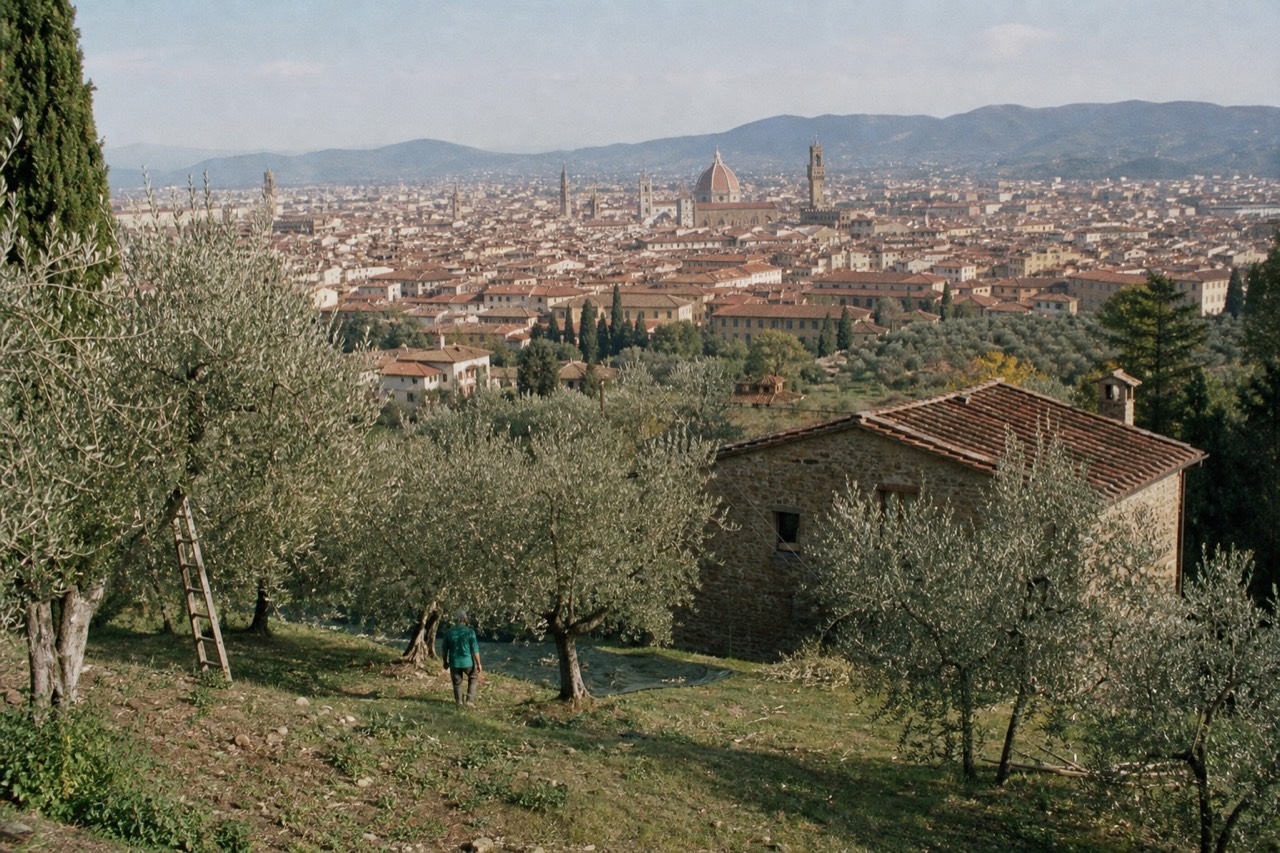
Olive oil has its own clock. The Toscano PGI specification sets the latest harvest date at 15 December, and requires cultivation, harvesting, extraction and packaging all inside the geographical area. New oil, olio nuovo, is therefore a late-autumn and early-winter pleasure. Tuscany has around 400 oil mills, a figure the specification itself credits for allowing small consignments of olives to be pressed promptly, which is why frantoio visits cluster in November and December. The 2025 harvest was a small one: T24 Economia reported regional production at roughly 140,000 quintals, about 30 percent down on the previous campaign, so tasting rooms in late 2025 and 2026 were pouring a scarcer, costlier oil.
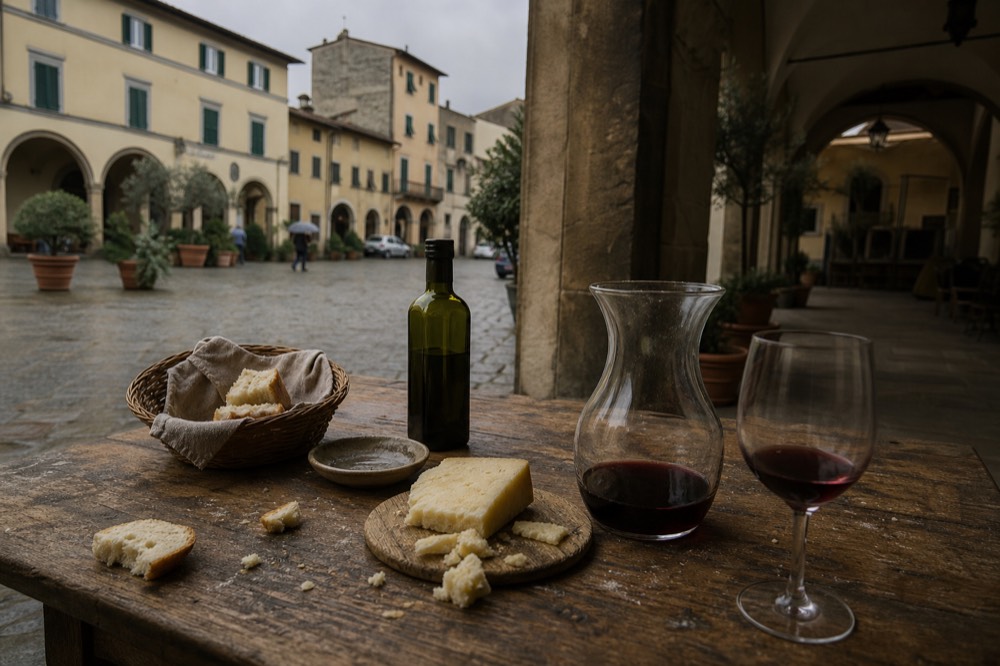
Then there are the fairs, which are the closest thing Tuscany has to a published food calendar. The San Miniato white truffle market, the Mostra Mercato Nazionale del Tartufo Bianco, is scheduled for the last three weekends of November 2026, the 14th to 15th, 21st to 22nd and 28th to 29th, with a renewed format and dedicated space for the thirty municipalities of the Colline Sanminiatesi, according to Dolcevia. The Crete Senesi edition at San Giovanni d'Asso ran over the weekends of 8 to 9 and 14 to 16 November in 2025, and the Mugello's Borgo San Lorenzo truffle market filled its historic centre on 15 and 16 November 2025. Build a day trip around one of these and the anchor is guaranteed; build one around "truffle country" in general and you are hoping.
How Much Time Does A Day Trip Cost Compared With A Half Day In The City?
A full-day Tuscan food trip consumes eight to eleven hours door to door, of which three to five are travel and logistics; a half-day food experience in Florence consumes two and a half to four hours with no transit beyond walking. For a visitor with two or three nights in the city, that difference is often the whole decision.
The honest arithmetic is below. Travel times depend on mode and traffic, so the table gives the structure of the day rather than minute-precise figures, which no source on file supports. What is certain is the shape: a day trip front-loads transit, while an in-city experience spends nearly all of its duration on food.
| Element | Full-day Tuscan day trip | Half-day in-city food experience |
|---|---|---|
| Total duration | 8 to 11 hours | 2.5 to 4 hours |
| Time spent eating and tasting | 3 to 5 hours | 2 to 3.5 hours |
| Time in transit or waiting | 3 to 5 hours | Minimal, walking between stops |
| Fixed departure constraint | Yes, usually early morning | Multiple daily departures |
| Weather sensitivity | High, markets and towns are outdoors | Low, mostly indoors and covered |
| Seasonal anchor | Truffles, new oil, fairs, harvest | Market produce, year-round staples |
| Fatigue cost | High by evening | Leaves the evening free |
That last row deserves a sentence. A day trip that returns at 19:00 has eaten your dinner slot, and dinner in Florence is not a throwaway: the city's evening food walks, from the Oltrarno dine-around to the sunset tour that carries a 5.0 across 5,911 reviews on its live listing, are among the strongest products in the region. Choose the day trip only if the seasonal anchor justifies it, or if you have four or more nights.
For readers who want maximum food depth without surrendering a full day, the longest experiences on this site's roster are the practical answer. Two of them run past four hours and combine a market shop with a cooked meal, which is structurally the same arc as a countryside day: source, then eat.
What Can You Actually Book From Florence For A Full Tuscan Food Day?
No day-trip product exists on this site's roster, and we will not pretend otherwise. What is bookable here are the longest in-city experiences, 4 to 5 hours and 4 hours 30 minutes, both of which pair a market visit with a hands-on meal. For countryside days, wine and Chianti trips belong to florencewine.tours and pasta classes to pastamakingcourseflorence.com.
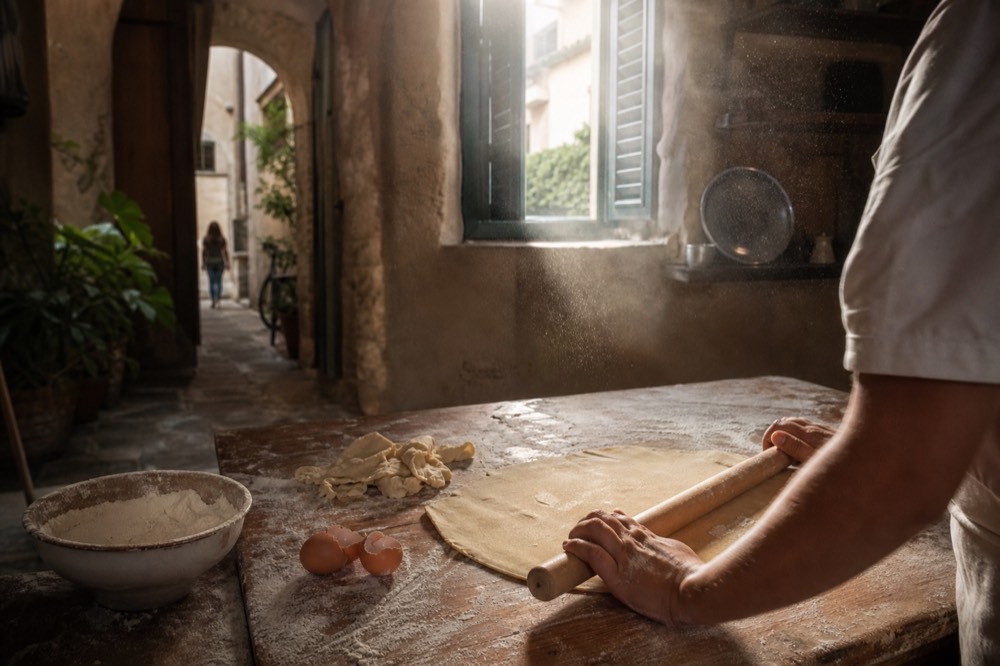
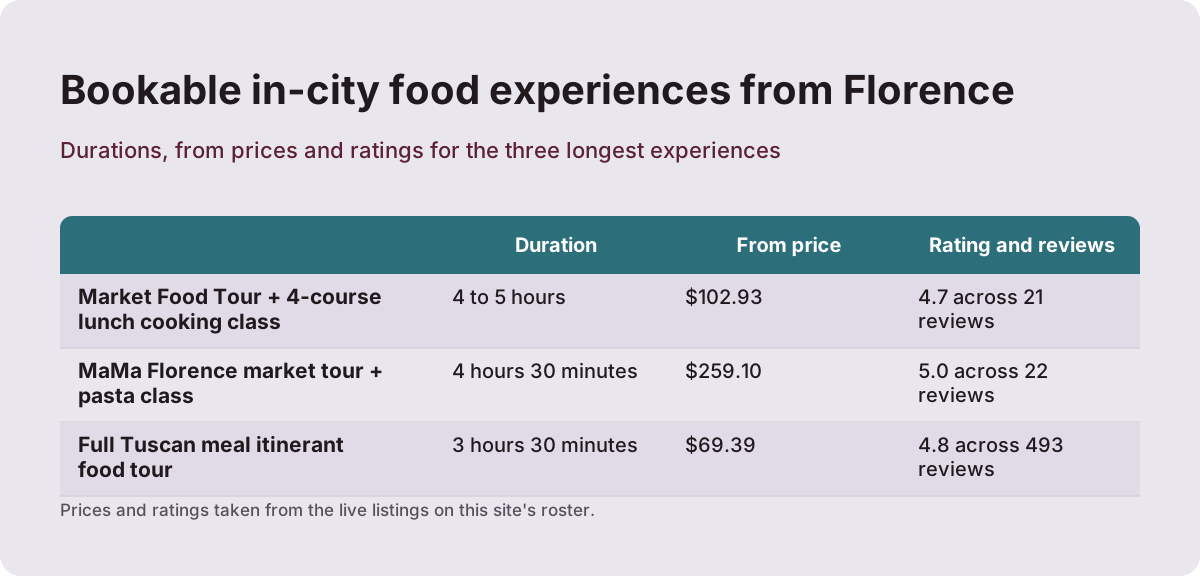
The two longest experiences are worth understanding in detail, because they do the same work as a day trip with none of the transit. The Market Food Tour in Florence with a four-course lunch cooking class runs 4 to 5 hours, meets at Piazza di San Lorenzo 22r, and includes a market shop followed by a lunch you cook yourself, with unlimited wine and coffee or tea, from $102.93 per person, rated 4.7 across 21 reviews on the live listing. It carries free cancellation up to 24 hours before the start time. If the depth of a Tuscan food day is what you are after, this is the closest bookable equivalent, and it is worth checking the live price and available dates before you plan the rest of that day around it. You can read more in our guide to Florence market food tours, or Check availability if the format already fits.
The other is the MaMa Florence guided market tour with a four-course pasta cooking class, 4 hours 30 minutes from $259.10, rated 5.0 across 22 reviews. It is the most expensive product on the roster, and its inclusions explain why: a hands-on four-course lunch covering an appetiser, three pastas and a dessert, with wine and prosecco. Both experiences end with you sitting down to a meal you had a hand in, which is the emotional core of a Tuscan food day, transplanted into the city.
| Experience | Duration | From price | Rating and reviews | What it includes |
|---|---|---|---|---|
| Market Food Tour + 4-course lunch cooking class | 4 to 5 hours | $102.93 | 4.7 across 21 reviews | Market shop, four-course lunch you cook, unlimited wine, coffee or tea |
| MaMa Florence market tour + pasta class | 4 hours 30 minutes | $259.10 | 5.0 across 22 reviews | Market tour, hands-on four-course lunch, three pastas, wine and prosecco |
| Ultimate Food Tour: full Tuscan meal | 3 hours 30 minutes | $69.39 | 4.8 across 493 reviews | Full itinerant meal across at least 4 stops, wine included |
The third row is there for contrast. The Ultimate Food Tour by Do Eat Better is the best food-per-dollar on the roster, a full itinerant meal across at least four stops for under 70 dollars, but at 3 hours 30 minutes it is a long dinner rather than a food day. If your real constraint is budget rather than time, it is the smarter pick, and the live listing shows current dates.
What Does A Day Trip Add That Florence Itself Cannot?
A day trip adds three things the city cannot supply: named provenance at its source, landscape as an ingredient in the meal, and the seasonal fairs that only exist on specific dates in specific towns. It does not add better food in any absolute sense, since Florence's own markets and protected products cover most of the same ground, and the city ranked fourth in TasteAtlas's 2025/2026 Best Food Cities list as La Nazione reported.
Provenance at the source is the strongest argument. Pecorino Toscano DOP has been protected since 1996, with its own consortium; so have Prosciutto Toscano DOP and Lardo di Colonnata IGP, the latter registered in 2004. Cinta Senese DOP, the dark-and-white Tuscan pig breed, was registered in 2012. You can taste all of these in Florence, but standing in the hills where Cinta Senese pigs are raised, or at a mill during the pressing season, is a different experience from a tasting counter, and no in-city product replicates it.
Landscape is the second. The Colline di Firenze olive groves sit in the provinces of Firenze and Prato, close enough that the oil on your Florence table may have travelled a shorter distance than your breakfast coffee. A day trip makes that visible. The third is the fairs, covered above: San Miniato in November, San Giovanni d'Asso, Borgo San Lorenzo. These are time-boxed by definition.
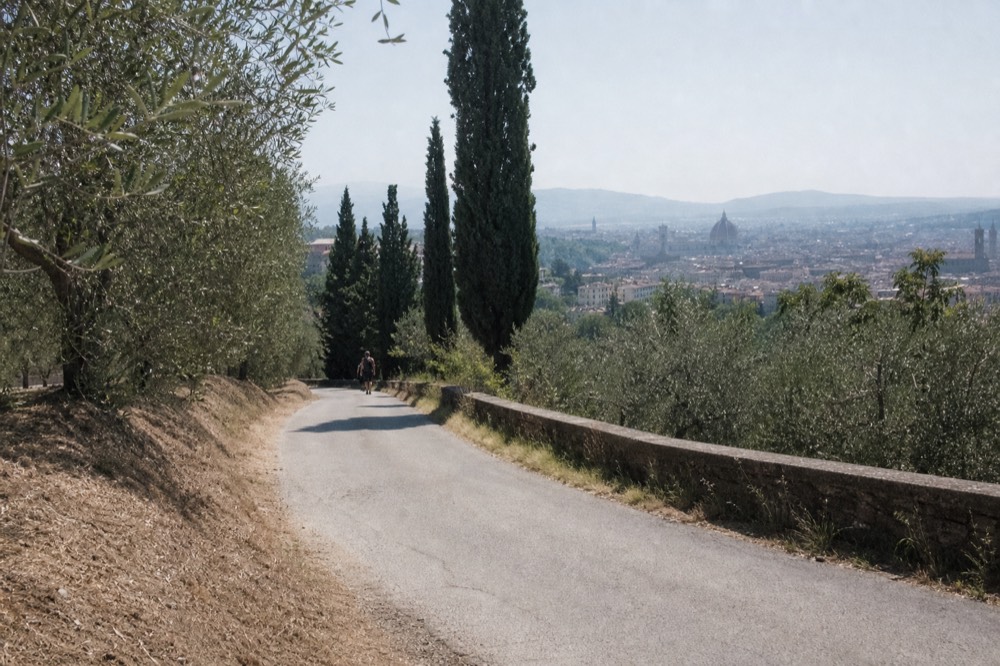
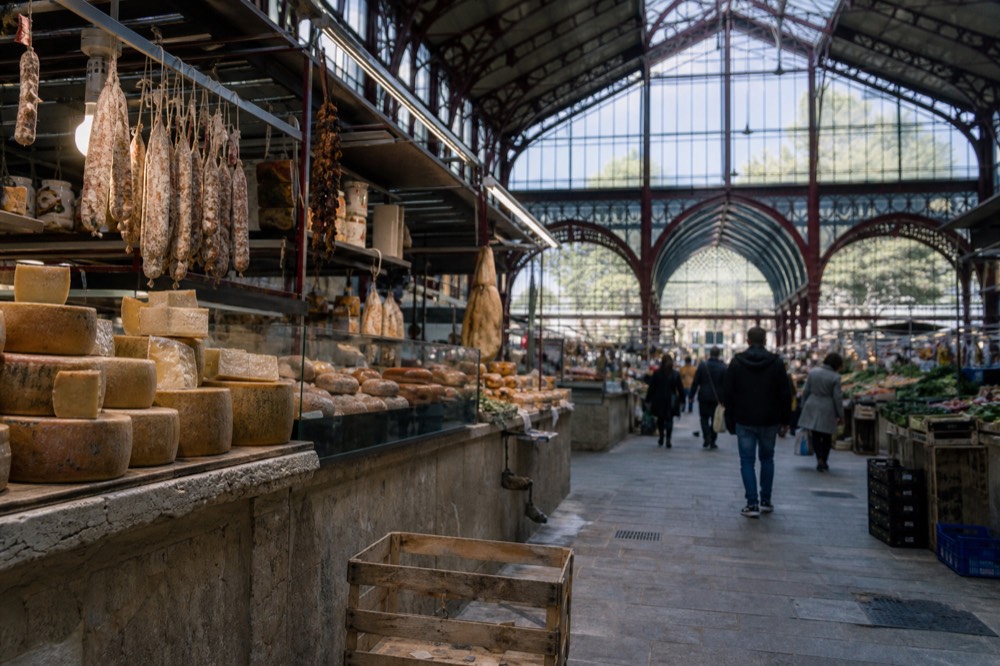
Against that, weigh what the city already does. Mercato Centrale's first floor is a 3,250 square metre food hall open every day from 09:00 to 23:00, with artisan botteghe, a restaurant and a pizzeria around central seating, and the ground floor beneath it holds over one hundred businesses trading Monday to Friday from 07:00. Sant'Ambrogio, designed by Mengoni in 1873, runs Monday to Saturday 07:00 to 14:00 and reopened in December 2025 after roughly 1.9 million euro of restoration work, according to La Nazione, with new canopies that let every stall operate under cover. A visitor who never leaves Florence still eats inside a working Tuscan food system.
| What a day trip adds | Where Florence matches it | Verdict |
|---|---|---|
| Provenance at the source (mills, farms, breeders) | Market stalls selling the same DOP and IGP products | Day trip wins on experience, city on convenience |
| Landscape as context | Oltrarno and riverside settings | Day trip wins clearly |
| Seasonal fairs on fixed dates | Seasonal produce at Mercato Centrale and Sant'Ambrogio | Fair dates justify a trip; otherwise even |
| A full countryside meal | Long in-city experiences ending in a cooked lunch | Close call, city far cheaper in time |
| Artisan producers met in person | Chef- and market-led tours with local guides | Depends entirely on the guide |
When Should You Plan A Tuscan Food Day Trip?
Plan around November for white truffles and new olive oil, late June through August for summer truffles, and the published fair dates for San Miniato and the Crete Senesi. October to mid-January is the white truffle window under regional law; 15 December is the last legal harvest date for Toscano PGI oil; and May and September are closed to truffle hunting entirely.
The full regional calendar, set by Legge Regionale Toscana 36/2023, article 8, is the backbone of any autumn or winter plan. White truffle from 1 October to 15 January. Prized black truffle from 15 November to 15 March. Summer truffle, scorzone, from 1 June to 31 August and again from 1 October to 30 November. Bianchetto from 15 January to 15 April. If a proposed itinerary promises truffle hunting outside these windows, it is not promising truffles.
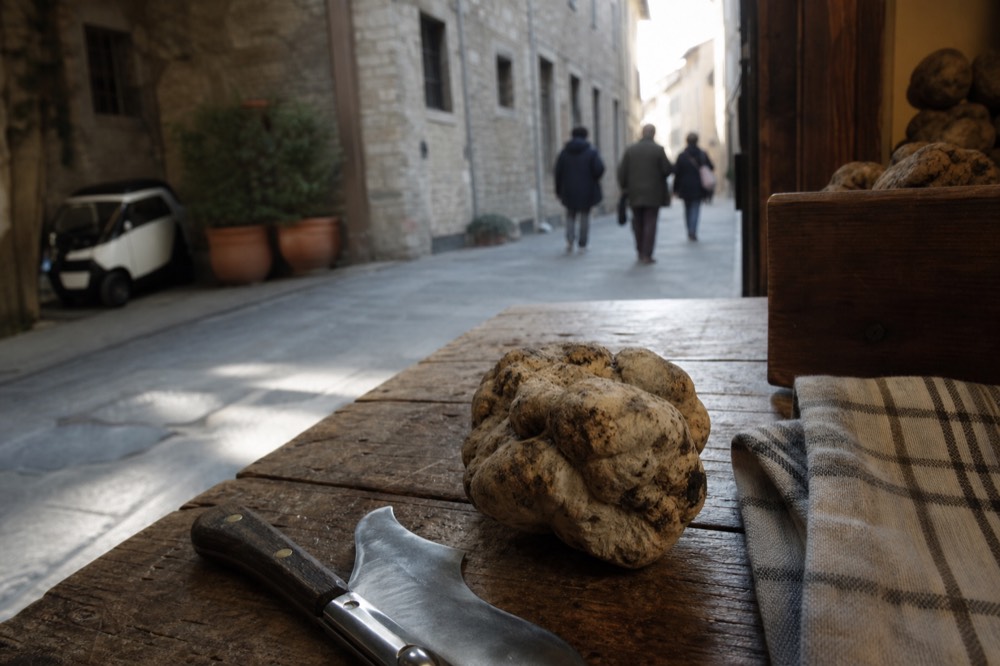
Price is the other seasonal reality. Il Tirreno reported that white truffles from the San Miniato area reached 3,000 euro per kilo early in the 2025 season, a level attributed to modest quantities despite good terrain. The 54th San Miniato fair closed with strong sales, thousands of visitors and a season-largest white truffle of 727 grams, with the largest at the fair itself weighing 607 grams, as pisatoday.it reported. None of that makes truffle cheap; it makes November the month when the region's truffle economy is most visible.
Olive oil follows a month later. The harvest ends by 15 December under the Toscano PGI specification, whose latest amendment also tightened maximum total acidity to 0.45 g per 100 g and capped yields at 9,000 kg of olives per hectare in dedicated groves. The specification's oldest documentary anchor, the Oil Retailers' Statute of 1318, is a reminder that this calendar has been regulated for seven centuries. A December frantoio visit, with tastings of oil pressed days earlier, is arguably the single best-scheduled food day trip from Florence.
For readers whose trip cannot move to November or December, the honest answer is that a spring or summer food day trip should be built on markets, bread and cheese rather than tubers and oil. Pane Toscano DOP, whose sourdough-based specification was amended in July 2025 with the change published in the Official Journal that August, and Cantucci Toscani IGP, protected since 2016, are year-round anchors, and the summer truffle window from June gives bakers' and cheesemongers' towns a modest seasonal hook.
What Does Driving Involve, And What Are The ZTL Rules?
The entire historic centre of Florence is a restricted traffic zone enforced by automatic camera gates, with daytime limits Monday to Friday 07:30 to 20:00 and Saturday 07:30 to 16:00 in the central sectors. A second, larger low-emission zone, the Scudo Verde, has applied since 1 April 2025 and bans vehicles by Euro class around the clock, seven days a week.
The details matter more than most guides admit. The ZTL's five sectors, A, B, O, F and G, are policed by telepass-equipped camera gates, some reserved for public transport and closed 24 hours a day. A summer night extension runs from the first Thursday of April to the first Sunday of October, covering Thursday, Friday and Saturday nights, but the night hours are set afresh each year by municipal ordinance, so no fixed night time should be trusted; check the current ordinance before assuming anything about an evening return. The Comune's mobility office publishes the rules at its ZTL page.
The Scudo Verde, established by deliberation DG/2023/00607 and live since 1 April 2025, is formally a Low Emission Zone as defined at EU level. It bans vehicles by Euro emission class from midnight to midnight, Monday to Sunday, and is enforced by a planned network of 75 camera gates, 73 at city entrances and 2 in transit. For a day-tripper this means the rental car question is not just where to park but what class of vehicle you are driving. Trains largely sidestep all of it, and for the market towns named in this guide the rail option is usually the calmer one, though the high-speed works that disrupted the Florence node ended on 30 July 2026 and any current timetable should be checked live before you commit.
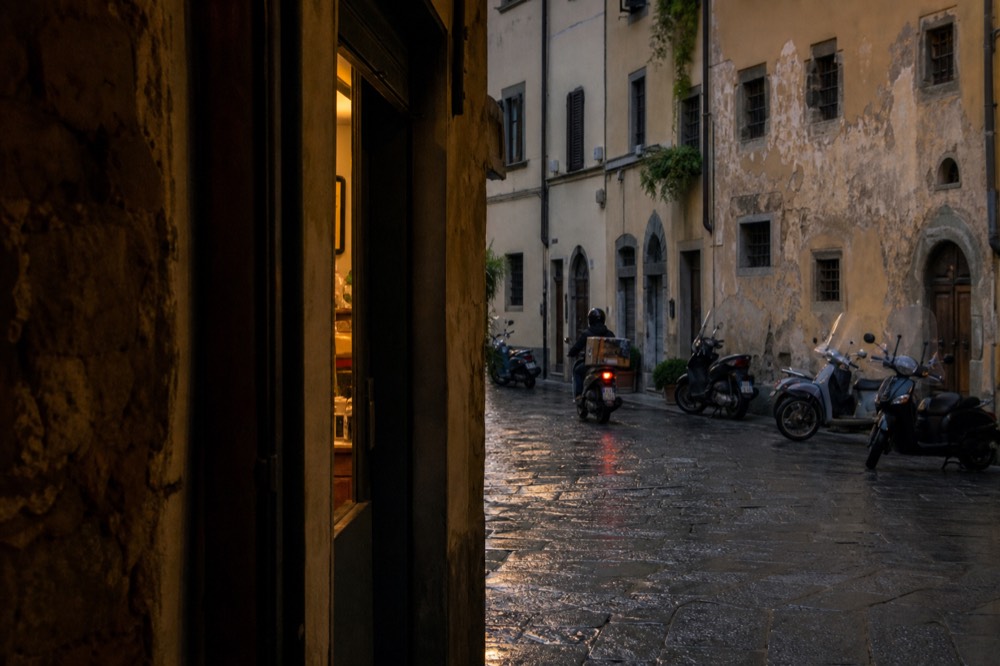
One more vehicle-adjacent fact belongs here. If a day trip includes an agriturismo lunch or a farm shop, note that every accommodation in Italy, agriturismi included, has had to display a Codice Identificativo Nazionale obtained through the national BDSR database since 1 January 2025. It is a small thing, but it is a quick legitimacy check for any farm-stay venue an itinerary proposes.
Which Towns And Products Justify The Journey?
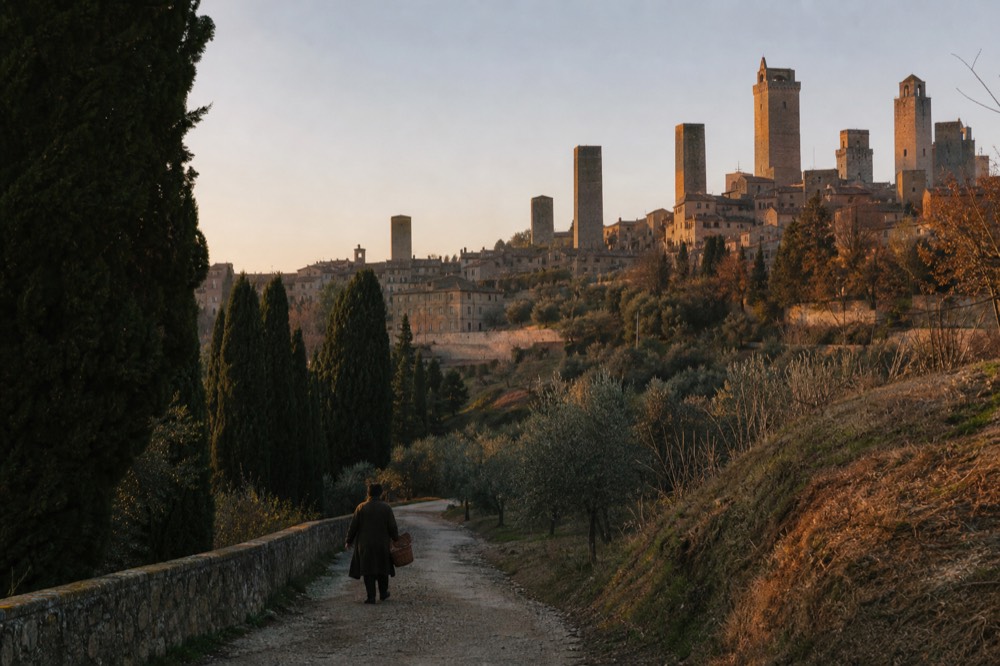
San Miniato in late November for the white truffle market, San Giovanni d'Asso in the Crete Senesi for the same season in a quieter key, the Mugello around Borgo San Lorenzo for a truffle fair with fewer foreign visitors, and the Colline di Firenze olive hills in November and December for new oil. Each pairs a legal seasonal window with a specific, dated event.
San Miniato is the flagship. The 55th Mostra Mercato Nazionale del Tartufo Bianco runs the last three weekends of November 2026, and the 2025 edition drew thousands of visitors, strong sales and dedicated shuttle connections from train arrivals, per pisatoday.it. The town sits in the Colline Sanminiatesi, whose thirty municipalities get dedicated space in the 2026 edition's renewed format. Go on a weekend, go hungry, and expect the fair, not just the shops, to be the event.
The Crete Senesi alternative, San Giovanni d'Asso, ran its 39th white truffle market over two weekends in November 2025 with tastings, an agricultural market and truffle-hunting demonstrations by local hunters and dogs, as centritalianews.it reported. It is the version of the truffle day where you can watch a dog work. The Mugello's Borgo San Lorenzo filled its historic centre with white and black truffle stalls on 15 and 16 November 2025, organised with the Associazione Tartufai del Mugello, and makes a reasonable pairing with the region's bread and potato traditions rather than the wine-and-oil story further south.
For a spring trip, the Valdichiana Senese holds the title Capitale toscana della cultura 2025 under Regional Law 59/2024, with a grant of up to 300,000 euro for its activity programme, a designation that often pulls food traditions into the cultural calendar. And if a day trip is really about a starred meal in the hills rather than markets, Fiesole's Serrae Villa Fiesole retained its Michelin star in the 2026 guide, as Tasting Life reported, though a restaurant recommendation is a different animal from a food day and belongs to the specialists.
One label rule worth knowing before you shop anywhere in the region: from 14 May 2026, under Article 37 of Regulation (EU) 2024/1143, the name of the actual producer must appear on the label of DOP and IGP products in the same visual field as the designation. Buying oil, cheese or ham on a day trip, you can now see who made it, which turns souvenir shopping into a provenance exercise. The Parmigiano Reggiano specification was also amended in April 2025, tightening the rules on introducing animals into the chain, relevant if your day trip crosses into Emilia, a route covered in our Bologna food day trip guide.
How Do You Choose Between A Day Trip And A Long In-City Experience?
Choose the day trip if your dates overlap a seasonal anchor, you have four or more nights in Florence, and you accept eight-plus hours and vehicle logistics; choose a long in-city experience if you have two or three nights, want guaranteed depth of food regardless of season, or need the evening free. The in-city option is bookable and costs from $102.93 for the deepest version.
The decision is mostly about time budget and calendar luck. A visitor in Florence for two nights who spends one full day in the countryside has used half their trip on transit-adjacent hours and has not yet done the evening food walks, which are among the city's strongest products. A visitor with a week can afford both, and probably should: the countryside gives provenance and landscape, the city gives density and repetition, and Tuscan food is best understood from both ends.
The bookable middle path deserves a final word, because it is what this site can actually sell you. The market tour with cooking class is the only product on the roster that reproduces a full Tuscan food day's arc, shopping then cooking then eating, inside 4 to 5 hours, and the MaMa Florence version stretches to 4 hours 30 minutes with a four-course lunch and prosecco. Neither replaces a November morning in San Miniato, but both run in July, in February, and on a Tuesday. If your dates do not line up with the calendar above, they are the honest answer, and the live listings show current prices and dates.
For the self-planners, the checklist is short. Match your dates to the seasonal calendar before choosing a town. Take the train where one exists and let the ZTL be someone else's problem. Book nothing that promises truffles outside the legal windows. And if the day collapses, fall back on the city: the markets are open six or seven days a week, the food hall runs to 23:00, and the deepest bookable food day in Florence still ends with a meal you cooked. More on timing choices in our guide to how long Florence food tours last.
The questions below cover the seasonal windows, the bookable alternatives and the driving rules in short form. Each answer restates the sourced figures from the body of this guide, so you can check a single fact without scrolling back through the seasonal calendar.
Common Questions About Tuscan Food Day Trips From Florence
When is white truffle season in Tuscany?
The Tuscan white truffle season runs 1 October to 15 January, fixed by Legge Regionale Toscana 36/2023. The prized black truffle runs 15 November to 15 March, the summer truffle 1 June to 31 August and again 1 October to 30 November, and the bianchetto 15 January to 15 April. Truffle hunting is closed region-wide in May and September.
Can you book a Tuscan food day trip from Florence?
No day-trip product exists on this site's roster, and we do not sell one. The longest bookable experiences are in-city: a market tour with a four-course lunch cooking class at 4 to 5 hours from $102.93, and the MaMa Florence market tour with pasta class at 4 hours 30 minutes from $259.10. Wine and Chianti day trips belong to florencewine.tours and pasta courses to pastamakingcourseflorence.com.
When does the San Miniato truffle market take place?
The 55th Mostra Mercato Nazionale del Tartufo Bianco di San Miniato is scheduled for the last three weekends of November 2026: 14 to 15, 21 to 22 and 28 to 29 November, with a renewed format and dedicated space for the thirty municipalities of the Colline Sanminiatesi, according to Dolcevia.
When is new olive oil available in Tuscany?
The Toscano PGI specification sets the latest harvest date at 15 December, so new oil appears from roughly late October onward and peaks in November and December. Tuscany has around 400 oil mills, and frantoio visits cluster in that window. The 2025 harvest was small, roughly 140,000 quintals and about 30 percent down, as T24 Economia reported.
Should you rent a car for a food day trip from Florence?
Only if your route genuinely needs one. The entire historic centre is a restricted traffic zone enforced by camera gates, with daytime limits Monday to Friday 07:30 to 20:00 and Saturday 07:30 to 16:00, and the Scudo Verde low-emission zone has banned vehicles by Euro class around the clock since 1 April 2025. Trains serve most of the market towns and avoid all of it.
Is a day trip worth it if you only have two nights in Florence?
Usually not. A full-day trip consumes eight to eleven hours, of which three to five are transit, and it costs you the evening, when Florence's strongest food walks run. With two or three nights, a long in-city experience of 4 to 5 hours plus a free evening delivers more food per hour than a countryside day.